

How To Fertilize Marigolds And Extend Their Beautiful Blooms
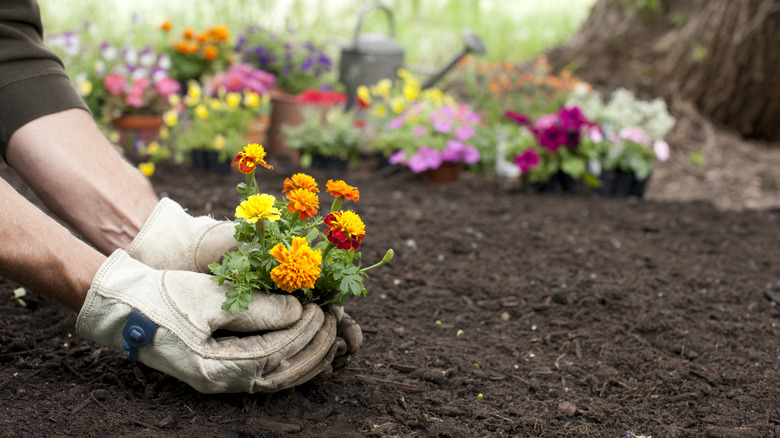
There are many reasons that growing marigolds is considered easy, but it mainly comes down to the fact that these gorgeous yellow, orange, and red blooms don't ask for too much. Marigolds tolerate many weather conditions including the heat, thriving in USDA zones 2 through 11, typically from spring until the first frost in fall. They also grow quickly and can bloom continuously for an entire summer, with each flower lasting up to three weeks — that is, if they are treated properly. But if you are looking for ways to extend their colorful blooms for longer, it is all too simple to make a big mistake: overfertilizing. While many amateur gardeners assume that more fertilizer equals more flowers, that couldn't be further from the truth when it comes to marigolds.
Marigolds don't require much fertilizer, which makes it very easy to overfertilize them. And problems are especially likely if you use a fertilizer that is high in nitrogen. When marigolds get too much nitrogen, they put all their energy into growing their stems and foliage instead of flowering. To get the blooms you want, fertilize with a liquid fertilizer that is low in nitrogen and higher in phosphorous and potassium. There are fertilizers specifically designed for flowering annuals such as marigolds, and these are often formulated with the ideal balance between phosphorous, potassium, and nitrogen (known as NPK – the numbers you'll find on the fertilizer). An NPK ratio such as 5-10-5 or a more balanced 10-10-10 is often recommended for flowering plants like marigolds because these balances help produce blooms, not just foliage.
The best types of fertilizer and how to apply them

Some gardeners fertilize during their growing season once their marigold plants are established, whereas others prefer to mix fertilizer into the soil before planting. Liquid fertilizer is often the best recommendation because it can be more easily diluted with water and then applied gradually over the growing season, which reduces the risk of accidentally overloading them. Marigolds planted in garden beds require even less fertilizer compared to growing them in containers, since nutrients wash out of containers' soil faster. Fertilize garden bed marigolds every four to six weeks, and container pots every four weeks. Gardening experts often recommend that fertilizer is best applied not during the hottest part of the day, but during the morning or the evening, to reduce any stress on the plants.
To encourage even more growth over the season, deadheading the flowers is essential, too. Deadheading allows the marigolds to continue to create new buds and blooms instead of putting all their energy into going to seed. And considering the popularity of these plants goes beyond just appearance –- marigolds repel garden pests like aphids, maggots, squash bugs, and even mosquitos –- there's plenty of reasons to want to keep them in bloom as long as possible.