

The Perfect Companion Flower For Peonies To Fill Your Garden With Color

When you're curating the perfect plants for your garden, one thing you'll want to keep in mind is companion planting. When you choose plants that grow well together, you can increase the biodiversity of your garden, creating a healthier mini-ecosystem all while cultivating a thriving, colorful outdoor space to enjoy. If you've decided to center your garden on peonies, there are several companion plants you can choose from. That includes this eye-catching flower that will help fill your garden with color alongside your peonies.
Also known as English or French lilac, common lilac (Syringa vulgaris) is a stunning flower that blooms throughout the spring with show-stopping flowers ranging from blue and pink to purple. They're low maintenance but spread quickly, helping fill in the extra space in your garden without a major work or time commitment on your end. And lilacs just so happen to be popular companion plants to include alongside peonies due to their visual appearances and shared growing conditions. As a result, by planting lilac with your peonies, you can create a garden overflowing with texture and color all while keeping your plants happy in similar growing conditions.
When looking at perennials to grow alongside your peonies, it's important to learn how to care for your chosen companion plant carefully. After all, you don't want a garden full of thriving peonies but lackluster lilacs. Fortunately, lilacs are easy to grow.
How to grow lilac with peonies
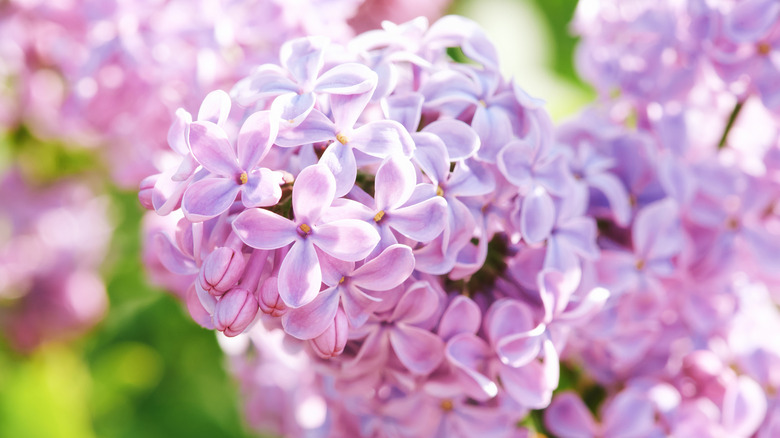
One of the biggest things to keep in mind when growing lilac as a companion plant for peonies is that they have overlapping USDA growing zones, but they aren't identical. As a result, to truly reap the benefits of these plants as perennials, you'll want to ensure you're in the right range for both.
Herbaceous-type peonies are hardy in zones 3 through 8, while lilacs are only hardy in zones 3 to 7a. Aside from hardiness zones, peonies and lilac prefer similar conditions. Both plants thrive in sunlight, and they should receive direct sunlight for at least part of the day. Otherwise, you may wish to find a few shade-loving flowers to add color to your yard instead. They also both require well-draining and nutrient-rich soil.
When planting your lilacs and peonies, consider composition. For many gardeners, peonies' large blooms help cover the sparser areas of lilac plants, ensuring the garden appears fuller and more colorful. If this is the appearance you're aiming for, you may want to keep that in mind when choosing the right orientation for your lilac and peony plants. You could also consider adding additional plants that grow well with both lilac and peony, such as irises.