

Give Your Compost A Major Nutrient Boost With A 100% Natural Fertilizer
We may receive a commission on purchases made from links.
To stay productive, efficient, and healthy, a compost pile needs a steady supply of nitrogen-rich green matter. This fuels the microbial activity of the decomposers that creates that beautiful rich, earthy finished compost. I've been growing fruit and veg organically for more than 20 years, so I usually have multiple compost piles in various stages of decomposition at any one time. Having an ample supply of compost is vital if you want to maintain healthy soil and plants across all your beds.
The faster you can get from raw composted scraps to beautifully crumbly finished compost, the better. One of the best ways to make your compost pile more efficient is to add a generous serving of alfalfa meal. It's a biological accelerant and a rich organic fertilizer that will do wonders for your soil and your compost. When stirred into an active compost pile, it will speed up the decomposition. Alfalfa meal is just dried ground alfalfa (Medicago sativa), which is a deep-rooting legume that pulls minerals from deep in the soil. After harvesting, it's milled into a fine crumbly meal. Down to Earth Organic Alfalfa Meal is an OMRI-certified option that works well as a compost activator.
How alfalfa meal improves your compost
Alfalfa meal works wonders in a compost heap that needs a boost because it's a concentrated source of nitrogen. Plus, because it's finely ground, it breaks down exceptionally quickly. This makes that nitrogen accessible to the microbes that are busy decomposing your compost ingredients very quickly. More readily available nitrogen means an increase in microbial activity, which means more heat. The more sustainable heat, the faster and more complete the decomposition, and the sooner you'll have lovely finished compost ready to spread on your beds.
If you've got a cold, stalled, sad compost pile, especially one that has too much brown matter, a generous helping of alfalfa meal can restart it within a matter of days, assuming the microbes and the worms are still alive. If your compost heap is already working pretty well, a little boost of alfalfa meal will speed it up. Alongside nitrogen, alfalfa meal contains triacontanol, which is a natural fatty acid growth stimulant. Alfalfa also has a high availability of a range of important trace minerals that will benefit the plants that eventually grow in your compost. Triacontanol doesn't do much for the compost itself, but it's exceptionally valuable to plants. It boosts photosynthesis and enhances root growth and overall plant development and vigor. It can also increase crop yield and boost nutrient uptake as well as making plants more tolerant of stress.
How to add it and what to expect
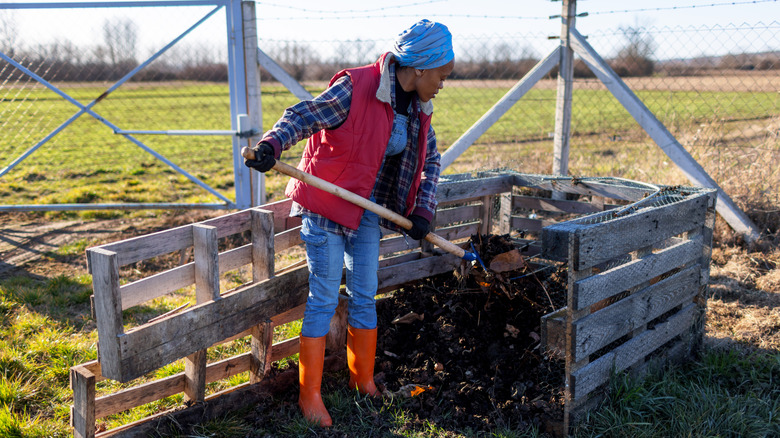
It's really easy to use alfalfa meal in your compost heap. Add 2 to 3 cups to your bin, depending on its size, how active your compost pile currently is, and whether you have a good ratio of green to brown matter. Most of us try to keep an approximate ratio of two parts brown matter to one part green matter. Alfalfa meal is a green material that will give your compost a serious nitrogen boost, but it's a supplement, not a substitute for actual green matter, because it breaks down so quickly.
If your pile is already functioning, sprinkle the meal on top and then work it into the middle layer. If your compost heap has gone cold and sluggish, work the alfalfa meal all through the pile with some water and turn the pile immediately afterwards. The combination of fresh readily available nitrogen, moisture, and mechanical aeration from you turning the pile will usually get things moving again in about a week.
If you're starting a new compost pile from scratch, sprinkle about a cup of alfalfa meal between each layer of green and brown material as you build. This makes sure there's plenty of nitrogen for your decomposers throughout the pile. For the quickest nitrogen boost, you want loose alfalfa meal. You can buy it in pellet form, but these are compressed, so they take longer to decompose than fine ground meal.