

Not Brick, Not Pavers: The Yellow Flowering Shrub That'll Beautifully Edge Your Driveway
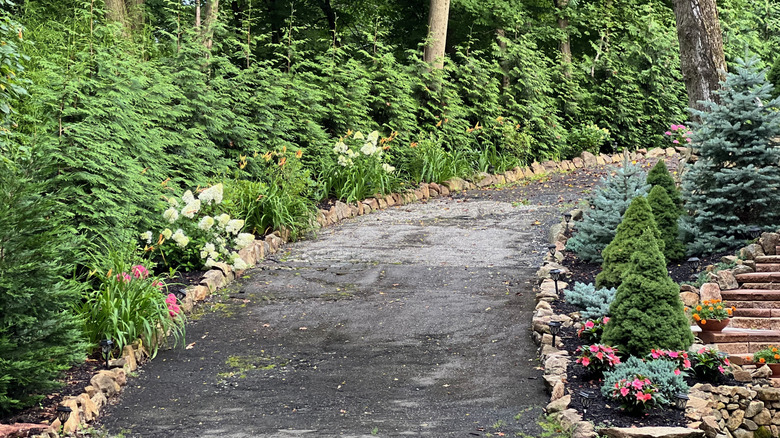
For many people, your driveway is the first impression your home makes on guests, so if you're prioritizing aesthetics, you may be interested in ways to increase this area's visual appeal. At first, you might turn to traditional border options or decorative pieces like bricks or pavers. However, forsythia is a stunning flowering shrub you can use to create an eye-catching driveway while contributing to your yard's biodiversity.
Forsythia is a genus of yellow flowering shrubs that thrives when planted along the borders in your yard, including your driveway. It's known for being easy to grow, and it blooms during the spring, filling your yard with vibrant color. Depending on the variety you choose, you may also have some visual interest come fall, as some species of forsythia sport yellow leaves during autumn. Because of its show-stopping appearance paired with its easy care, forsythia can be a good plant for beginner gardeners. Forsythia also provides shelter for birds and other small animals, helping create a wildlife habitat in your yard even if it doesn't produce food for your favorite local critters.
How to grow forsythia as a driveway edge
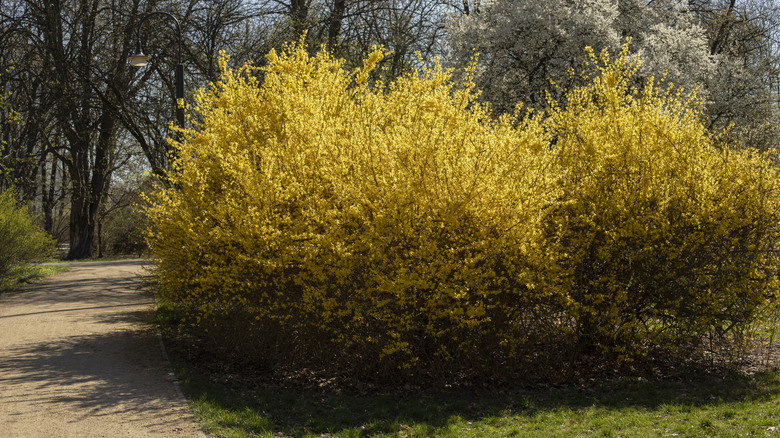
When growing forsythia as a driveway edge, much of the care is the same as in a garden. You'll want to pay attention to USDA growing zones, sunlight requirements, and general maintenance — especially routine care like pruning. For example, you'll want to make sure that your new colorful forsythia bushes along your driveway stay tame enough not to scratch your car.
Exact care specifications can vary based on the species of forsythia you choose. However, you can learn a lot about what this plant needs by looking at the genus as a whole. For example, forsythia is overall hardy in zones 5 through 8, and its durability includes holding up well against poor soil, drought, urban conditions, pests, disease, and other environmental factors that can make it difficult for plants to thrive. However, forsythia requires partial shade to full sun each day — ideally full for better results — and it needs soil with ample drainage.
When pruning, one key consideration is that forsythia blooms on old wood. As a result, when you're pruning for shape and containment, you'll want to be careful not to get rid of the previous year's growth where the flowers will form. Instead, prune away any unwanted growth carefully in late spring or summer, following the three D rule of pruning to remove any dead, diseased, or damaged branches.