

Keep Your Spider Plant Healthy All Year With A Little-Known Watering Tip
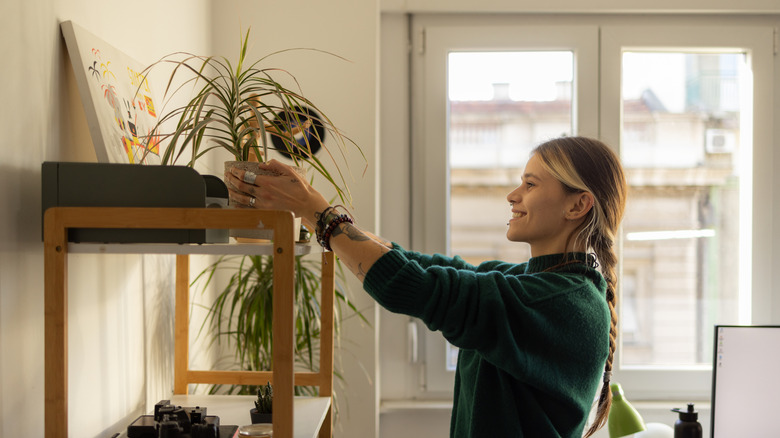
Chances are, if you've ever asked someone what houseplant you should add to your collection, they recommended the spider plant (Chlorophytum comosum). This houseplant is a stunning addition to your home, and is extremely low-maintenance. Besides being easy to manage, a spider plant can propagate endlessly, giving you dozens of baby spider plants in return. While this plant only requires a few specific conditions, the spider plant can still fall victim to the tragedy of soluble salts. Depending on where in the U.S. you live, your water source may contain a large amount of soluble salts, which are natural minerals, like calcium and sodium. After a watering session, there may be too many minerals left in the soil, which can negatively affect the health of your plant. This is why it's recommended to regularly leach your spider plants.
Leaching is the process of washing or rinsing soluble salts or excess minerals from the soil of your houseplant. When your soil contains too many soluble salts, the water you give your plant prioritizes those areas instead of focusing on hydrating the roots. If the plant does absorb any of the soluble salts, it can cause "salt stress." You can tell your spider plant is in need of leaching of soluble salts by a few key symptoms, including "burned" or browned leaf tips, slow growth, wilting, and visible signs of salt on the plant or the plant's container. The brown-tipped and wilting leaves are caused by salts leftover from the water that are slowly absorbed by the plant. Leaching will wash out the salts.
How to leach your spider plants
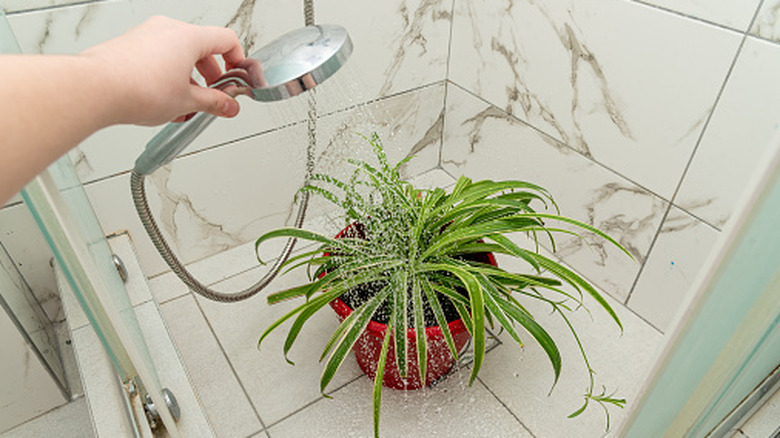
If you've noticed the telltale sale signs of brown-tipped leaves, slow growth, wilting, and other concerning symptoms from your spider plant, then it's time to start the leaching process. To begin, you will only need a few supplies, including a sink or bathtub and a scooping tool. Note that leaching is a process intended only for potted plants. While you can use a regular watering can for this process, it's typically recommended to use a faucet as the slight water pressure can be beneficial.
Before you start leaching, scrape off any white crusted salt that has built up on the top of your plant's soil. You can do so with a small scooping tool and dispose of the salt.
Start by watering your plant until water drips out of the container's drainage holes. This round of watering will help to dissolve any soluble salts in the soil. If you have a larger spider plant, it may be easier to place it underneath a faucet and letting the water run or use a handy tool or pitcher to avoid making a mess. Wait at least five to ten minutes after the first round, or for the plant to drain completely, before watering it for a second time. This final round should rinse the salts out of the soil.
Whenever you water your spider plant, you want to make sure that you don't leave the excess drained water in the drip plate underneath the plant. Your plant will simply reabsorb the salt in the drained water. Make sure to also empty the drip plate regularly. In order to keep your spider plant's soil mixture healthy, it's typically recommended to leach it at least once every two to three months.