

8 Flower Colors That Will Have Hummingbirds Swarming Your Garden (& 3 They Avoid)
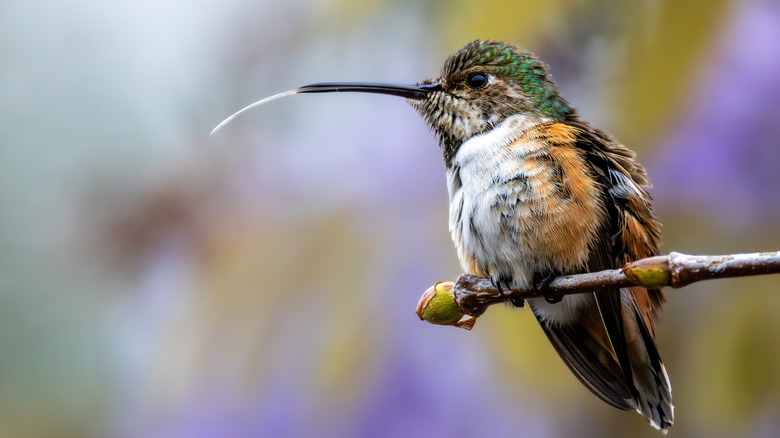
There's something positively magical about hummingbirds. They're adorably tiny, endlessly energetic, and manage to look both graceful and chaotic at the same time. We can't seem to get enough of them in our yards. Despite their itty-bitty stature, they have larger-than-life personalities and strong opinions on which flowers they prefer and which they avoid. When you spot one of these persnickety birds in your garden, you know you're doing something right. While tubular blooms with oodles of nectar hold their attention best, their eye is first caught by the bright shades of red, pink, peach, and blue. If you don't see hummingbirds swarming your garden, you might not be growing flowers in their favorite colors.
Hummingbirds see a far more colorful world than we do, which is likely why they're attracted to bold-colored blooms. These flowers stand out against predominantly green foliage. You probably already know that red is a go-to color for hummers — after all, most nectar feeders are covered in the hue. However, other vibrant shades, like yellow, orange, and purple, also attract these tiny flying gems. To hummers, bright colors signpost a flower full of nectar. Hummingbirds tend to avoid very dark colors, like black, and light shades, like green and pale blue. Of course, if you want your yard to become a favorite hangout for these wee birds, you can't rely on flower color alone. It's also important to grow plenty of native plants to attract hummingbirds while enhancing your garden's aesthetic. Just be sure to invest in endemic species with flowers in the most attractive hues — and avoid the least attractive — to get the most bang for your buck.
Red
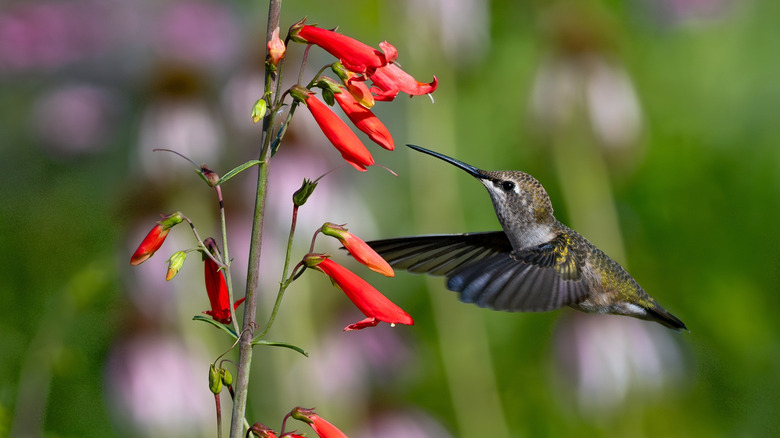
Red flowers top the list of hummingbirds' favorite colors, and for good reason. The bright, bold color is easy to see from a distance — that's perhaps why hummer feeders are so often red. Plus, red flowers usually have plenty of thirst-quenching nectar. Many popular hummingbird plants, such as the drought-tolerant California fuchsia (Epilobium canum), the North American native cardinal flower (Lobelia cardinalis), and the long-blooming firecracker penstemon (Penstemon eatonii), boast red blooms.
Pink
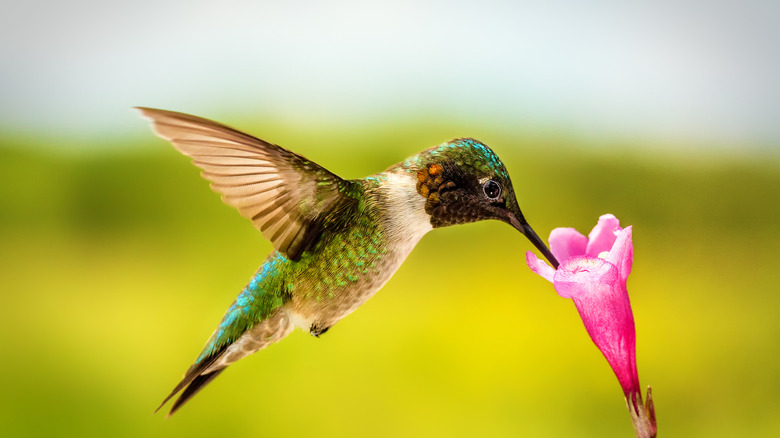
Even if pink isn't your favorite color, there's one big reason to deck your yard out in pink blossoms: hummingbirds absolutely love this hue. Similar to red, pink often signals to visiting hummingbirds that there's likely lots of nectar ready for the taking inside the flower. Shades like fuchsia, magenta, and hot pink are easy for these diminutive birds to spot from a distance, too. Look for hummingbird-friendly perennials like pink petunias (Petunia x hybrida), old-fashioned weigela (Weigela florida), and pink-flowering bee balm (Monarda spp.) to coax them to your space.
Purple
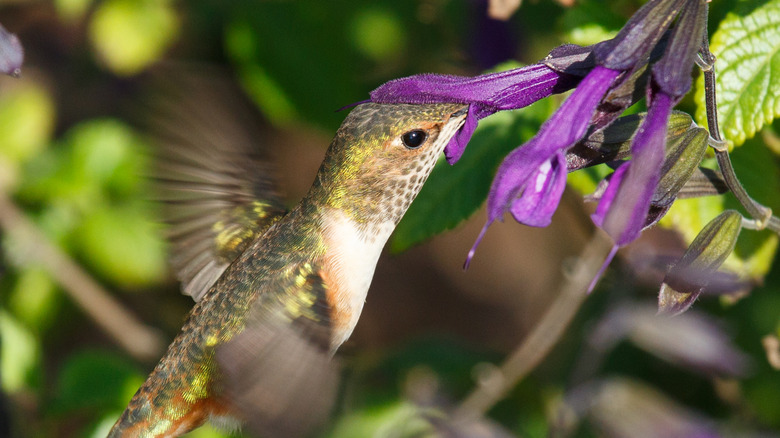
Purple flowers can be surprisingly vivid — sometimes even rivalling red and hot pink blooms for attention in the garden. As such, hummingbirds adore them. These tiny, zippy avians are especially drawn to the intense violet- and plum-hued blooms of plants like Mexican bush sage (Salvia leucantha), purple foxglove (Digitalis purpurea), and purple columbine (Aquilegia spp.). There are also pink-flowering sage, foxglove, and columbine varieties, so mix and match the colors in your garden. You could also brighten up your yard with a purple flowering ground cover hummingbirds love: wild petunia (Ruellia humilis).
Orange
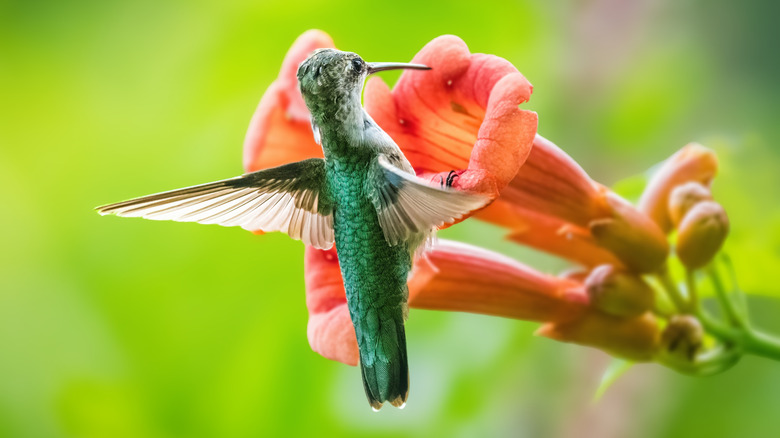
Hummingbirds will make a beeline for your garden when it's filled with orange blooms — it's a color they find hard to ignore. Fill your backyard with native plant varieties with orange-hued flowers — like trumpet vines (Campsis radicans), zinnias (Zinnia spp.), and coral bells (Heuchera spp.) — and sit back and wait for the parade of colorful hummers. They'll probably set up camp and stay all season long. Plus, these highly decorative, nectar- and pollen-filled flowers will bring a bevy of other pollinators.
Peach
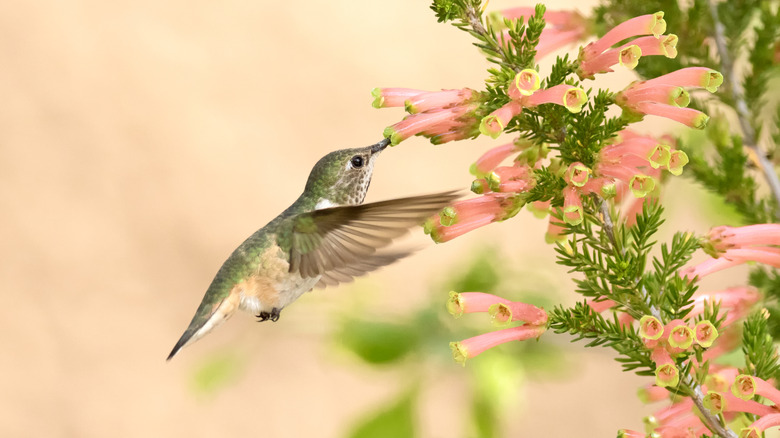
Peach-colored flowers fall somewhere between the dramatic hue of hot pink and the boldness of bright orange. Although peach-hued blooms don't stand out as much as other colors against the abundant green foliage in a garden, hummingbirds still pay attention to them, making them worthy of a spot in your pollinator garden. Nectar-rich plants like fruit-scented sage (Salvia dorisiana) and 'Snaptini Peach' snapdragon (Antirrhinum majus 'Snaptini Peach'), and the rarer Cape heaths (Erica spp.) have blooms in shades of salmon. They pull double duty in a backyard by adding a soft touch cottage gardens or pathway borders.
Yellow
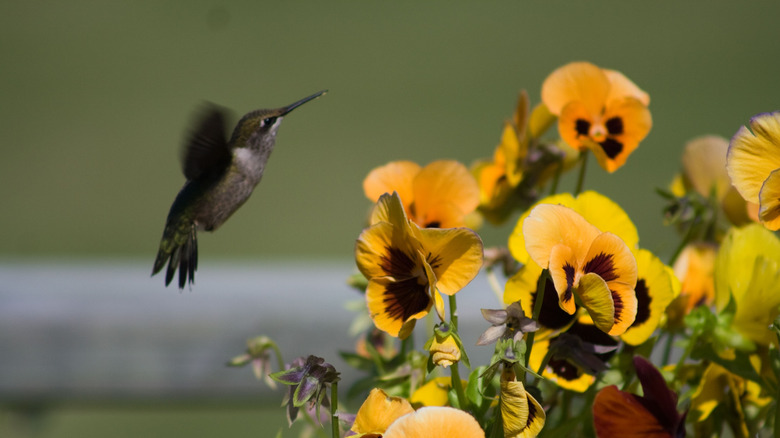
Hummingbirds do find yellow flowers attractive, but the shape of the flower really matters to them. Hummers are more likely to visit yellow flowers with a narrow, tubular shape instead of those with flat, open faces. 'John Clayton' trumpet honeysuckle (Lonicera sempervirens f. sulphurea 'John Clayton') and golden columbine (Aquilegia chrysantha) are ideal. Despite being the wrong shape, hummers will also visit yellow pansies (Viola x wittrockiana). Plus, sunshine-yellow blooms are a great way to brighten a pollinator garden filled with red or pink.
Blue
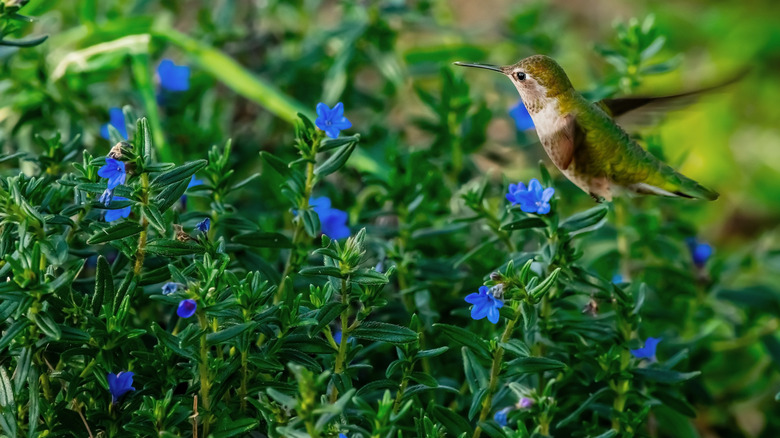
If you want to capture the attention of hummers passing by your garden, grow plants with rich blue flowers. Deep cobalt, indigo, or blue-violet blooms stand out more than pale blue ones — the latter often just blend into the background, hidden by similarly colored foliage. If you want to add this cooler shade to your garden without your hummingbirds losing interest in your backyard, pick plants with tubular, nectar-rich flowers, like 'Blue Nile' delphinium (Delphinium elatum 'Blue Nile'), blue lungwort (Pulmonaria angustifolia), or the pollinator-friendly 'Heavenly Blue' shrubby gromwell (Glandora diffusa 'Heavenly Blue').
White
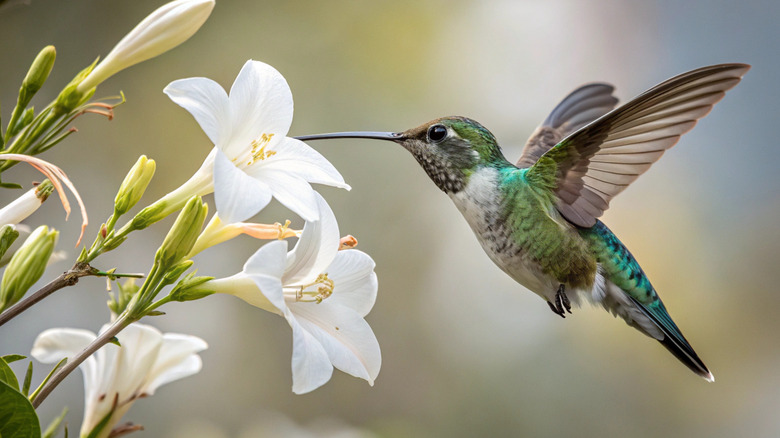
While hummingbirds prefer bright flowers, they'll still visit white blooms, especially once the sun goes down. "White, while not as prominent as other colors for hummingbirds, is attractive to them during dusk and dawn because they shine through the darkness," said landscape designer and Plant by Number founder Alexander Betz to Martha Stewart. Plant white morning glory (Ipomoea lacunosa) or star jasmine (Trachelospermum jasminoides), or Easter lilies (Lilium longiflorum) in a sunny spot, but prune the blooms if they form clusters. Too much white can scare away hummers, who mistake the flowers for the plumes of predators.
Green
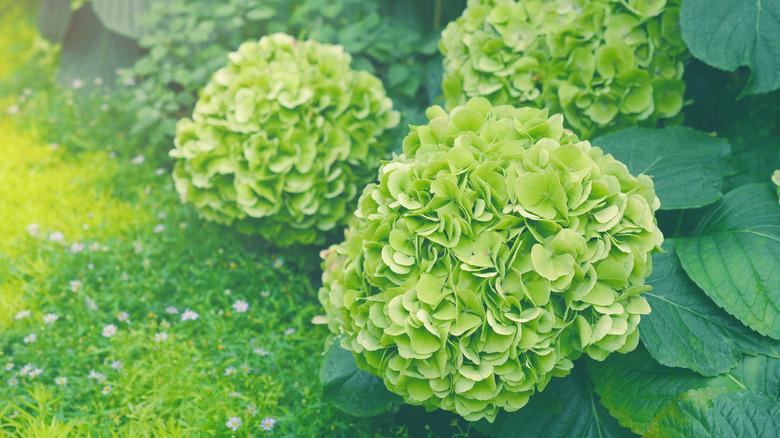
Green isn't high on the list of a hummingbird's favorite flower colors, mostly because blooms in this hue blend into their surroundings. A garden, after all, is mostly full of green foliage in the growing season. Green flowers just don't stand out enough to grab their attention. Even if a green flower has abundant nectar, a hummer may pass it by in favor of brightly colored blooms. It's not a reason to abandon green flowering plant altogether, though. Use them in your garden design to make the red, pink, purple, and blue flowers stand out even more.
Black
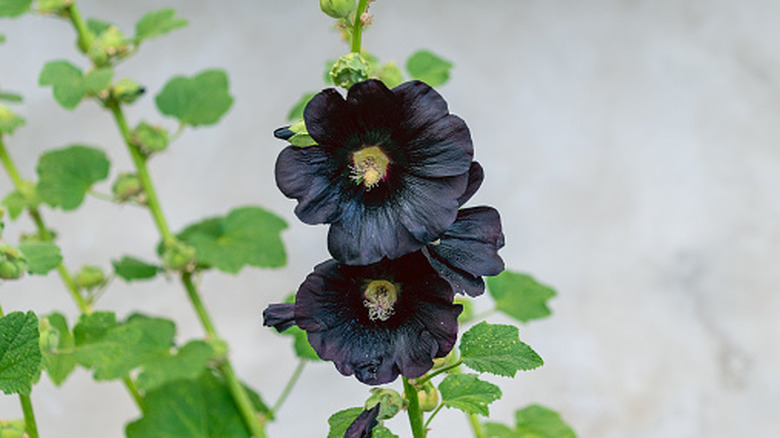
There's a flower you'll see everywhere in 2026 that embraces the gothic garden trend — the 'Nightrider' lily (Lilium 'Nightrider'). Black hollyhock (Alcea rosea 'Nigra') is another such plant. If you love the darker side of life, you may be tempted to grow them — or similar black-bloomers. That's totally fine, unless you want to attract hummingbirds. It's undeniable that black flowers bring a lot of drama to a backyard. What they don't bring is hummers, who tend to associate them with a lack of nectar. Unless the black is closer to deep purple, burgundy, or maroon, avoid these plants.
Pastel
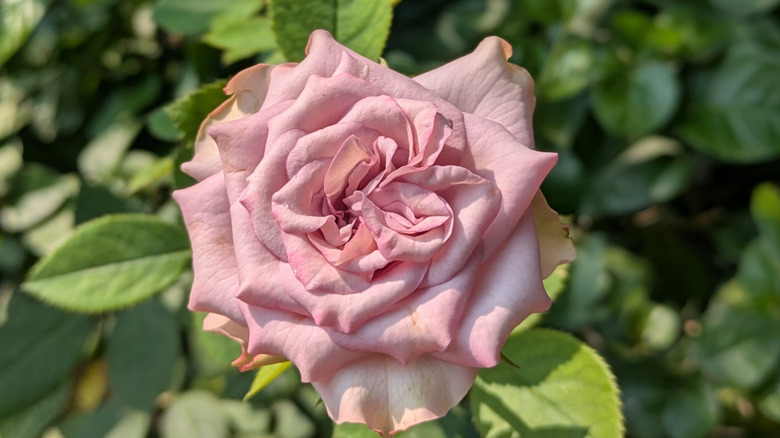
Pastel-hued blooms look super pretty in a whimsical cottage garden. When that's all you grow in your garden, however, it's not likely to host many hummingbirds. As you've learned, hummers prefer bright colors that won't fade into the green, leafy backdrop of a garden, and they'll ignore these colors in favor of their favorites, like red or hot pink. You could, however, successfully mix some pastel-flowering plants into a vibrantly colored garden for balance — if they have abundant nectar, a hummingbird may even stop by.