

It Was Rare Back In The '70s — Now It's The Holy Grail Of Pyrex Thrift Store Finds
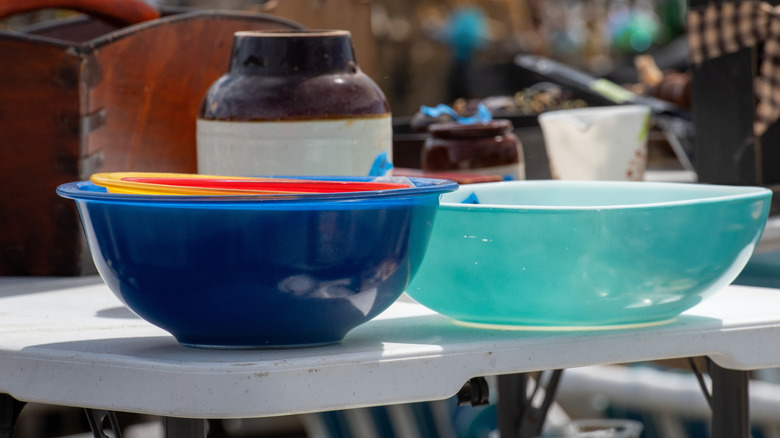
Back in the 1970s, Pyrex was already incredibly popular for its casserole dishes, mixing bowls, and patterned bakeware, but there was one piece that slipped through almost unnoticed at the time: Pyrex 664, a piece that collectors now call "Big Bertha". It's a 4-quart casserole dish, and spotting one at a thrift store today would feel a little like finding treasure. This casserole dish was produced in fewer patterns than many standard Pyrex dishes, like Cinderella bowls or round casseroles. In fact, some collectors believe this dish was created as a test piece connected to Crock-Pot inserts while Corning (the maker of Pyrex) experimented with new products, as only a very small number seem to exist.
And that's exactly why it has an estimated value of between $3,500 and $4,500 — quite the price tag for what is otherwise a relatively plain-looking casserole dish. Usually ,when people are hunting for other valuable vintage Pyrex pieces at thrift shops, the focus is all about those colorful patterns, but in this instance, a rare shape trumps appearance.
Why collectors want Big Bertha
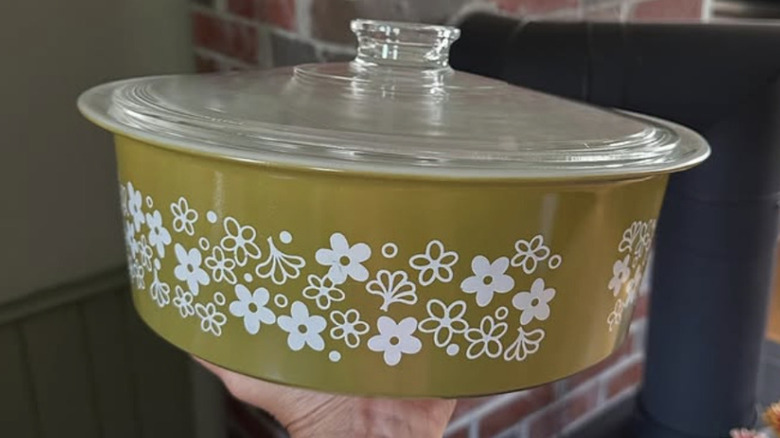
Truthfully, "Big Bertha" has the appearance of something that would quietly sit in the back of a your grandma's kitchen for sixty years, but its understated-ness somehow makes for a better story. If it's being appraised by an untrained eye, one of the rarest Pyrex items ever made could easily be mistaken for a basic casserole dish and end up in the donation pile. A lot of its appeal (and, of course, it's name) comes from its size. At 4 quarts, the casserole is significantly larger than many standard Pyrex dishes from that era, which is what would have made it practical for Crock-Pot use.
Experienced collectors usually flip pieces over immediately to inspect the bottom because stamps are a sign of value on vintage Pyrex. Model numbers, logos, production markings, and unusual stamps can separate a common $12 casserole from something worth thousands. Age and manufacturing style can affect both value and collectibility in surprising ways, which is why understanding the difference between PYREX and Pyrex labels on cookware matters so much. Generally speaking, all-caps "PYREX" was used on older borosilicate glass pieces from Pyrex's mid-century era — the same era that produced sought-after oversized casserole dishes like "Big Bertha". The later lowercase "pyrex" branding is often associated with the tempered soda-lime glass of the 2000s. Items like Big Bertha are why thrift stores continue to attract Pyrex hunters every weekend. Somewhere out there, hidden between stacks of donated kitchenware, another "Big Bertha" could still be hiding, ready to be discovered by a lucky collector.