

Don't Get Duped By Its Beauty: The Ornamental Grass You Might Not Want In The Yard
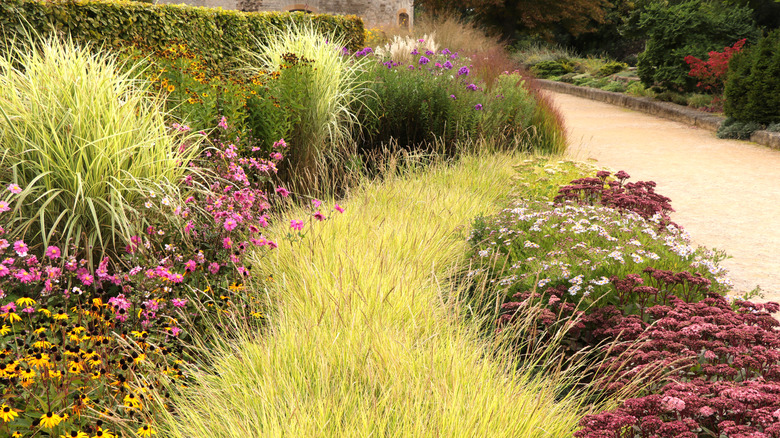
You've likely caught sight of Chinese silvergrass or maidengrass (Miscanthus sinensis) in residential yards. Those feathery tan plumes swaying gracefully in the breeze add structure and movement to the landscape. If you research miscanthus, you'll discover other enviable attributes: resistance to drought, salt, humidity, and deer, with easy adaptation to many soil and drainage options to boot. It sounds like the perfect ornamental grass for your yard, or so you'd hope.
Sadly, maidengrass is extremely flammable, making it risky to plant in your yard. While one could argue that all plants can burn in the event of a fire, some burn faster or more quickly than others, and maidengrass falls into this perilous category. You can blame it on its growth habit. Miscanthus can grow as tall as 12 feet and features spindly, hairless stems. Since these stems are sparsely foliated, they're quick to dry, especially during summer, thus doubling up as dry fuel. Left unpruned, they collect lots of dry leaves, thatch, and debris during fall and winter, providing ample biomass for a fire. As an introduced species that has spread to natural areas, it's known to amplify fires, with raging flames reaching 30 feet high, getting out of control. Worse, the grass just grows back even more vigorously afterward. As you can surmise, having miscanthus in your yard can endanger your life and your home's structural integrity if it's growing in your landscape. So, it's best to remove it from your yard at once.
Removing maidengrass from your yard
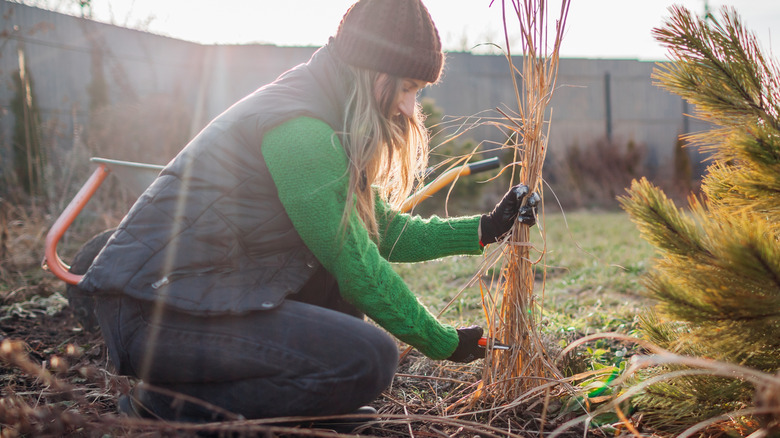
Due to its large root mass, getting rid of maidengrass in your yard isn't the easiest endeavor, and may require several seasons of work, especially for a large planting. You can try to dig out single specimens before they flower or set seed. However, you may have to weed out any volunteer seedlings that regrow from rhizomes or a previous cache of seeds remaining in the soil.
For larger plantings, use a non-selective 2% glyphosate solution, prepared and applied according to the label. Wait until the grass grows to at least 12 inches tall in spring or at the beginning of summer to spray it. After the foliage turns brown, remove it. Be mindful of runoff that may damage surrounding plants. Repeat until the grass stops resprouting. You can also try mowing silvergrass extremely short, at least twice a month when it's actively growing. Avoid mowing after it goes dormant, as it'll just come back more vigorously.
Instead of growing maidengrass, cover the immediate area around your home with inorganic mulches or hardscape it with materials unlikely to fuel fire, such as granite, gravel, concrete, or stone. Grow compact, fire-resistant plants with high moisture and drought tolerance that are low on oil and resinous content to create a landscape that is more fire-resistant.