

Not Alliums, Not Herbs: The Companion That Gives Strawberry Plants A Boost
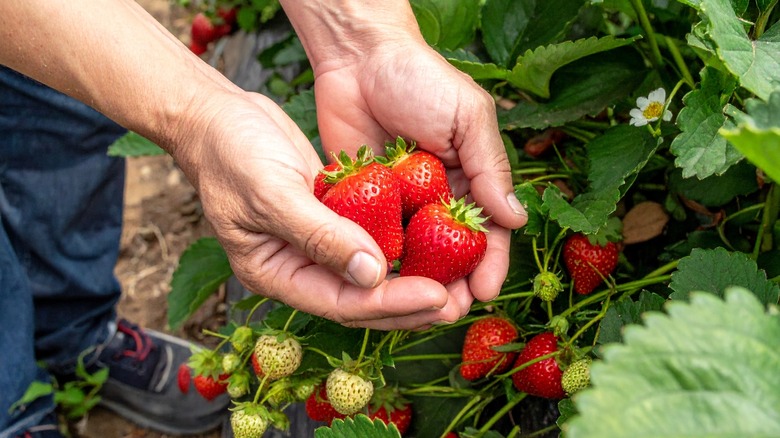
As a master gardener with over two decades of experience as a permaculturist, I'm a little obsessed with companion planting. It's my absolute favorite way of making my garden low-maintenance but thriving, abundant, and full of life. Companion planting has many garden benefits. It's useful for deterring pests, bringing in useful insects, boosting plant health and, in some cases, improving nutrient availability, and enhancing flavor.
Strawberries definitely need companion planting, because so many things want to eat them. I regularly interplant things like borage and thyme with strawberries because they each bring something beneficial to the mix. One of the best things I've done for both plants is to mix my asparagus and strawberry bed. Both of these plants are long-lived perennials and the presence of one benefits the other. As asparagus ferns die back and start to decompose each year, they release organic matter and nutrients, including lots of nitrogen, into the upper layer of soil where strawberry roots are most concentrated. The strawberries play their part by spreading a dense low-growing canopy across the bed that acts as a living mulch. It shades the soil, retains moisture, suppresses weeds, and feeds the ground as the foliage and spent runners break down around the asparagus crowns. This is a brilliant low-maintenance companion plant combination, as asparagus crowns can live up to 20 years and strawberries can keep going almost indefinitely, as new plants from the runners replace the mother plants. It's also particularly valuable for getting the most possible crops from a relatively small space.
Why asparagus and strawberries work
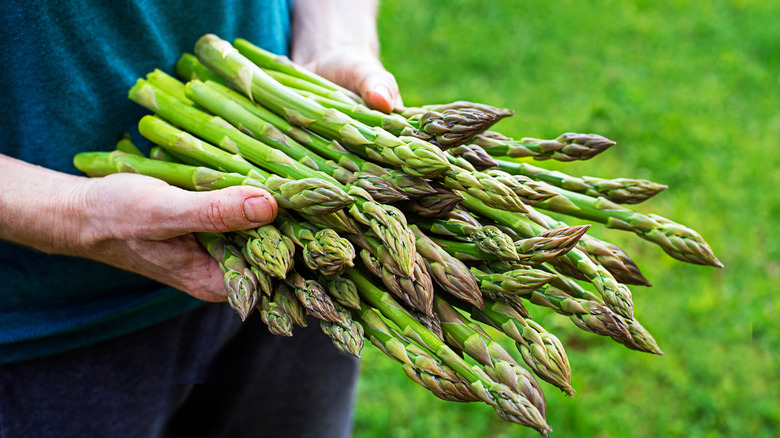
These long-lived plants complement and grow so well in a shared bed because they have different root zones. Asparagus has long deep roots and it draws water and nutrients from deep within the earth. Strawberries, on the other hand, are shallow-rooted plants. Their root systems only extend around 6 inches into the soil. Therefore, they don't compete with one another for water or nutrients, even if you have a fairly densely planted bed.
If you are caring for your asparagus properly, you will leave the last spears to grow tall through summer and into fall. As they grow they will turn into feathery ferns. Although this seems like a waste, it's actually helping the plant build energy reserves for the following year's spears. These ferns can reach up to 4 feet tall, so they cast shade across the bed. However if you're growing in a hot sunny spot, this can be beneficial to the strawberries as it offers shade and reduces the risk of scorch. As they leaf out, strawberries create a layer of deep shade across the soil surface. This is useful for asparagus as it doesn't stop the spears pushing upward, but it does help stabilize soil temperatures. Because the leaves act as a living mulch, it also helps retain moisture and limits nutrient runoff. Plus the leaves suppress weeds that could potentially overtake and smother asparagus if left unchecked.
Setting it up for best results
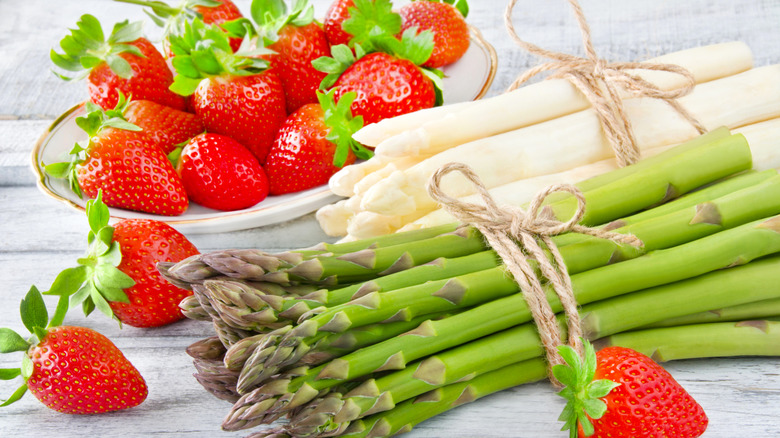
Because these are long-lived plants, you need to make sure where you're planting them is suitable for the long haul. Amend the soil with lots of finished compost that is rich in organic matter so that you are boosting nutrients as well as adding lots of fibrous material to improve drainage. Plant the asparagus first. Set the crowns approximately 18 inches apart. Then, plant the strawberries between each row of asparagus, with plants spaced around 12 inches apart. I strongly recommend using June-bearing strawberry varieties like 'Earliglow' or 'Flavorfest', as they have a similar harvest window as asparagus, so the whole bed grows and then goes into dormancy together.
Once both types of plants are in the ground, provide a generous layer of straw mulch every spring. This keeps the weeds down, protects the soil, and stops the strawberry fruits from resting on wet soil. It also makes the plants less prone to fungal pathogens. Make sure you don't harvest the asparagus or the strawberries during the first year. Just let them grow and then die back. In fact, for maiden strawberries, I strongly recommend removing the flowers and not letting them fruit at all. This lets the plants get fully established and makes them much more productive in subsequent years. The strawberries will put off runners, and each node on a runner that touches the soil becomes a new strawberry plant. Over time, they form dense ground cover. A quick word of caution. Alliums like onions, garlic, and chives are all well-documented companion plants for strawberries. However, asparagus and onions don't belong in the same bed. So, if you are into planting asparagus and strawberries, you shouldn't plant alliums in the same bed as they can stunt asparagus growth.