

The '60s Cabinet Style No One Uses Today But Should Be Brought Back
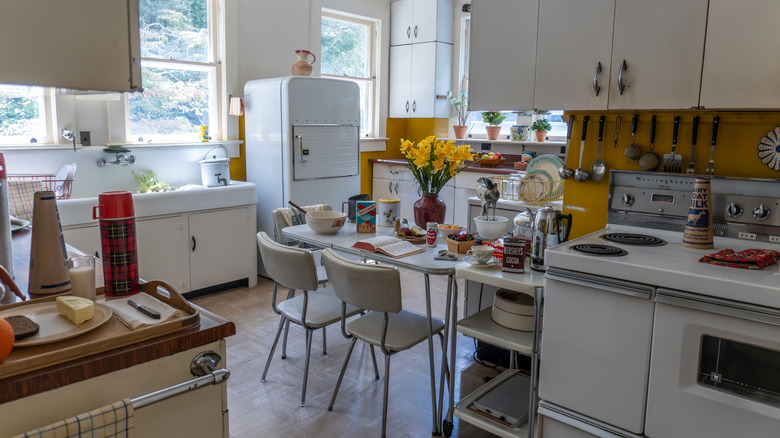
The 1960s post-war period was a time of experimentation. From bold colors such as bright red and buttery yellow to wacky patterns and shapes that reflected the pop art and collage styles of artists at the time, home designs were unlike most of what had been seen in recent decades. And while some of those quirky designs are most likely best left in the past, there are a few classic '60s styles that really deserve a comeback in modern home design.
Take suspended kitchen cabinets, for example. While this design may make you immediately think of classic mid-century decorating, hanging upper cabinets from the ceiling can have a range of practical and visual benefits, so you may want to consider them for your current home. One key bonus of this fascinating kitchen choice is that it can allow you to rewrite the dimensions of your kitchen, to an extent. For example, if your kitchen is open-plan and runs into the living room or dining room in a way you don't like, you can hang cabinets across some of that open space to create a visual divide between them. So, using hanging cabinets does away with the need to have a full wall put in place, meaning you still benefit from the natural light and flow, which remain above the suspended units. This is especially true if you opt for cabinet colors that make a small kitchen feel more spacious, such as crisp white or a light pastel shade. Let's take a look at how you could go about adding and styling 1960s-inspired hanging cabinets in your kitchen today.
Types of suspended cabinets
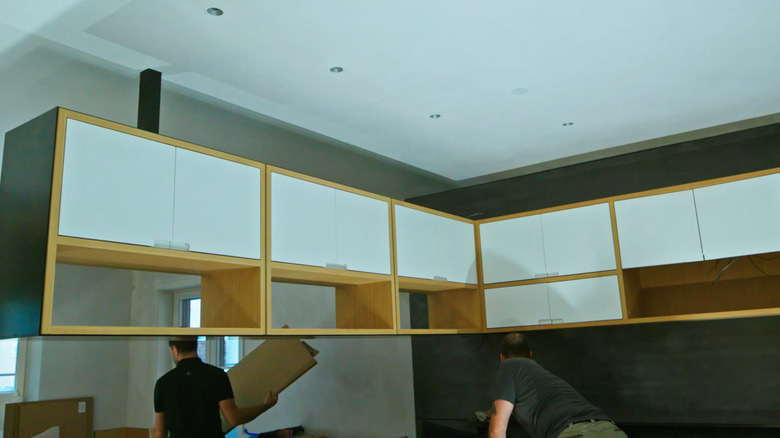
There are a few different versions of this classic '60s cabinet style, so it is important to work out which one might work best in your space. One option, for example, is to have a semi-suspended cabinet. This style retains the open, sleek feel of mid-century design, but it involves securing one end of the upper cabinets to the wall while the other end is suspended from the ceiling. This offers extra stability and is a good way to make sure the hanging cabinets flow well into the rest of the kitchen.
Alternatively, you could opt for suspended cabinetry, which is not attached to the wall at all. This is great for creating a visual delineation between spaces without blocking off too much natural light or making the kitchen feel closed off. For even more flow between spaces and to make the items on your shelves the stars of the show, why not try suspended open shelving? This twist on the classic '60s style enables you to create a broken floor plan, a design that is somewhere between an open-plan layout and a closed one. Just keep in mind that open shelving can require additional upkeep such as tidying and dusting because, unlike with traditional cabinets, the items on the shelves are always visible. Whatever style of suspended cabinet you are interested in, it is a good idea to consult a professional who can provide advice on which ceiling joists to use and how to hang the cabinets for a safe and secure hold. Once that has been accomplished, you can then think about the fun part: styling your '60s-style suspended cabinets.
Styling '60s-inspired suspended cabinets
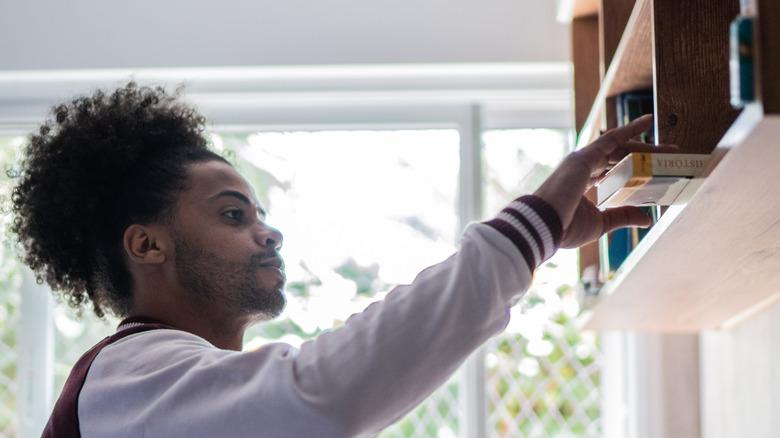
Suspended cabinetry can serve as mid-century modern decor in your home, marrying retro inspiration with contemporary tastes and needs. As such, you may want to think about how you could go about making this style of cabinet work in your home so that it doesn't feel out of place but rather blends in with the rest of your decor. For example, you could try opting for a bold color on the cabinets themselves to reflect the bright shades that were popular in the 1960s. However, to make sure they don't feel too dated, try looking for a bold shade that is trendy now to ensure the cabinets feel connected to modern-day design, such as bright blue or a deep, wine-colored red.
Your choice of materials can also be hugely beneficial when bringing this retro cabinet style into the modern day. For instance, you could thrift a cabinet that features some of the natural materials popular in the 1960s, such as rattan or wicker. Then, by suspending that from the ceiling, you can make sure that piece is separated out from the rest of the cabinetry and made into a statement piece in your kitchen. To make sure your thrifted cabinet still feels modern and works as a part of the overall space, you could try changing out the hardware on the new cabinet to match the rest. If you are happy to lean into the retro feel of 1960s suspended cabinetry, you could also surround the cabinets with pieces of original '60s decor, such as vintage appliances (like stand mixers) or wall art.