

How To Prune Peppers In Late Spring For A Stronger, Fuller Plant All Summer
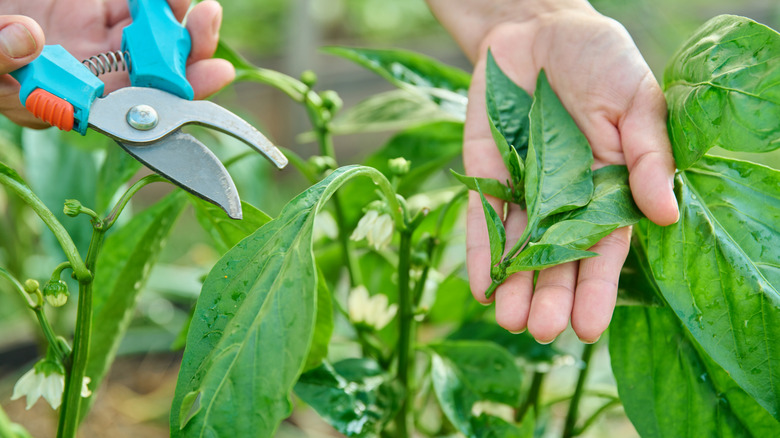
One of the most common pepper-growing mistakes I see people make is pruning peppers the same way they prune tomato plants, but as a master gardener with 20 years of experience, I can tell you that although these plants are related, their pruning requirements are different. Late spring pruning for peppers should be a little more conservative than for tomatoes. You don't want to strip the plant too bare or be too quick to nip out the tops. Peppers are warm-season crops that grow more slowly than tomatoes, and they can take a while to get established. Only prune established plants. If you move too early, you can stunt their growth and set them back by many weeks, which reduces your overall yield.
Aside from nipping off any very early flowers, I don't prune my pepper plants until they've been in their final growing position in the garden for at least two weeks. Once I see active growth, I know they've recovered from any transplant shock and can cope with being pruned. The goal with early-season pruning is to encourage the pepper plant to grow big, strong roots and thick, sturdy stems to give you a bigger harvest. Additionally, the right kind of pruning in spring helps keep your plants healthy and reduces the risk of disease. Late spring pruning for peppers involves removing early flowers, unwanted branches, and lower leaves.
Start by removing the early flowers
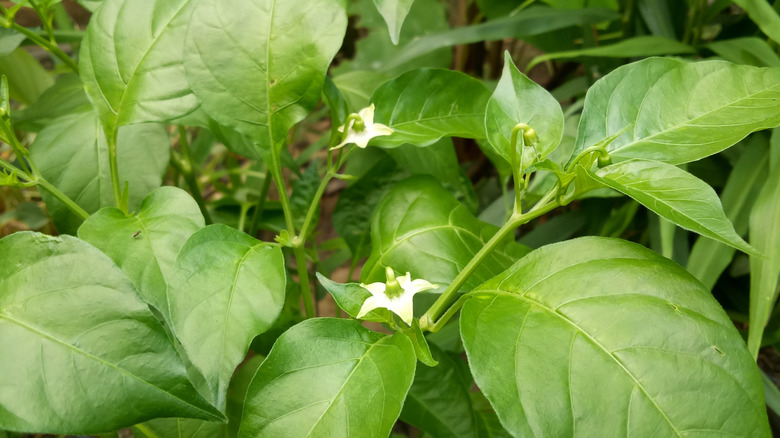
The easiest late spring pruning job for peppers, which is hard to get wrong, is removing the first flowers. Yes, it feels weird to nip out what could eventually become fruit. However, if the plant is still young, short, or leggy with narrow stems but is already trying to flower, removing those buds is your best option. Those early flowers are not necessarily a sign of health or vigor. In fact, it's more likely, in my experience, that those flowers are the result of stress. If the plant has been stressed, it may try to complete its life cycle as quickly as possible by sacrificing leaf and root growth in an attempt to produce fruit.
When you nip off those early flowers, what you're actually doing is telling the plant that it should use its early limited energy to develop a stronger root system, a healthier, thicker framework, and more foliage that will support the main crop later in the year. If your transplants are already large or it's been a couple of weeks since you put them in the ground and they're only just now beginning to flower, then you don't necessarily need to nip those flowers out. If the plant is healthier, it's more able to support fruit growth.
Prune pepper foliage conservatively
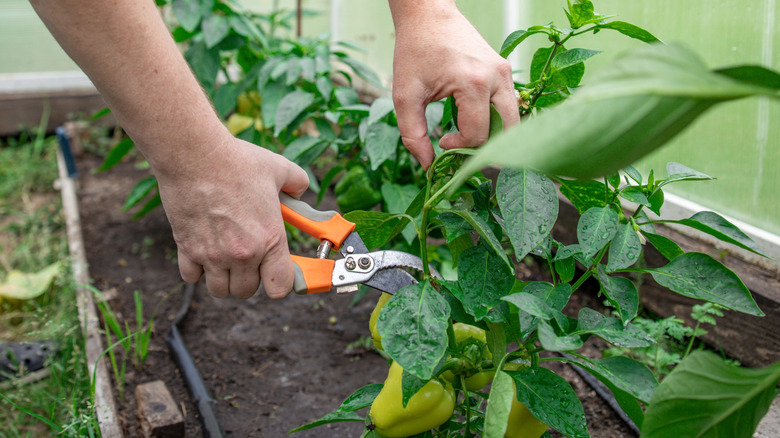
Contrary to popular belief, not every pepper plant needs its growing tip nipped out. That's okay for peppers like shishito, jalapenos, cayennes, and many Thai-style varieties that have smaller fruits. These peppers carry their little fruits on branching stems, so it makes sense to encourage a wider, bushier growth habit. Wait until the plant is in its final position and showing sustained new growth. Then pinch out the soft growing tip just above the first leaf node to encourage branching, leaf fill, and stem thickening.
Larger pepper varieties like bell peppers, poblanos, and cubanelles, however, need a strong healthy leaf canopy to support bigger fruit and to protect the developing peppers. Although peppers are a sun-hungry vegetable, the fruits can burn or scald with too much direct sun. I don't pinch out the tops of my larger varieties like 'Bell Boy,' 'Big Bertha,' and 'Sweet Chocolate' unless they are disproportionately tall, narrow, and struggling to fill out.
People assume they should strip out every sucker like they do with tomatoes. But peppers need their side branches to truly become full and productive. Keep the healthy side branches, especially higher up the plant, as these create the full, dense plant structure that can support the biggest harvests. I do remove weak lower shoots and leaves if they are crowding the base of the plant, touching the soil, or showing signs of ill health. This stops the plant from wasting energy on weak foliage and encourages it to divert that energy into healthy new growth that helps the plant fill out.