

How Often Do I Need To Replace A Lawn Mower Belt?
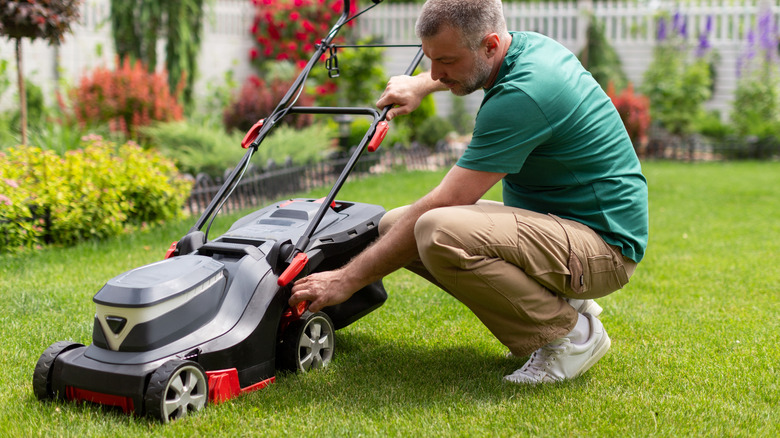
If you own a self-propelled push lawn mower, you know the joy of letting the machine do the heavy lifting for you. The secret behind that effortless pulling power is the drive belt, which connects and powers the engine all the way down to the wheels. But how often do you actually need to replace this hardworking part? As a general rule, change it every 3 or so years, or roughly every 500 hours of mowing time, and you should inspect it about every 50 hours. However, this timeline isn't necessarily set in stone. Your unique replacement schedule depends on variables like what mower you have, the size of your yard, how hard your machine has to work while mowing, and, most importantly, how often you mow.
Rather than just relying on a calendar, pay close attention to how your mower handles each time you use it. Watch out for a loss of propulsion, one of the biggest signs of a failing drive belt. So if your mower starts struggling up hills or you find yourself doing the lion's share of the work to physically push it across your lawn (especially flat stretches), the belt is likely stretching or slipping. Other issues can include high-pitched squeaks and other noises, and grass that looks patchy or completely uncut after mowing. If it seems like there are, in fact, problems, remove your mower's protective plastic drive cover and do an inspection, looking for cracks, frayed edges, a stretched shape, or otherwise damaged rubber. If you see these warning signs, it's likely time to replace the mower's belt before it snaps. Not doing so is one of the overlooked lawn mower maintenance tasks everyone forgets.
How to extend the life of your mower's hardworking belt
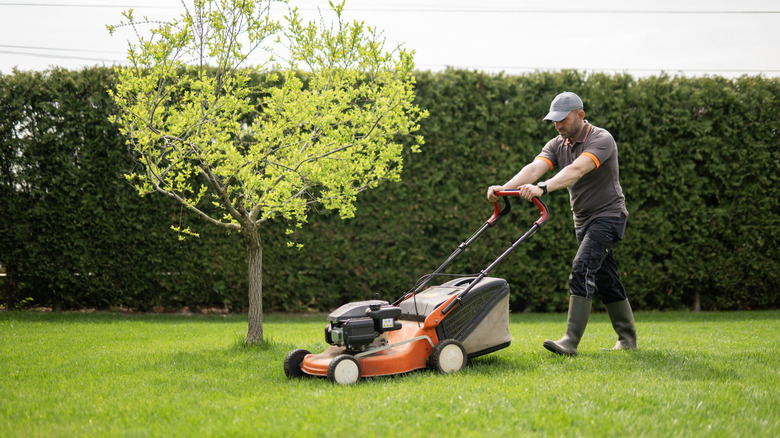
Yes, buying a replacement is an eventual guarantee. Still, though, there are a few easy habits that'll help you maintain and maximize your current drive belt (and any you'll have in the future). One of the biggest culprits behind early belt failure is built-up yard gunk. As you mow, debris like grass clippings, dirt, fallen leaves, and twigs inevitably find their way under the drive belt cover; anything in there ends up packed tightly around the pulleys, which can create intense friction and either wear down the rubber or make it slip off (or both). To prevent this, make it a habit to occasionally inspect things and clean your lawn mower the right way. You'll also want to make sure the mower's belts are kept aligned and tensioned enough.
Lastly, make sure you're storing your machine in a dry, sheltered place like a garage or shed and not outside exposed to the elements. Why? Because the sun's UV rays can wear down rubber and plastic parts, and moisture (like from sprinklers or a rainstorm) can rust out your mower's metal components. High heat is also bad for mower belts, leading to issues like cracking. But when the time finally comes to change it, don't fret; there's a simple method for replacing your mower's drive belt. By keeping your mower clean and stored responsibly, you can confidently stretch the time between belt replacements and keep your grass looking its absolute best all season long.