

The Perennial Plant You Should Prune In June For More Showstopping Blooms
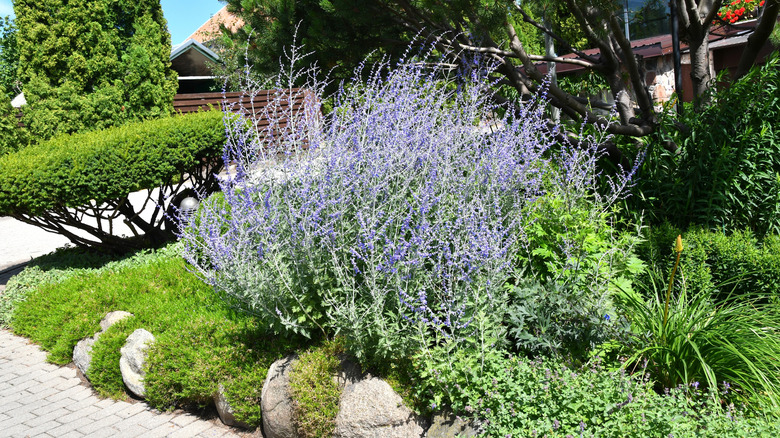
I'm a master gardener with over two decades of experience, and I adore all salvias, but Russian sage (Salvia yangii) in particular, is one that I frequently recommend to people in USDA hardiness zones 4 through 9. It's one of my absolute favorite perennials — with minimal fuss and intervention, this plant gives you an abundance of glorious hazy purple-blue flowers.
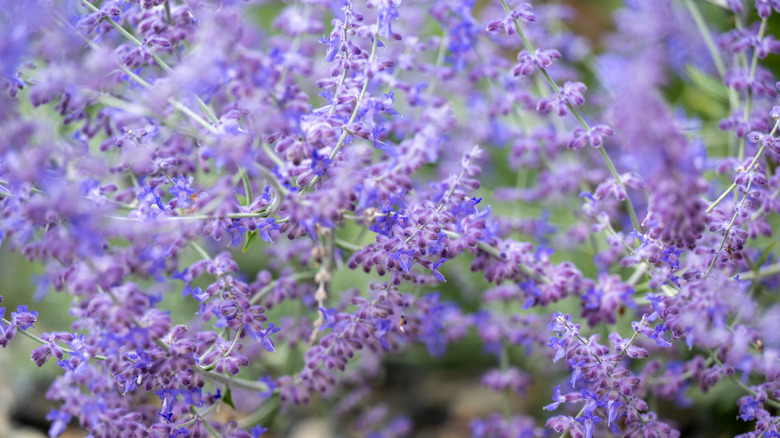
Previously known as Perovskia atriplicifolia, this salvia has a soft, airy look, with its fine gray leaves, silvery stems, and gorgeous flowers, but it is surprisingly tough once established. By June, Russian sage sports lots of soft, new growth, and it naturally has a fairly loose and slightly wild-looking habit, which for me is part of its charm. However, if it gets too tall too quickly, it can flop over and look sad. A careful trim in June encourages branching, giving it a denser, more pleasing shape. A June trim can also help your Russian sage give you a more interesting layered flower display and a longer bloom season.
Russian sage is heat- and drought-tolerant and can cope with exposed garden spots that would cause stress for many other perennials. And it can cope with lean soil. The only thing it really asks for is sunlight and good drainage. It's popular with bees, butterflies, and hummingbirds, so it brings energy and movement as well as color and makes a great choice if you're trying to start a pollinator garden. Giving it a light pruning come June is the perfect way to encourage all those beneficial pollinators, while keeping your yard or garden in tip-top shape.
Pinch or trim Russian sage in June before it starts flowering heavily
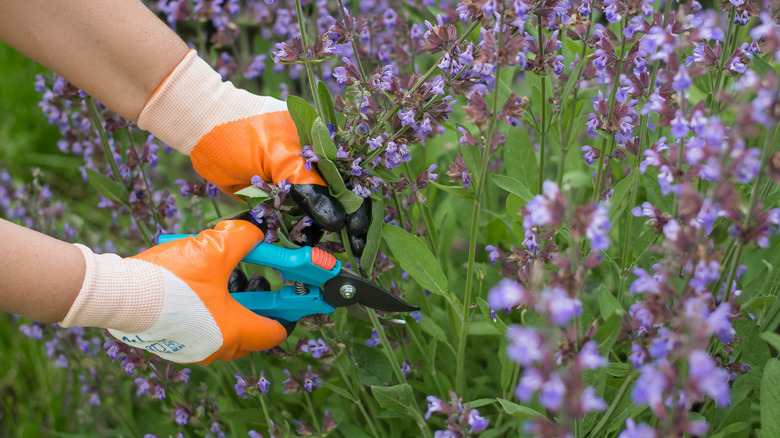
If you're going to give your Russian sage a pre-summer trim, June is the best time to do it. By this point, new stems are growing strong but the plant isn't flowering just yet. What you don't want to do is prune Russian sage if it's in its first year, still small, hasn't fully established yet, or is showing signs of drought stress or ill health. If, however, the plant is healthy and upright and you can see lots of sustained new growth, pinching now is your best chance to get a dense, bushy shape that will be covered in flowers by summer.
Remember, you're not doing heavy pruning work here and you want to let the plant keep some of its feathery wild look. Shorten the tallest, fastest-growing stems by cutting just above a leaf node and taking off the soft, growing tip. Be sure never to remove more than one-third of the length from any one stem. I enjoy the wild, natural look, so I generally only prune one part of the plant or only reduce the height of the very tallest stems. One benefit of a June trim is that you'll get succession flowering. The stems you trimmed back often produce lateral growth. So the stems you didn't trim flower first, then the trimmed stems and their new lateral growth flowers a little later.
Things not to do to Russian sage in June to avoid a summer flop
Russian sage is super easy to grow, but one of the biggest mistake you can make in June is cutting it back hard as if it were a winter prune. By June, the plant is already producing this year's flowers, so if you cut it back too much now, you'll delay flowering or completely remove the stems that are about to flower, losing a whole year of blooms. I'd also recommend not being too keen to remove spent stems. They add interest to the winter garden, catch frost beautifully, and they give the garden structure after the softer perennials have collapsed. Plus, their stems catch falling leaves and snow which help protect the crowns over winter. Spent blooms and stems also provide seeds and habitat for wildlife.
Finally, it's worth noting that Russian sage is resilient. Don't be tempted to excessively water your Russian sage, and don't feed it. In extremely dry conditions you may need to water especially if the plant hasn't established itself yet, but too much water can cause rot to set in. Rich feeding can make the stems softer and make them much more likely to lean and collapse. One common mistake I see people make is to apply a high-nitrogen fertilizer after a June trim to try and encourage lots of regrowth. Yes you probably will get lots of fast new growth but they will be weak floppy stems that do nothing for the plant except ruin its shape.