

The Butterfly-Friendly Ground Cover That Deer Want Nothing To Do With
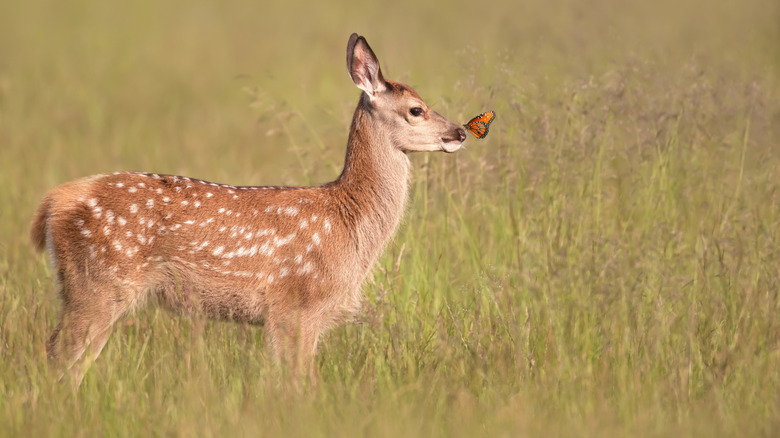
It's a darn shame when a gardener creates an inviting habitat for butterflies, filling it with flowers these beauties love, only to one day find the plants decimated by hungry deer. It's a bit heartbreaking to see your investment of time, labor, and resources destroyed overnight. Luckily, the Venn diagram of deer-resistant and butterfly-attracting plants shows many plants with both traits, including one that also helps keep excessive weeds out of the garden and encourages hummingbirds to visit your yard in addition to butterflies. Catmint (Nepeta) is the name of this multitasking perennial that can serve as a ground cover in your landscape, and it's available in numerous varieties.
Catmint's deer deterring traits include both fuzzy leaves and a minty scent that these mammals don't like. They might nibble at new shoots in early spring, but anything they damage will grow back with no effort on your part. The fragrant lavender look-alike attracts butterflies with flowers loaded with nectar. A long blooming season, from April to August in most locations, keeps butterflies well-fed. Cut back blooms to encourage new ones for butterflies. You can even attract more pollinators by growing herbs next to catmint, such as yarrow, Russian sage, and hummingbird mint.
Tough catmint is a breeze to care for
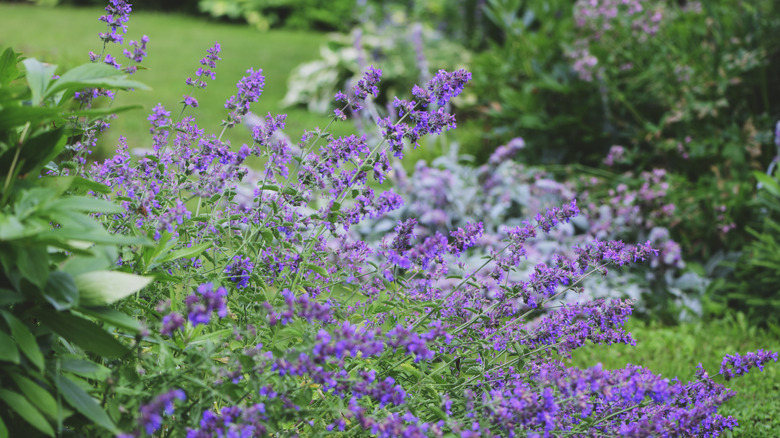
Known for its toughness and ability to withstand neglect, catmint is extremely easy to care for. The plant is cold-hardy in USDA Zones 4 to 8. Plant it in the spring from nursery pots or division in well-draining, low-nutrient soil — also make sure it's in an area that receives full sun to partial shade. Catmint functions best with deep, infrequent waterings once it's mature, but it should be watered two to three times a week while getting established. Fertilizer isn't necessary for catmint. The plant will grow to 18 to 24 inches tall, but it will appear shorter because of its arching stems.
Propagate catmint by dividing it every three to four years; this task also has the added benefit of rejuvenating its appearance and health. It not only has no significant disease or pest issues, but actually repels some insects, like flies, aphids, and squash bugs.