

Don't Fall For Its Beauty: The White Flowering Plant You Don't Want In Your Garden

Putting together a flower garden takes a lot of planning and preparation. Between choosing the right companion flowers to make your garden thrive and selecting varieties that match your style while attracting pollinators, it can be easy to get wrapped up in the aesthetics. When you are looking for tall flowers to create layers in your garden beds, there's one white flowering plant that might stand out as an attractive option, due to its 4-foot-tall, dense flowering coverage and beautiful fern-like leaves: wild chervil. However, there is one major downside to planting this stunning flower that you won't want to overlook.
Wild chervil (Anthriscus sylvestris) is native to Europe and Asia, but in the United States, it is considered invasive. In fact, it's actually illegal to grow wild chervil in at least five states, including Oregon, Wisconsin, Pennsylvania, New York, and Maine. Plus, it's easy to get wild chervil, also sometimes called cow parsley, mixed up with poison hemlock, a mistake you definitely don't want to make in your garden. While some native plants can grow aggressively, you can learn how to identify invasive plants based on their country of origin and their growing habits. You can also check with local authorities before planting to ensure the plants you are putting in your garden are safe for the local ecosystem.
The downsides of planting wild chervil in your garden
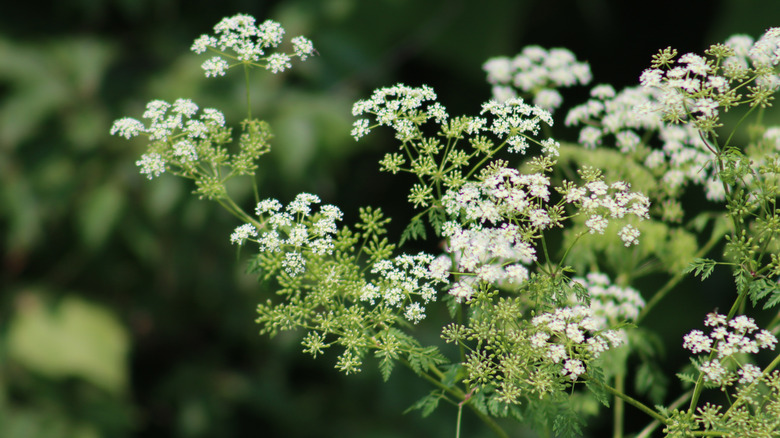
Wild chervil is just one of many beautiful flowering plants that are considered invasive, and for good reason. Planting wild chervil in your yard can quickly lead to disaster. It can actually create a major headache for gardeners and destroy local ecosystems. First and foremost, it can quickly take over your garden, choking out your native plants. Wild chervil grows aggressively in almost any environment, causing a reduction in edible plants for wildlife in forests, pastures, and on roadsides. Plus, it has been known to spread disease, which can kill any remaining plants in your garden.
Beyond the ecological issues that it presents to your garden, and ultimately to the local ecosystem when the seeds inevitably spread, it is a pain to get rid of. You can't get rid of it completely by digging, cutting, or pulling it from the ground because of the deep root system. Mowing it down is the most recommended method for removal, but if you wait until after it goes to seed, you could just be spreading it even faster. In the end, it is best to avoid planting this beautiful invasive flower altogether.