

What Is The Door Rule For Throwing Out Old Appliances?
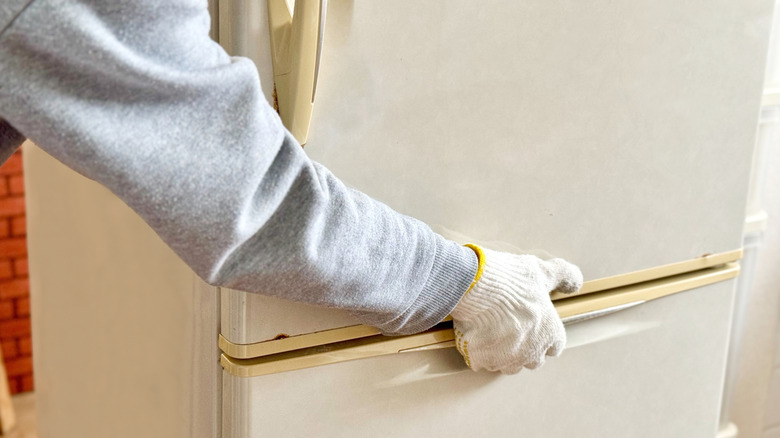
When it's time to throw away appliances that have doors, such as old refrigerators, freezers, and washing machines, there are so many logistics to think about. But the most important one — even more important than figuring out how you'll get it up the stairs or transport it to your local dump — is remembering to take off the doors. Failing to remove them is against the law and could have tragic consequences. The federal Refrigerator Safety Act of 1956 highlighted the potential dangers of old school appliance styles, in particular. It required that refrigerators in circulation after October 30, 1958 had to have a way to open from the inside. This was in response to the child suffocation deaths that occurred when they hid and became trapped. Latch-door models were considered especially dangerous child home hazards for this reason.
Whether you have a retro appliance or a contemporary model with a way to open the door from the inside, the risk for entrapment and suffocation for young children and wild animals is still high, and it extends to any household appliance with a door — washers, dryers, chest freezers, and even mini fridges. Today, many government organizations at state and local levels have very specific guidelines for how to get rid of any appliance in order to protect the safety of wildlife and vulnerable children.
Detach appliance doors yourself or seek local resources
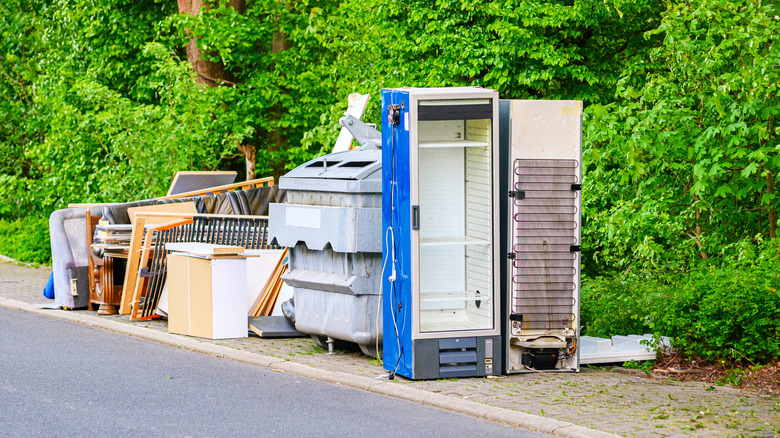
Most appliance doors can come off with the help of a screwdriver or power drill. Make sure to have a helper to hold large appliance doors in place as you unscrew them. An alternative is to tie or tape the doors shut, but removing them will give you the ultimate peace of mind. After you've checked off this step, do a quick online search for nearby recycling centers or drop-off locations that take household appliances. Never leave items on the side of the road or in casual dump spots — this is bad for the environment and could still trap or crush wildlife if tipped over.
It's imperative that you take items to designated spots where professionals can properly clean and recycle the parts. This is because residual coolant and plastic components on appliances like refrigerators and freezers could have potential environmental impacts. When in doubt on how to get rid of your old washer and dryer, refrigerator, or any other household appliance, contact professional haulers to dispose of them for you. If you're instructed to leave the item outside, make sure the doors are off or properly tied closed.