

The Natural Way To Add Privacy To Your Yard Without Fences Or Screens
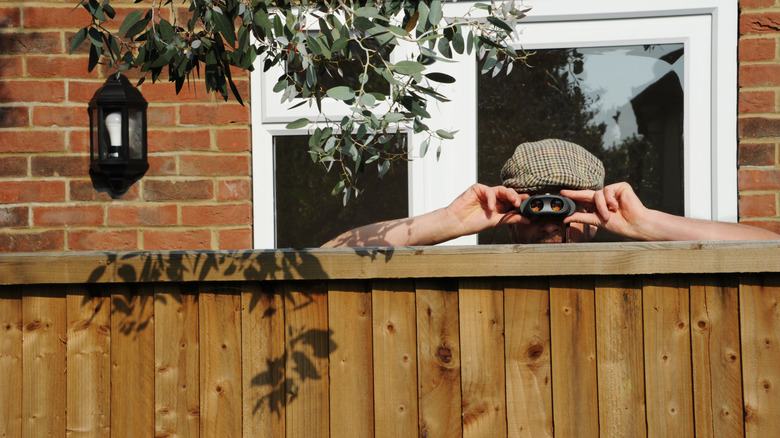
A tall, solid fence gives you instant privacy, but it can also look a bit stark and utilitarian, even though it does its job very well. However, I'm a permaculture specialist, so I prefer a softer, natural look over bare but functional hardscaping. Bonus points if the plants in question are multifunctional. In the case of the Smokehouse apple, it eventually offers privacy as well as food for pollinators and fruit for humans. A few well-placed fruit trees can provide a degree of privacy, but they can take years to fill in and, of course, they're deciduous, so they're only really effective for part of the year. But you can still use them to soften or break up a sightline and give gentle partial privacy. Plus, you'll get flowers, shade, fruit, and seasonal structure.
The Smokehouse apple tree isn't the fastest-growing tree for a natural privacy screen, but it's still a great choice to soften or screen views. It's an old American apple variety dating back to about 1800, discovered by chance as a seedling near farmer William Gibbons' smokehouse in Pennsylvania. It has a distinctive look with long, willowy branches with a lovely, airy arching silhouette instead of the stiff upright growth habit of most apple trees. It also tops out at around 15 feet, depending on the rootstock it is grafted to, with a broad, rounded canopy. So it creates a nice screen until it drops its leaves for the winter, and it doesn't need continual pruning to remain at a reasonable height. The fruits of this apple tree are interestingly dual-purpose. They are sweet, tart, aromatic apples that are good for fresh eating and cooking. Smokehouse apples also ripen fairly late in the season, and they store well through winter.
How to grow a Smokehouse apple tree
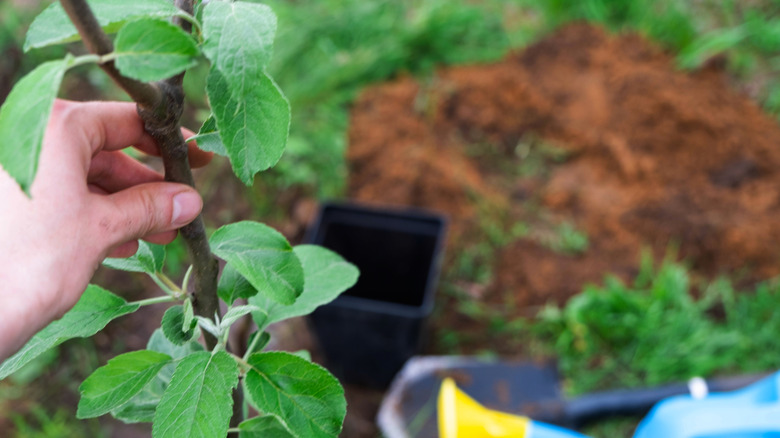
Smokehouse apple trees are hardy in USDA Hardiness Zones 4 through 8, so it's a versatile tree that will grow in most of the country. Planting and growing healthy apple trees requires at least six hours of direct sun daily, and it also requires well-drained soil. It dislikes heavy clay that retains moisture, as well as depressions or the base of slopes where its roots remain wet for long periods after rain. Check the label for spacing instructions, as different rootstocks can have different spacing requirements. Make sure you don't overcrowd them, as you don't want them competing excessively with one another or having a canopy so dense that it struggles to dry out after rain. Even though Smokehouse apples show good resistance to apple scab, other diseases can thrive in a wet, humid canopy that never fully dries.
Once the trees are well established, prune them in late winter before bud break, so they maintain a good shape and a canopy that's open enough for light and air to move through. Do remember that apple trees need a compatible pollination partner. This should be another apple tree of a different cultivar that flowers at the same time. Smokehouse is a midseason bloomer, so it needs to be planted near another midseason or long-blooming apple variety such as 'Summer Rambo,' 'Red Winesap,' or 'Mutsu.' The pollination partner should be within 20 feet of the Smokehouse apple tree. You can combine the Smokehouse with your chosen pollination partner in your privacy screening row.
How to use Smokehouse apple trees as a privacy screen
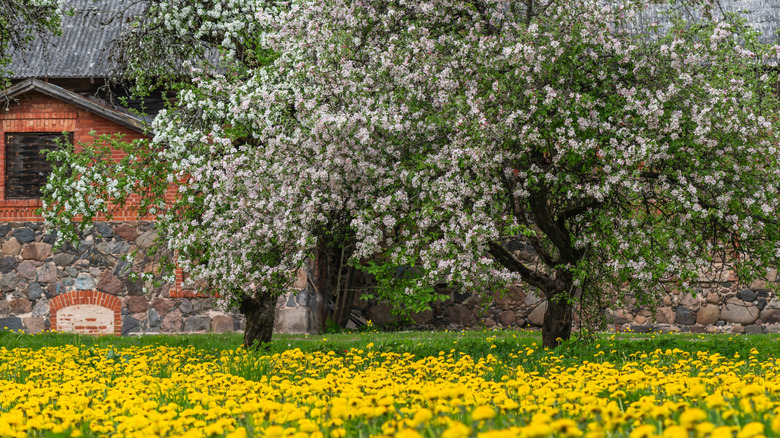
How many trees you need is determined by the size of the screen you're trying to build. Assuming a fairly standard rootstock and trees that eventually mature at about 15 feet wide and tall, you'll want to space them about 15 feet apart. This will look very sparse to begin with, but that's because you're most likely buying a tree that's only a couple of years old and that still has a great deal of growing to do. Spacing them too closely results in unhealthy trees that need more feeding and produce smaller harvests. Within a few seasons, the canopies will fill out and begin to merge in a continuous line.
Don't forget about the pollination partner. When I put a row of apples along one side of my new property to help screen the neighbor's very large fence, I chose to mix in the pollination partners. I chose two varieties that were compatible, and that I knew I would enjoy the fruit from, so I was able to plant them alternating all the way down the line. If you're trying to create privacy without a fence, remember that Smokehouse apples, or any other apple tree, are deciduous, so they'll give you a screen but not a wall. It's enough to filter a view from the street though, or make a front yard feel a bit less exposed. They can help break up sight lines between neighboring properties, too. Even in winter, once the leaves fall, they still break up a view nicely, but they don't give true privacy unless they, like mine, are screening an existing fence.