

Rid Your Plants Of Fungal Disease With A DIY Spray Made From A Kitchen Scrap
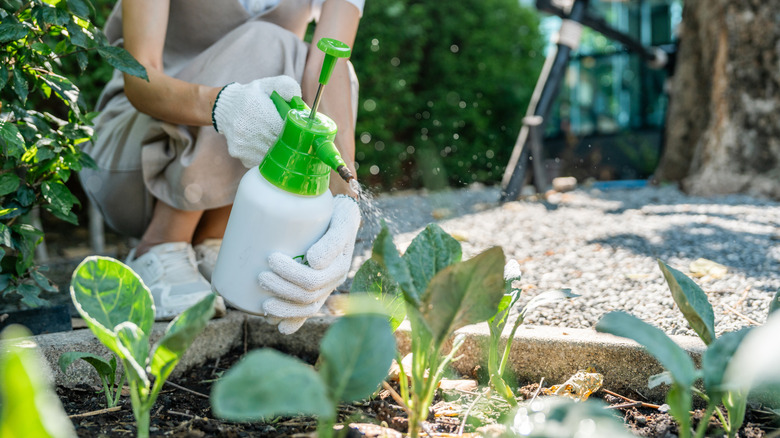
A fungal disease in the garden often appears without warning and can cause devastation pretty quickly in ornamentals. Your beautiful green foliage can suddenly be covered in white powdery or fuzzy growth that works its way up the stem and ruins the look of plants you've spent ages caring for. In the vegetable garden a fungal outbreak can ruin a whole crop very quickly. I'm a Master Gardener with over 20 years of experience in permaculture and organic growing, and even my garden is not immune. A few years ago, a fast-moving disease tore through my entire tomato crop and killed all of my plants in under a week, and there was nothing I could do about it. It was intensely frustrating and quite upsetting as tomatoes are one of my favorite crops to grow.
Fungal diseases can appear on almost any plant, from basil to apples, and are responsible for up to 80% of microbe-related crop loss according to a 2020 study. Depending on the fungus and how quickly you spot the problem, there are several natural alternatives to store-bought fungicide. Among my favorites is a spray made from onion skins, a kitchen scrap that most of us have a regular supply of.
How onion skins work to stop fungal pathogens
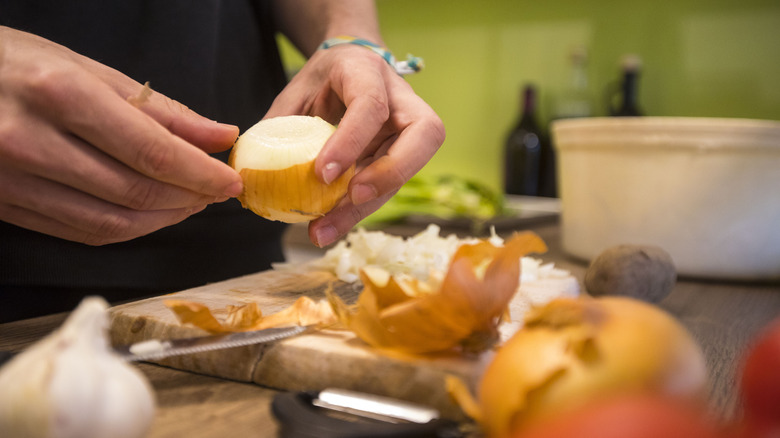
Onion skins contain quercetin, which is a flavonoid compound that's heavily concentrated in the outer layer of onions. Although onion skins contain other useful compounds, a study in the journal Molecules confirms that it's the quercetin in the husks that is the primary source of the antifungal and fungistatic properties. When you steep onion skins in water, drawing out these useful compounds, they end up in the liquid that you can apply directly to your plants. Although this is an old remedy, the science behind it proves that not all natural, organic, and low-cost remedies should be dismissed.
The Molecules study found that although quercetin is the main antifungal component of onion skins, quercetin extract alone was not as effective as onion skin extract in combatting fungi. The other polyphenols and compounds in onion skins may have helped the quercetin be more effective. The antifungal compounds, when extracted in water and applied to plants, disrupt the integrity of the fungal cell membranes, making them permeable and compromising the fungus's ability to function and reproduce.
Using onion skins to fight fungal pathogens is relatively new to me, but it did a great job on a powdery-looking fungus on my cucumber plants in the greenhouse and some fuzzy gray splotches on the pumpkins growing in a newly cultivated bed that was a bit wetter and shadier than I'd like. Onion skin spray may not completely obliterate a fungal infection on contact, but it stops the spread and weakens the pathogen's hold on the plant tissue. It won't reverse the effects, but it stops it from getting worse and gives the plant a stronger chance of recovery, especially if you catch it early.
How to make the treatment
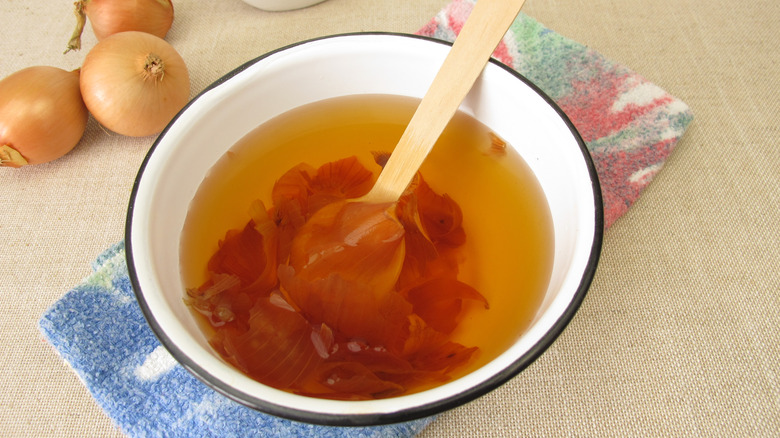
Like most of my favorite natural remedies for the garden, making onion skin extract is super easy, and thankfully much less stinky than nourishing DIY fertilizer teas like comfrey and nettle. Take the dry outer leaves from your onions (about a handful of them), pop them in a jar or pitcher, and pour around 8 cups of water over them. Leave them to steep at room temperature overnight. You can also speed up the process by putting the onion skins in warm water and leaving them for just a few hours. Once they've steeped sufficiently, strain the liquid to remove the solid material and compost the waste. You can then transfer the liquid extract into a spray bottle. The liquid should be a pale amber color. It will last in the fridge for up to a week before the active compounds start to degrade. Although to make sure you get maximum potency, I prefer to just make a fresh batch every day or two.
It's mild enough that you don't need to dilute it further and can just spray it directly onto affected foliage. Remember to spray both sides of the leaves, and don't neglect the stems. Apply it every 2 to 3 days. The earlier you catch the fungal infection, the better, so make sure to look at your plants regularly. This is a brilliant and useful remedy, but it's not a miracle cure. I'd still recommend removing any badly affected leaves or even whole plants before you start treatment, as this will improve air circulation around the plant material that is left and it reduces the overall fungal load.