

10 Of The Biggest Wastes Of Money You Can Spend On Your Lawn
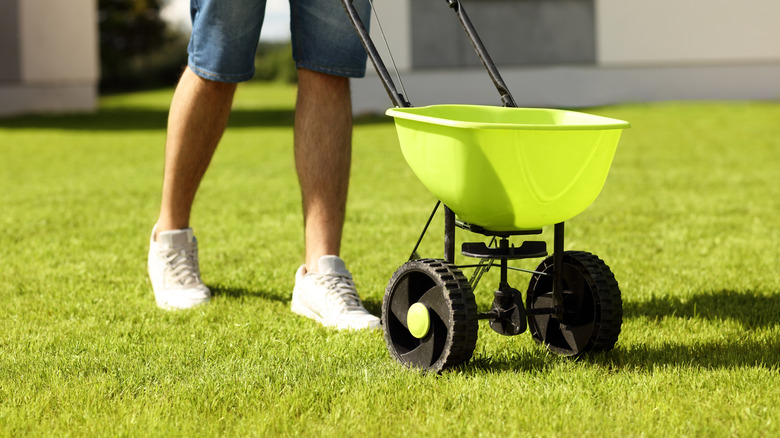
Everyone wants a lush green lawn, and most people are willing to invest a certain amount of time and money into achieving this. However, lawn care can get expensive, and it's easy to pour dollars down the drain (or rather, into the ground) without getting results. It's also easy to fall prey to marketing claims and assume that a pricey lawn input from a big brand is going to save all of your front yard's woes. Yes, there are some essential lawn tools and treatments that are really necessary. But many homeowners end up wasting money treating symptoms incorrectly or buying products or services they don't actually need — or which could be gotten cheaper. Over a lifetime, this can add up to thousands of dollars wasted.
In exclusive interviews, House Digest asked lawn care professionals to identify the unnecessary habits and purchases they see homeowners throw money at the most in the pursuit of a pristine lawn. In general, the pros all agreed that the biggest wastes of money involve doing the wrong things at the wrong time and applying treatments without actually knowing whether the lawn needs it done in the first place. Another common wasteful theme our experts highlight is doing things out of habit, like dethatching every year or feeding and watering too frequently.
Dethatching every year isn't necessary (or healthy) for most lawns
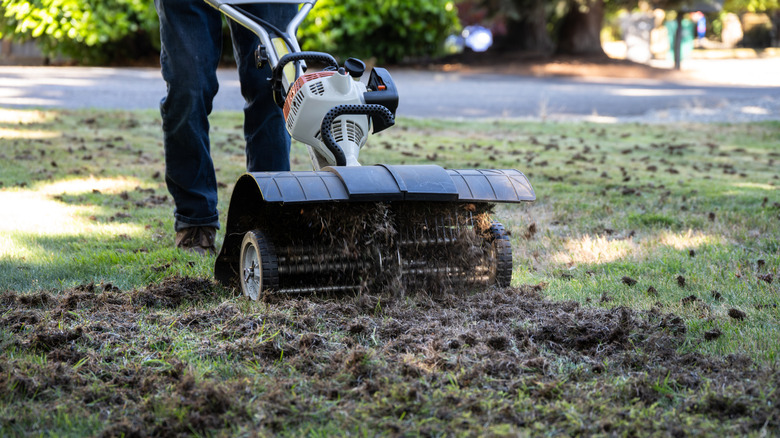
Many people dethatch their lawns on an annual basis out of habit, so they end up hiring dethatching machines or hiring a dethatching service. Most lawns shouldn't need dethatching that frequently. Thatch is that thin layer of dead grass roots and other organic material that builds up on top of the soil at the base of the grass blades. While dense, impenetrable layers of thatch can be detrimental and promote disease, a thin layer of thatch up to about half an inch or so is healthy. It helps protect the soil and plant roots, insulating them from temperature fluctuations and helping the soil retain moisture. It's only when your lawn has excessive thatch that's starting to cause problems that you should consider dethatching. If you properly maintain your lawn and care for it well, it should rarely get to the stage where dethatching is needed
Brian Clayton, CEO of GreenPal, tells House Digest in an exclusive interview that "for most lawns, annual dethatching is a waste of money." He explains that the majority of lawns are better served by a different approach entirely. "In most cases, core plug aeration combined with overseeding does a better job of improving soil health and turf density without stressing the grass," Clayton says. "I've seen plenty of lawns damaged by unnecessary dethatching when they would have been better off left alone." Most people don't realize what dethatching means for a lawn. It tears at the grass blades, causes stress, damages roots, exposes soil and plant crowns, and is shocking and drying. Core aeration removes plugs of soil to open up airflow and drainage, at the same time reducing mild thatch, while letting new grass seed hit the soil surface so it can germinate.
Fuel stabilizers are wasted on frequently-used equipment during the growing season
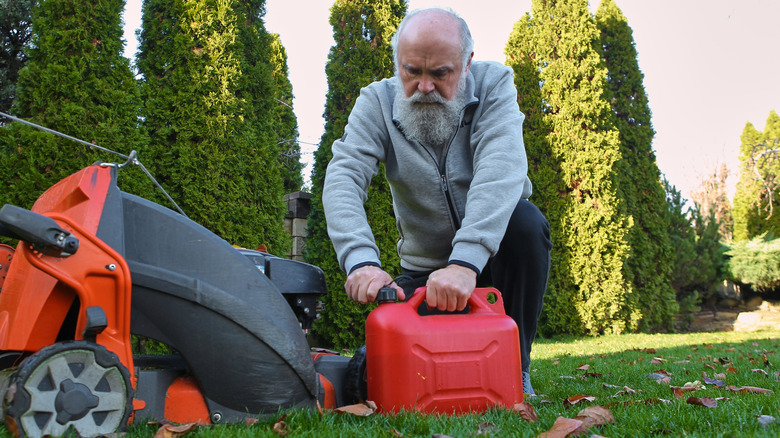
Fuel stabilizers are genuinely useful for gas-powered lawn equipment, but only if it's going to sit unused for a long period. Brian Clayton says, "A lot of people swear by fuel stabilizers for mowers and two-cycle equipment but in my experience they're usually unnecessary." He's not wrong. If you are just adding it automatically to your mower or other gas-powered lawn equipment all season long every time you top up with fresh fuel, you're most likely just wasting your money because if you're cycling through fuel quickly, it shouldn't need a stabilizer.
"If you're using fresh gas and running your equipment regularly during the season, stabilizers don't add much value," Clayton says. "I ran a commercial landscaping company for years and rarely used them." You want to use fuel stabilizers if you plan on letting your equipment sit for a couple of months or more with fuel still inside. Otherwise, you're better off spending your money on fresh fuel and doing regular maintenance like cleaning the air filters and checking your spark plugs at the start and end of each season.
Name-brand fertilizers from big-box stores tend to be pricier (and not always better) than generic options
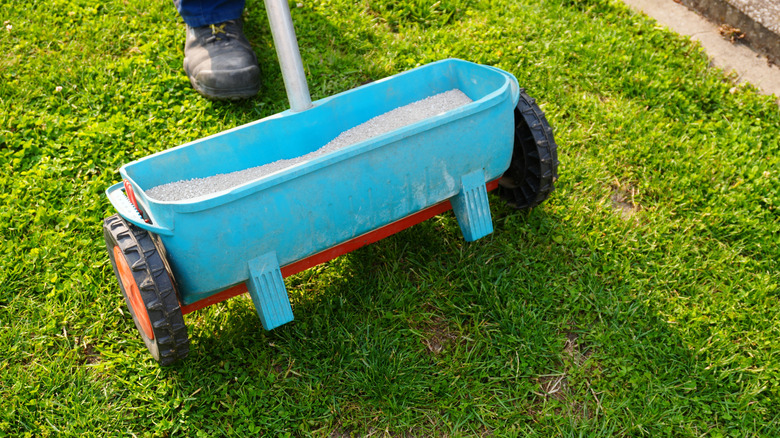
Bags of fertilizer from premium brands at big box stores are well marketed when compared with generic or commercial-grade options, but they're also much more expensive. Which is why it can pay to focus less on the brand name and more on the nutrient analysis, which lists the products' nitrogen, phosphate, and potash content. Brian Clayton says, "Premium brands like Scotts or Miracle-Gro are often poor value. You're paying extra for packaging and marketing, not better nutrients."
That obviously doesn't mean that the cheapest bag is always the best choice, however, or that none of the products from these popular brands are worth buying. But it does mean that you need to compare the N-P-K ratio with the coverage, release type, and whether the product matches your lawn's actual needs. A 12-4-8 fertilizer, for example, contains 12% nitrogen, 4% phosphorus, and 8% potash by weight. As Clayton puts it, "Grass doesn't care about logos. It cares about nutrients applied at the right time." He goes on, "Homeowners are usually better off buying commercial-grade fertilizer from a local supply house or even a generic store brand with a similar N-P-K ratio". Always choose a fertilizer that is best for your lawn's specific needs, and focus on timing applications correctly. A mid-range fertilizer applied at the right growth stage for your grass type will outperform an expensive one applied too early or too late every time.
Overwatering spikes your water bill and opens lawns up to disease and other issues
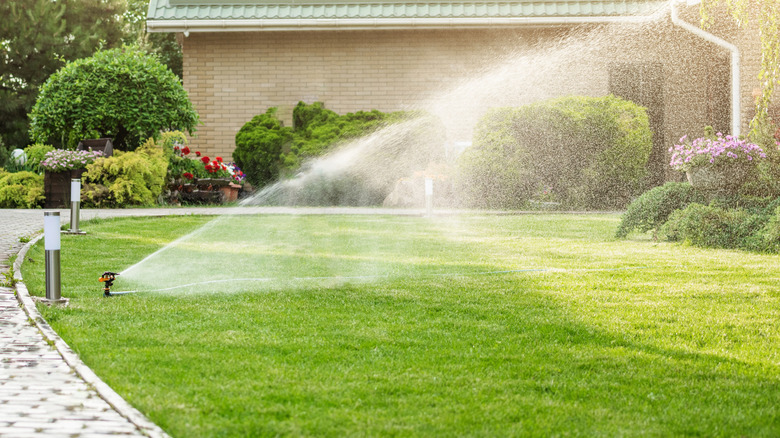
Ryan Walts, training manager and business coach at Lawn Squad, tells House Digest in an exclusive interview that overwatering is one of the most expensive habits he sees. The cost isn't always obvious, but every drop costs money and this adds up over time. Over-watering means that you're spending money you don't need to. Overwatering can also trigger future costs because you leave your grass open to pathogens and to scorching and dying in hot weather. A lawn with shallow roots caused by overwatering can scorch during drought. This might mean you need to pay for treatment or reseeding to restore the damage. "While it may seem logical that more water equals greener grass, excessive watering can weaken root systems, promote fungal disease, and can increase weeds," explains Walts.
Overwatering is a common lawn watering mistake, but it's also an easy one to fix. For a healthy lawn, aim for deep, infrequent watering. This helps encourage the lawn to be self-sufficient. Lawns that are watered in this way tend to have longer roots and be more drought-tolerant as they are able to access moisture and nutrients from deeper in the soil. Frequent, light watering is a surprisingly easy way to kill your grass, as it causes grass to be shallow-rooted and more dependent on you for water and nutrients. To avoid this mistake, aim to give your lawn about an inch of water per week (and less if it has rained). To figure out how long it takes your sprinkler system to do this, you can set up some cups or cans, and time how long it takes for them to accumulate an inch of water when the system is on. If you have free-draining, sandy soil, divide your watering over two or three sessions per week. If you have heavier, clay soil that holds more water, opt for weekly or bi-weekly watering.
One-size-fits-all lawn treatments might not deliver results
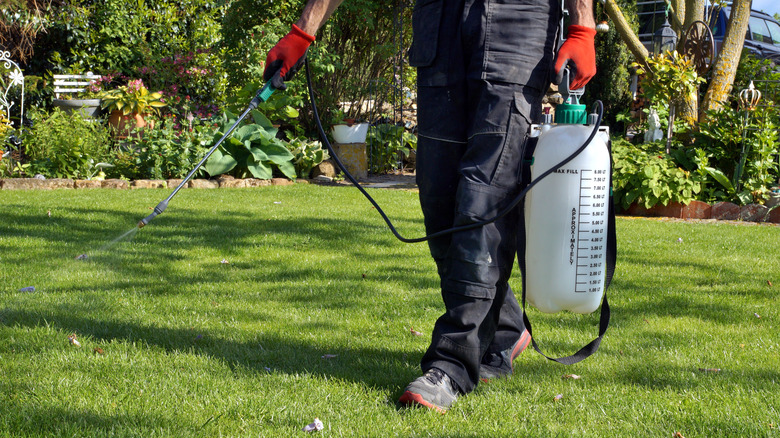
There's a lot of generic advice and lawn treatment products out there — but soil conditions, lawn performance, and climate vary by region, neighborhood, and even yard. A bag of fertilizer or another lawn treatment that's formulated for heavy clay in the Midwest isn't necessarily the best treatment for sandy coastal soil. If you buy a one-size-fits-all lawn treatment that isn't a good fit for your particular lawn, at best you're just overspending and, at worst, you can cause actual damage that you have to pay more to fix.
"Many store-bought lawn products are designed for broad use, not for specific soil conditions, grass types, or regional climates. This can result in over-application, under-performance, or unnecessary spending," Ryan Walts says. A basic soil test will help solve this problem and can cost less than $20. The results will tell you what your actual lawn and soil pH levels are, and nutrient levels too. You also need to pay attention to your local growing conditions, any obvious symptoms your lawn currently displays, and figure out your grass type. Once you've got this information, you can buy the correct product.
Lawn rolling compacts soil, which negatively affects lawn health
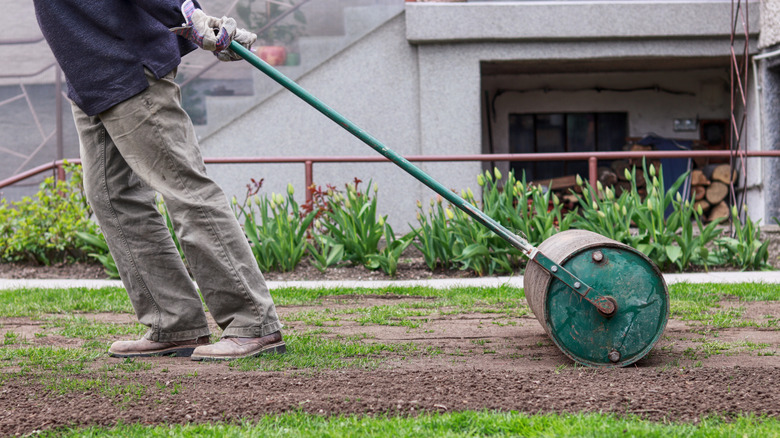
If you've got a bumpy lawn, rolling it with a heavy cylinder roller can understandably seem like an obvious fix, and it will give you a flatter surface right away. But there are a couple of problems here. Firstly, if the uneven lawn was caused by moles or other wildlife activity, rolling is unlikely to cure that problem long-term. The critters that caused the first round of holes, hills, and general unevenness will eventually create more. Secondly, all you're really doing when you try to flatten a bumpy lawn is compress it. This undoes any good you've done towards building a healthy soil and lawn and is actually very damaging.
Co-founder of GreenPal, Gene Caballero, tells House Digest in an exclusive interview that rolling consistently makes lawns worse. Caballero says, "People think that lawn rolling smooths out the yard, but it's actually the opposite. It actually compacts soil and that leads to poor root growth and also drainage issues." Compacted soil doesn't absorb or drain water properly, and grass roots can struggle to push through denser soil. There are fewer air pockets for gas exchange and for the movement of soil life. You'll end up with a thin and patchy, unhealthy lawn that will cost you more to maintain over the long term. The more you roll, the worse it will get. Instead of renting a roller, you need to figure out the cause of an uneven lawn, whether that's drainage issues, settling soil, uneven top dressing, or pest issues. Then you can work to address the root cause and re-level your yard in healthier ways, like top dressing the low areas with compost and then reseeding them.
Applying lime without a soil test can rob your lawn of nutrients
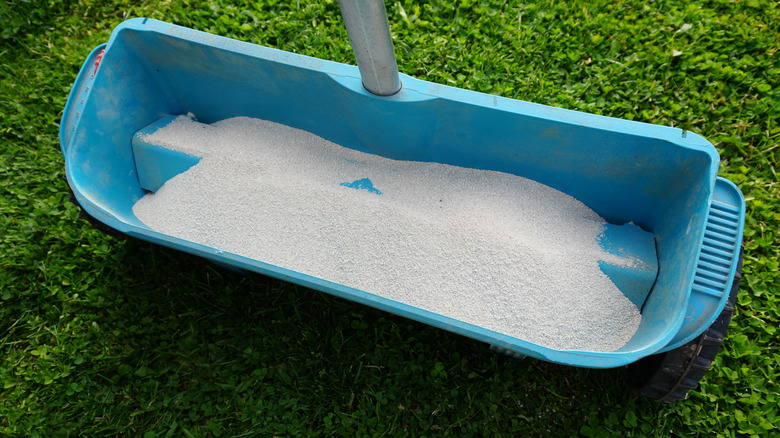
If your soil is too acidic for the grass type you're trying to grow, then lime can be useful to rebalance the pH, but it really shouldn't be used as a general lawn tonic. Gene Caballero calls using lime without testing "total guesswork," adding, "If your pH is already balanced, lime does nothing other than waste your money." Lime is cheap, so it's understandable that when their lawn is struggling, homeowners often think that they'll just try adding some lime. This can be disastrous, however, as lime raises soil pH, and overly high pH comes with a whole set of issues.
If your pH is already balanced appropriately and your turf isn't thriving, then there's a different problem at play. By applying lime, you can raise the soil pH to the point where key nutrients become unavailable, or you create prime conditions for fungal diseases, like summer patch disease. Over-liming is much harder to fix than under-liming, therefore, measuring your soil pH before you reach for the bag of lime is critical. Most turfgrass grows best with a pH of between 6.0 and 7.0.
Weed and feed applied at the wrong time is likely to be ineffective
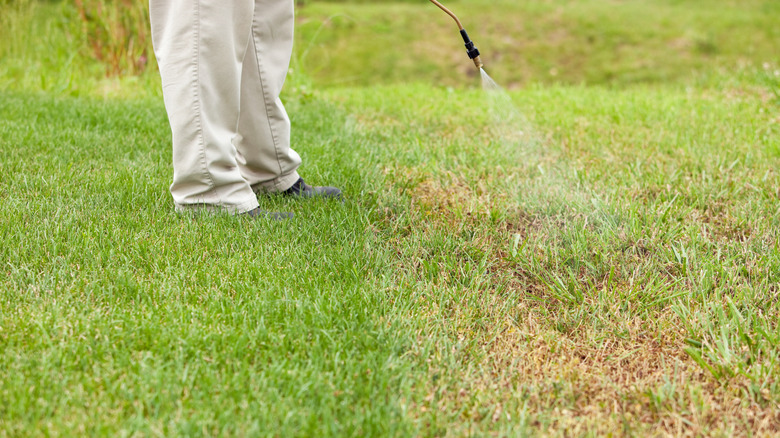
It's tempting to apply weed and feed products heavy-handedly whenever your lawn looks a little bit sad or too weedy. However, these products should be applied at very specific times. Using them randomly whenever you feel like it, or if you think that your lawn looks a bit tired, is just throwing money away. Gene Caballero confirms this, saying, "These products only work when they are timed correctly. Used improperly they miss weeds and can stress the lawn."
Pre-emergent formulas are designed specifically to stop weeds from germinating, and they're next to useless once the weeds are already up. You're just erroneously adding chemicals that your lawn doesn't need. Post-emergent weed and feeds kill off weeds that are already growing, so using them very early or very late in the season is likewise pointless, and again, it's just another wasted chemical application. If you really do want to treat your lawn with chemicals, make sure you know what product to apply when.
Sticking with a traditional mechanical sprinkler system can waste water and trigger expensive lawn problems
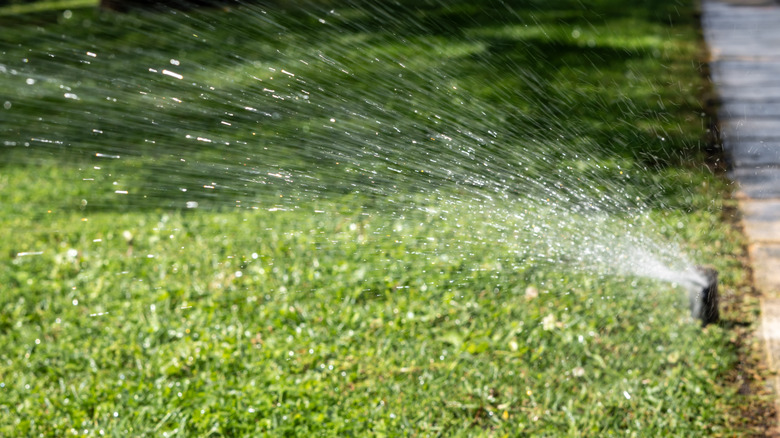
A traditional mechanical sprinkler system is definitely a viable low-maintenance watering setup. But if it's old, outdated, poorly designed, or in need of repair, it can result in years of excessively high water bills. It can also cause lawn problems that, in turn, cost more money to correct. Don Chouinard, an irrigation specialist at Irigreen, explains during an exclusive interview that "traditional, mechanical sprinkler systems aren't very efficient with water usage. They use dozens of sprinkler heads to create overlapping spray patterns, which leads to over- or under-watering." He shares that it goes beyond just the water bill itself, saying, "This waste hits homeowners' wallets hard, especially now that water bills are rising at twice the rate of inflation. But the financial damage doesn't stop at the water bill. These inefficient systems create the exact conditions that cause expensive lawn problems: Overwatering leads to fungal diseases and pest infestations; underwatering creates brown patches and allows weeds to take over."
According to the EPA, residential outdoor water use in the US accounts for nearly 8 billion gallons a day, mostly for landscape irrigation. The EPA also states that as much as 50% of that water could be wasted because of over-watering and inefficient systems. Smart irrigation systems with the WaterSense label are a better, less wasteful option as these can map your specific yard shape, have better sprinkler placement, and can monitor current conditions and weather forecasts so they know whether to water or not.
Overfertilizing, or fertilizing too early can be a harmful waste
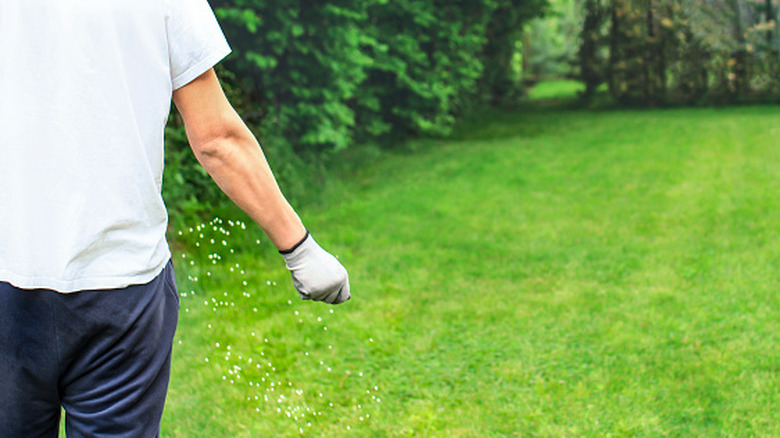
When applied in the right quantities and at the right time, lawn fertilizer can help depleted soil and give grass a boost. However, if it's applied before the grass is actively growing or in quantities that the lawn can't absorb, fertilizers can cause significant stress and harm. In an exclusive interview with House Digest, Chrissie Handley, lawn care specialist and gardening expert at North West Turf Ltd, says that early and excessive application is one of the most common lawn care mistakes she encounters. "If you fertilize too early, the roots won't be ready to absorb the nutrients so it will have no effect on plant growth and will just lead to a higher concentration of nitrogen and salt in the ground," Handley says.
She warns that the collateral damage extends into the soil ecosystem, explaining that high salt and nitrogen concentrations can chemically burn plant roots, earthworms, and other soil life. Handley advises that "fertilizing your lawn should be done sparingly and only when your grass needs it." She warns that feeding too early can also trigger leggy growth. Your money is better spent building soil health and lawn health naturally so that you need less fertilizer overall and your lawn is more self-sufficient. If you need to use fertilizer, make sure you use the right product, at the right N-P-K ratio, at the right time.