

Skip The Hydrangeas: There's A Better Plant For Small Spaces And Attracts Hummingbirds
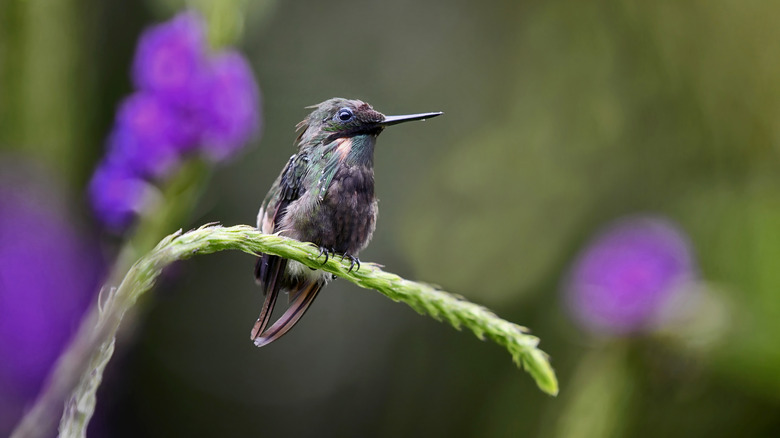
Hydrangeas (Hydrangea spp.) have almost become a default flowering shrub for home gardens — and for good reason. With those gigantic blooms in romantic colors, they're dramatically showy and oh so easy to fall in love with. However, if you're working with a less than spacious yard, hydrangeas can become way more trouble than they're worth. These voluminous shrubs can quickly overwhelm small gardens. Enter mountain laurel (Kalmia latifolia), a perennial that flaunts its clusters of saucer-shaped pink, lavender, or white blooms. The flowers entice hummingbirds, butterflies, and other pollinators, while the rounded, mounding growth doesn't monopolize the landscape. It's a win-win plant for small space gardeners.
In compact backyards, every square foot of space is precious. Although hydrangeas are super pretty, just one of these oversized deciduous shrubs can throw off the balance of your entire landscape design. They crowd pathways and block the view out of windows. Plus, with a maintenance checklist that can start to feel like a part-time job, they rank high among the popular perennials that aren't worth planting, no matter how pretty they are. Mountain laurels, on the other hand, shine in all these areas. They give you the showiness of hydrangeas, and the flurry of hummingbirds and pollinators they bring, but in a more compact plant. This low-maintenance shrub adds lots of color to your space without the constant upkeep. If you're trying to create a space-saving garden that still makes an impact, you can plant a mountain laurel or three without worry.
How to grow mountain laurel for lots of color in small gardens
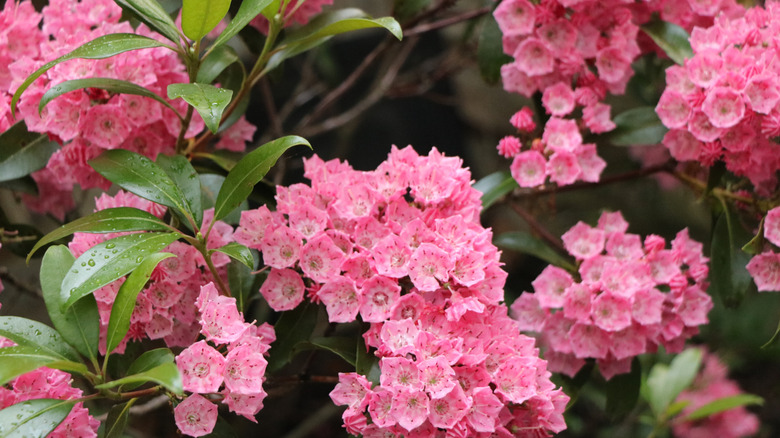
For starters, you'll love this low-maintenance alternative to hydrangeas for your small garden simply because of its abundant blooms and easy-to-maintain growth habits. At maturity, mountain laurel will reach somewhere between 6 and 10 feet tall. Plus, it grows slowly to reach its final height — about 1 foot a year. Of course, like any garden shrub or small tree, you need to know how to care for it before digging that planting hole.
Mountain laurel, which is hardy in Zones 4 through 9, may look delicate. It boasts, after all, fluffy clusters of pretty 1-inch-wide blossoms in pastel hues in late spring and summer. In reality, it's a tough, low-maintenance, native evergreen perennial. Beyond regular watering, this multi-stemmed plant doesn't require constant attention and it's not fussy about light — it will thrive in everything but deep shade. Water it regularly and prune it to the ground in late winter or early spring.
Mountain laurel is also one of the colorful plants that will thrive in your garden's acidic soil, as long as the soil is also well-draining, rich, and loamy. If you're creating a hedge, plant saplings 4 to 6 feet apart to give the shrubs plenty of elbow room. If mountain laurel has one downside, it's that it's highly poisonous if ingested by people, dogs, cats, and horses. To hummingbirds and other pollinators, however, it's an excellent source of nectar and pollen, the latter of which is catapulted out of the flower when an insect triggers a mechanism.