

Ditch High-Maintenance Brick Tile Layouts With A Sleeker Alternative That's Easier To Clean
We may receive a commission on purchases made from links.
There's an old saying that if hard work paid off, the donkey would own the farm. It's a truism that explains a lot, including why even some building materials don't have to work as hard as others to achieve a similarly brilliant effect. Unfortunately, when we use this analogy to explain why there's a better alternative to high-maintenance brick tile layouts in interior design, we're the donkey! With brick, we work harder than we have to for the results we want when we could choose straight stacked rectangular tiles that provide warmth and style while also being sleeker and easier to clean.
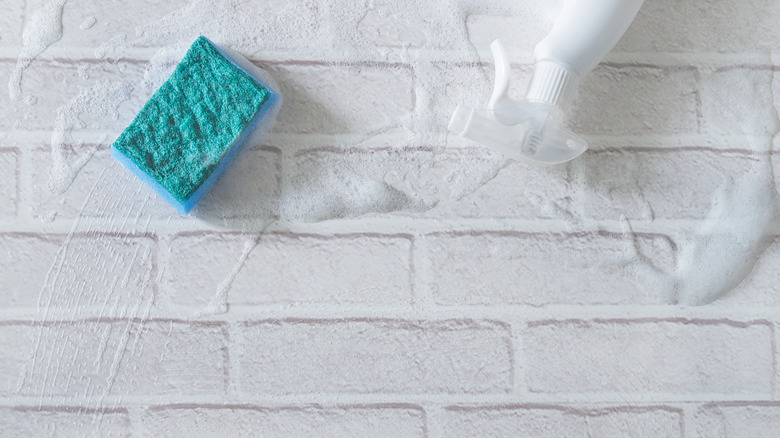
There's a lot to love about a brick-look tile wall. It makes a home feel cozy, and just part of an accent wall is enough to elevate a room and create a focal point. Brick is also highly durable, so you get the texture without worrying too much about how it will hold up over time. However, the downsides are just as sharp. With a rough face and deep grout lines, brick tile is notorious for getting dirty fast and requiring more elbow grease for cleaning.
When House Digest talked to design expert Craig Gritzen about stacked tile layouts that are trending for 2026, he said it clearly, "These offer a clean alternative to brick layouts, helping a space feel more minimal and intentional. Stacking the tile in different orientations and with different textures allows you to customize the look of your space."
Why stacking rectangular tiles is more modern and sleek than traditional brick
There are a few reasons why stacked rectangular tiles can be a better alternative to brick. They're more modern, create a flatter surface, and can even change how we perceive a room's dimensions. Brick tiles installed in the traditional offset pattern are often used in modern interior design, but they don't always read as modern. In fact, brick is a popular finishing surface that's been used for centuries both indoors and out, so it reads as classic or timeless.
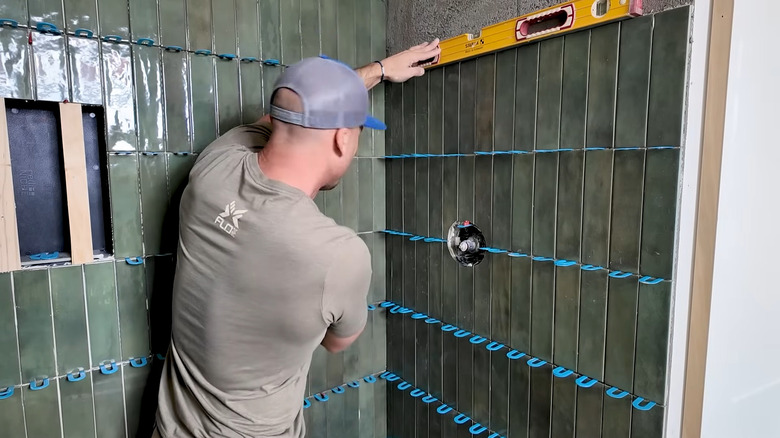
On the other hand, stacked tiles read as more modern and sleek. When you're using a straight-set tile layout, you can achieve a flatter finish because there is less lippage, which is the slight unevenness where one tile sits a hair higher than the next. Offset or running tile patterns, which are the classic brick layouts, are more likely to result in an uneven finish that isn't as sleek or minimalist.
With stacked rectangular tiles, you get the same orderly, linear aesthetic that brick offers, but without the rough finish. But if you're still stuck on choosing the best layout between straight or staggered, Gritzen notes another reason to go with stacked tiles over a brick set installation. Stacked vertically, tiles can make a wall look taller, making them a great choice for adding visual height in showers and bathrooms. And, if you turn them the other way, horizontal stacked tiles can widen a room.
Installing a stacked rectangular tile layout for a custom look
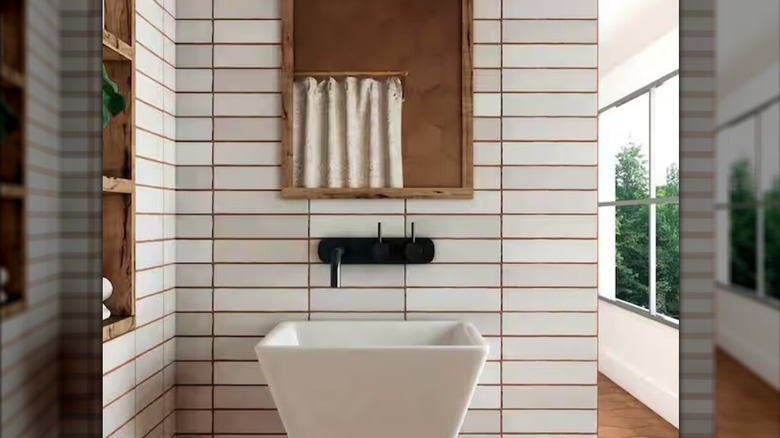
If you love the visual texture of brick but not the upkeep that comes with it, installing a stacked rectangular tile layout is a great way to achieve a custom look. One of the best tile styles to try in your kitchen and bathroom, stacked rectangular tiles are used for backsplashes, shower walls, and wainscoting. They work for everything from small spaces like powder room walls to fireplace surrounds and laundry rooms.
With stacked tiles, you can get the same homey feel that brick offers, especially if you lean into a matte or textured finish, which, according to design expert Craig Gritzen, will be more popular in 2026 than a glossy one. Keep the texture subtle if you're trying to move away from a surface that's difficult to clean and toward one that's more modern.
Once you choose the tile material and layout, you still have a lot of design choices to make when you're installing straight stacked rectangular tiles. For a seamless look that's more minimalist, match the grout. When you use contrasting grout, it outlines each tile and creates a stronger linear effect. This can be useful if you're using the linear impact of tiles to change the proportions of a room, and it offers a unique aesthetic on its own.