

Not Hostas, Not Begonias: The 'Lovely' Ground Cover That's Great For Shaded Areas
We may receive a commission on purchases made from links.
It's so easy to give in and purchase yet another hosta or begonia for the pesky shade spot in your garden, but where's the fun in that? Not to mention, you have to buy a bunch of individual plants or divide them year after year to achieve a lush ground cover. You deserve something more low-maintenance that will do the work for you. If you're ready, it's time to expand your horizons and look beyond the tried and true shade varieties. For this reason, the Catalina currant (Ribes viburnifolium) deserves a closer look.
Also nicknamed the evergreen currant, this plant is native to coastal southern California and most famously, Santa Catalina Island, from which it gets its name. It's an excellent ground cover for flower beds that experience shade, because it still thrives even with minimal sun exposure. It has flowers for the hummingbirds and insects, berries for the birds, and year-round fragrant foliage that keeps weeds at bay, plus it anchors soil in erosion-prone areas. The only caveat is that it requires conditions that are both dry and free of direct afternoon sunlight, since getting waterlogged and leaf-burned are among its least favorite activities (totally understandable).
What is the Catalina currant and can you grow it?
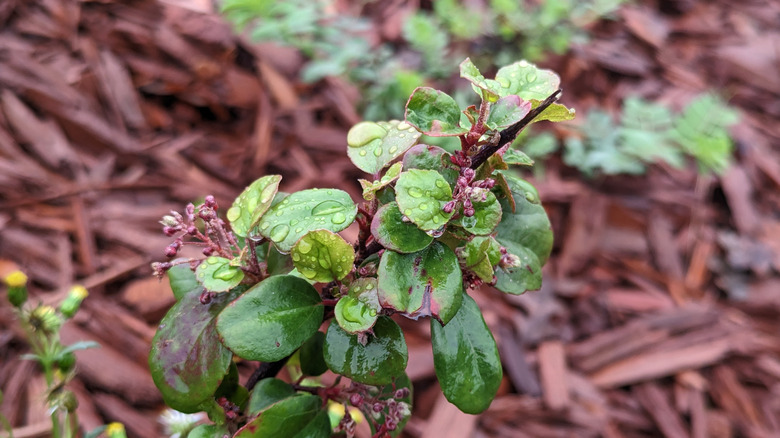
Classified as an evergreen shrub, the Catalina currant grows as a perennial in the Mediterranean-esque climate of coastal SoCal. Each plant can grow up to 3 feet tall, but its real growth lies in its ability to spread. It extends up to 8 feet via its red viny stems, which root into the ground as they move over the landscape. It is also a shade plant that attracts hummingbirds and beneficial pollinators, thanks to its ability to grow tons of small flowers with lots of delicious nectar — even without direct sunlight. It produces reddish-pink-purple flowers from February to April in its natural habitat of California. Once the flowers have faded, it offers itself to the birds, producing red berries all summer. And after this color is also gone, the lush leaves still add interest — they boast a warm, spiced fragrance to enjoy.
You'll be happy to know that the Catalina currant doesn't need a lot of water or specific soil consistencies to thrive. The only exception is areas prone to consistently wet soil. You'll need to help improve drainage by amending the soil with organic matter or adding a feature like a French drain. This is a crucial step if you're trying to grow this plant in wetter climates. It does best in USDA Hardiness Zones 8 through 10. However, it can tolerate places where winters stay above 15 degrees Fahrenheit as long as it's protected and has adequate drainage. In humid environments, it can grow, but might be more prone to fungal diseases. If you live outside of the recommended climate, you may not be able to grow it as a perennial. As a compromise, use this ground cover for spiller interest in containers and pots and bring it inside during cold snaps.
How to grow the Catalina currant in your garden
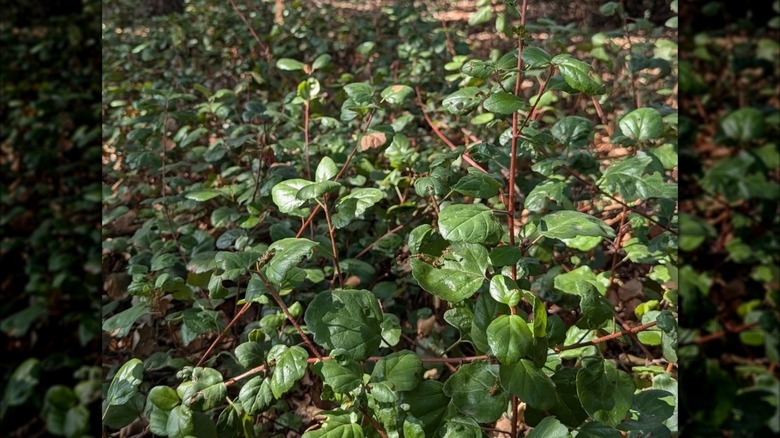
So what do you do if you do live in a suitable planting zone? First, map out the perfect spot for your Catalina currants to ensure that they'll thrive. Due to their shade needs, look for conditions under a canopy of trees or large shrubs. Some of this plant's favorite canopies include oaks and toyon or coffeeberry shrubs. Next, examine your soil. These perennials like a pH between 5 and 7 (not too acidic; not too alkaline; just right). You can get a Soil pH Paper Test Kit on Amazon to make the process easier. If the soil is far above or below the recommended range, you can amend it to get it to a neutral level. Try to plant in the fall so the plants have time to adjust and establish before the warmer months.
If you're planting more than one Catalina currant, make sure they're spaced 6 to 8 feet apart — this placement takes the mature spread of each plant into account and ensures adequate coverage in your shade garden. After getting them established, only occasional water is needed — about once a month in the summer. Pruning can occur after they've finished flowering in the spring. Although you can try to redirect growth by attaching stems to the ground with landscape staples, you can also take pruned cuttings and root them in water or soil. This way, you can fill in bare spots or give baby plants to friends for free! Since the Catalina currant's flowering window only lasts until April, dot the area around it with hummingbird sage (Salvia spathacea), coral bells (Heuchera spp.), and St. Catherine's lace (Eriogonum giganteum) that pollinators can benefit from in the summer and fall.