

Everyone Used It In The '80s — Now It's The Thrift Store Find We Want In Our Homes
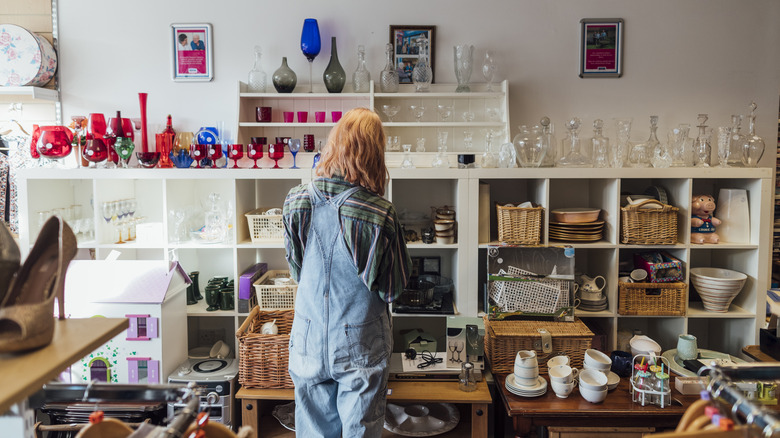
Silverware was everywhere in the 1980s. If you were worth your salt as a host, you had a velvet-lined case of sterling utensils and some silver-plated trays in your China cabinet. Silver serving sets that helped you plate cake and cut cheese were commonplace, and silver champagne buckets were aplenty. People would either register for them for their weddings, inherit them from family members, or invest in them for more important parties and family events.
However, the younger generations had their own styles, and so, when grandma wanted to pass down her hosting collection to Gen X and millennials, they weren't as interested, and it went to the thrift store instead. But now, silver tones are set to trend in 2026, and because of that, silver hosting pieces are coming back into fashion, and people are scouring thrift stores for some deals.
You will most likely find silver-plated pieces at thrift stores, since sterling is much more expensive and likely would have been sold rather than donated. But they still give the same effect, and you can find everything from platters to serving trays to tea sets in the metallic finish. Here's a closer look at the trend, and how to tell if you have something that's silver-plated or authentic sterling.
Silver servingware is coming back into style
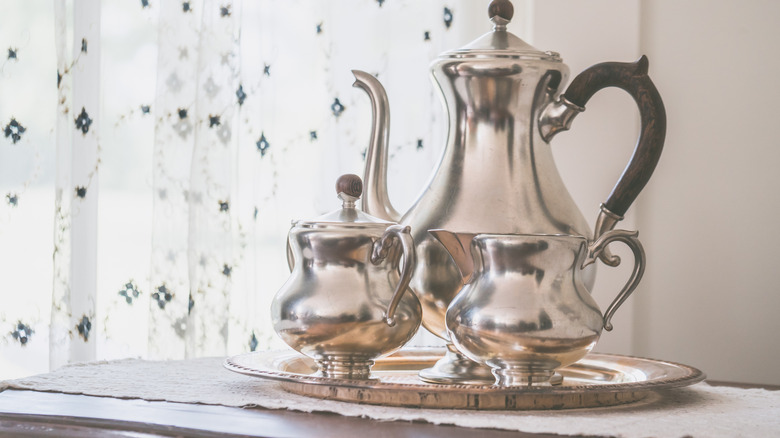
Silver is trending again as a reaction against all of the minimalist servingware we've been exposed to in the last decade. Think of the simple square or oval white platters from Crate & Barrel or the shelves of white ceramic at Target. "It's all cyclical," said artist Laila Gohar in an article by Architectural Digest. "Before we saw sleek, minimal designs that looked industrial as popular and now we're returning to things that are more ornate."
The resurgence is also thanks to younger generations, like millennials and Gen Z. They don't quite have the same reverence for it as older generations, instead seeing it as a valuable item that's only taken out for special occasions like Christmas. "I think younger generations embrace using objects that would traditionally have been put on a shelf to look at," explained Bryony Sheridan, buying director at luxury retailer Abask. This makes it feel more versatile, allowing them to use it for small dinner parties or cocktail hours, which makes it feel worth buying. Not to mention, if you're getting it at a thrift store for between $5 and $20, it doesn't feel like such a risky investment. That makes silverware a second-hand find you should stop overlooking at thrift stores.
Silver pieces aren't just flying off the shelves at your local charity shop or Goodwill, though. They're also trending at chic online retail stores. For example, after CYK Vintage Silver dropped its first antique-curated collection online, it sold out almost instantly. "Eighty percent of the pieces sold within an hour and a half," Celine Yousefzadeh, the owner, told Vogue. They're also going wild at auctions, like when a pair of silver wine coolers was recently sold for a spicy $312,000 at Sotheby's.
What to look for at the thrift store
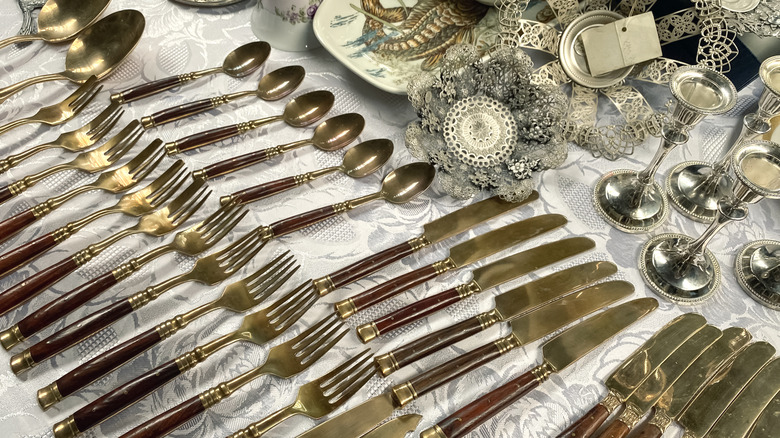
No matter which thrift store you walk into, it will likely have an aisle purely dedicated to all things silver. There, you'll find anything metallic that can be used for hosting, whether it's a huge platter or a set of donated cutlery. However, this aisle typically has a mix of finishes, ranging from aluminum pretending to be silver to sterling silver pieces. You might get wildly lucky and find an actual sterling silver piece buried among the imitation pieces, but to spot it, you'll need to know the differences between the two.
Sterling silver is usually 92.5% silver mixed with copper, which is added to help make the piece sturdier, since pure silver is a soft metal. Silver-plated, on the other hand, is a very thin layer of silver on top of a thick base metal like nickel or copper. It's so thin that it usually wears off in areas that are continually touched, revealing the metal underneath. Because of this, one of the easiest ways to discern if a thrifted piece is silver-plated is to see if there are worn-down spots that reveal a less valuable metal underneath.
Another handy way to check is to look for a stamp on the item. These hallmarks let you know who the manufacturer is, giving a way to look up the metal's composition. However, be aware that seeing a stamp doesn't automatically ensure it's sterling — silver-plated pieces sometimes come with marks, too. Lastly, another easy way to determine whether something is silver is to bring a magnet with you to the thrift store. If there's nickel underneath a silver-plated piece, it will stick (although it won't if it's pure copper underneath). True sterling silver, however, is not magnetic, and will never stick.