

Not Weigela, Not Bluebeard: The Colorful Shrub That Hummingbirds Can't Resist

Flowers that support hummingbirds come in a rainbow of colors, but it's always special to come across a hummingbird-friendly plant in the rarest of flower colors: blue, found in just 10% of flowers. It's even more exciting when a blue flowering, hummingbird supporting plant offers a bounty of other benefits, including being fast and easy to grow. Get to know the evergreen shrub blueblossom ceanothus (Ceanothus thyrsiflorus), with robust blue blooms that resemble lilacs but have a fluffier look. They are also commonly known as mountain lilac, California lilac, and wild lilac.
Blueblossom not only attracts and feeds hummingbirds, but it provides tremendous support to a range of wildlife, including other pollinators like butterflies, and honey bees, and bumble bees. The shrub provides a place for birds to hide and produces berries and seeds that support small mammals and songbirds.
So many gardeners grow these bushes in the Pacific Northwest to attract hummingbirds that they've become associated with the PNW, but they are grown worldwide and are cold-hardy in USDA zones 5 to 9. The shrub, which can grow into a 20-foot tall tree, is drought tolerant and can be used for erosion control and, if pruned accordingly, a ground cover. It also works well in the defensible space portion of firewise landscape. A huge benefit is that blueblossom ceanothus provides one of the ways to add nitrogen to your soil for a healthier garden. It is a nitrogen-fixing plant with root nodules that improve your soil.
Plant fast-growing, easy-care blueblossom ceanothus to attract hummingbirds
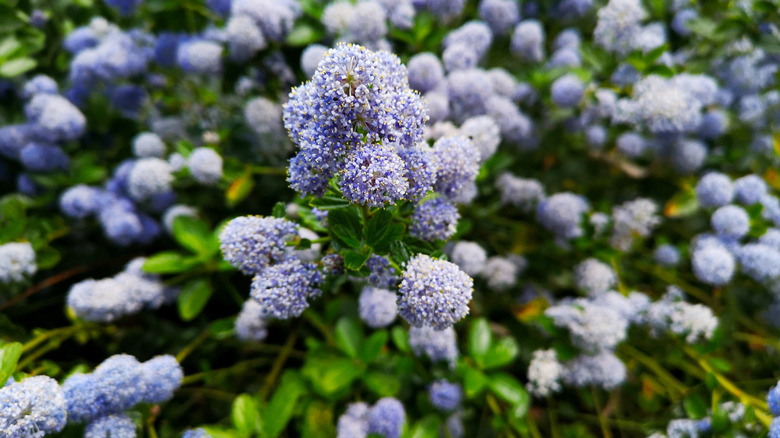
It's easy to grow these flowers that will transform your space into a hummingbird heaven. Planting blueblossom ceanothus from seeds requires a complicated process involving a hot bath and lengthy cold stratification. That's why blueblossom ceanothus is typically transplanted from nursery pots, but since its roots do not like to be disturbed, choose your location carefully so you don't need to move it. You can plant it in a range of soil types, as long as it's moist-to-dry, alkaline, and well-draining. Locating it in a full-sun spot that gets afternoon shade is best.
You could refer to blueblossom as a "not too much" plant, as it requires not too much water, pruning, or fertilizer (no fertilizer is better) — too much of any of them could shorten its life. Water as needed to keep the soil moist as the plant gets established during its first year. After that, it will need minimal or no supplemental watering; in fact, you'll likely doom it to a shorter life if you give it too much water after it's settled in. Avoid fertilizing, which can disrupt the nitrogen-fixing process. Blueblossom should not be heavily pruned but can tolerate a light trim after flowering for shaping or to decrease fuel in fire-prone locales. The most effective way to propagate the shrub is by taking semi-ripe cuttings anytime from mid-July through September. No pests or disease problems are known to plague blueblossom ceanothus.