

Ditch Boring Planters For Amazon's Smart Solution- 'My Vegetables Have Never Looked Greener'
We may receive a commission on purchases made from links.
Home gardeners can attest that there are a bunch of hidden costs that go along with the hobby, especially after you factor in the cost of raised beds, soil and fertilizer, nursery seedlings, and trellises-slash-stakes, not to mention pest control. However, the result of growing your own vegetables, herbs, and flowers is worth every penny. But what if you can still max out your harvests without spending hundreds on traditional raised garden planters? That's where the CJGQ fabric raised garden beds from Amazon could come in handy. They're made of thick, breathable fabric that can hold up over multiple seasons and help aerate plant roots, potentially stimulating growth more than traditional enclosed planters. As one purchaser put it, their vegetables had never looked greener.
They come in four different pack sizes, with the most budget-friendly being the under $10 one pack, which comes with four grids and 2-by-2 feet of total growing space. For context, the largest size boasts eight grids and measures 3-by-6 feet. The two packs of the bigger size come in under $34! The price point alone makes them the perfect affordable alternative to raised beds for beginners or those looking to double up on growing space. The built-in grid system is ultimately what sets this product apart from other fabric garden beds on the market, since their design helps them stay structured and neat.
How to Incorporate this Amazon solution into your garden
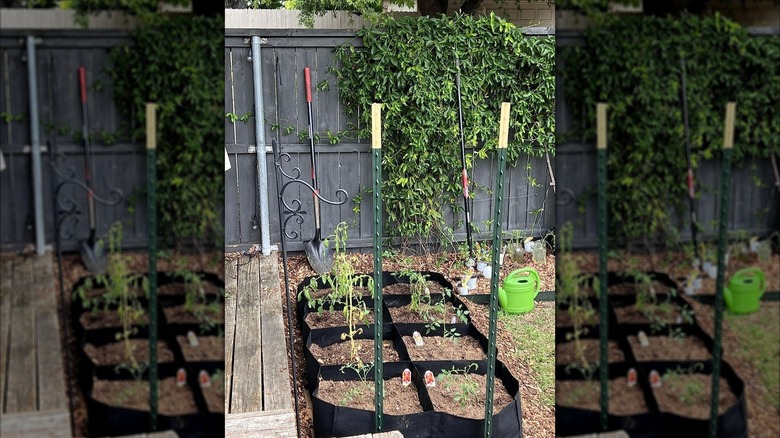
First, map out and measure the space you have allocated for the fabric beds. This will help you determine the right size dimensions and pack number to choose. When you receive them in the mail, unfold them and give them a day or so to lay out after being in the packaging — adding soil when it's time will also help them shape up and expand. Put down pavers or a layer of gravel or mulch if you plan to set them up in the grass. This will help promote good drainage and ensure that water run-off won't create giant puddles beneath and around the garden beds.
There is one thing to keep in mind if you plan to put these fabric raised planters on a deck or patio: where the water run-off and occasional soil spills will go. Since you won't be able to easily move or clean around them once they're filled with dirt and plants, a plastic kiddie pool can act as an inexpensive, large-scale drip tray. Opt for one that's slightly larger than the fabric bed dimensions. For the two-foot planter, this 3-foot kiddie pool from Walmart could do the trick (and it's only around $10). This might not be as doable for the 6-foot planters, but you could try something like this rectangular inflatable pool from Amazon.
Planting up and watering these fabric raised beds
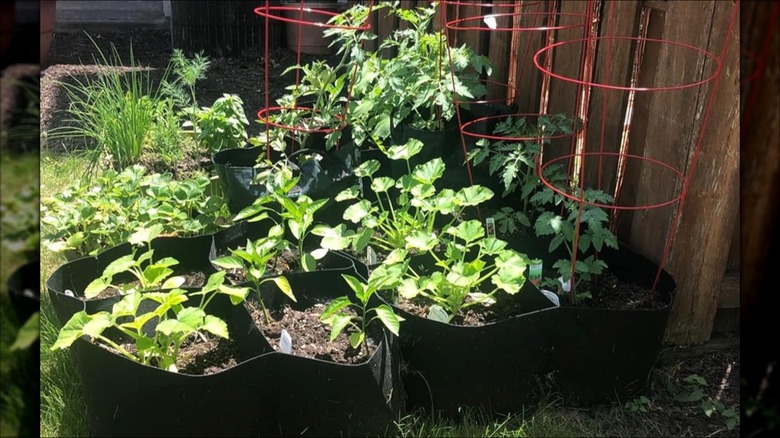
Get planting once you're happy with the setup of your fabric raised garden. Start by covering the bottom of the planters with the same materials used for filling raised garden beds. Adding cardboard, sticks, fallen leaves, and old potting soil (as long as the previous plants didn't have pests) will help bulk them up and reduce the amount of potting soil you have to buy. Not to mention, they'll slowly decompose and contribute organic matter to nourish your plants with. Since each square is 12 inches deep and the bottom of the fabric beds are open, there's plenty of room for basically anything you want to grow. From tomatoes, cabbage, squash, potatoes, and even corn, customers attest that there are no limits to what you can grow in them. Just be mindful of what you plant next to each other, since some plants get along better than others.
The only caveat of fabric raised beds is that because they're so porous, you'll lose soil moisture more quickly, especially on hot days. One way to remedy this is by installing a drip irrigation system. This automated network of hoses hooks up to outdoor water sources and provides a slow, steady drip of water to your plants on a timer schedule that you control. This watering method is much more effective and won't cause water to run out of the bottom like if you top-water fabric planters with a hose or watering can.