

It Was A Staple In North Carolina: The Vintage Chest You Should Never Skip At The Thrift Store

Vintage chests are as aesthetic as they are useful. Not only do they add tons of valuable storage in a room — whether that's housing blankets in a living room or throw pillows in a bedroom — but the carved wood often adds a cozy, lived-in touch to the space. Because of that, wooden chests are mong the most sought-after home items people are snatching up fast when thrifting. While chests come in all sorts of different designs, wood types, and are made by hundreds of different manufacturers, one that you want to keep an eye out for during thrifting is Piedmont red cedar chests. Similar to Lane cedar chests, these trunks were factory-made in the early 20th century and are a beautiful example of American-made craftsmanship.
Made by the Piedmont Red Cedar Chest Company, they were originally produced in Statesville, North Caroline, just 40 miles from Charlotte. The company was active from the early 1910s until the late 1920s, so the designs reflect what was popular in the early 20th century. The red cedar was sourced from its home state or nearby Tennessee, and shoppers could buy one of its chests via a catalog, which helped buyers save on "middleman's profits", according to the brand's catalog. Here's how to spot one when thrifting.
How to find a Piedmont Red Cedar Chest Co when thrifting
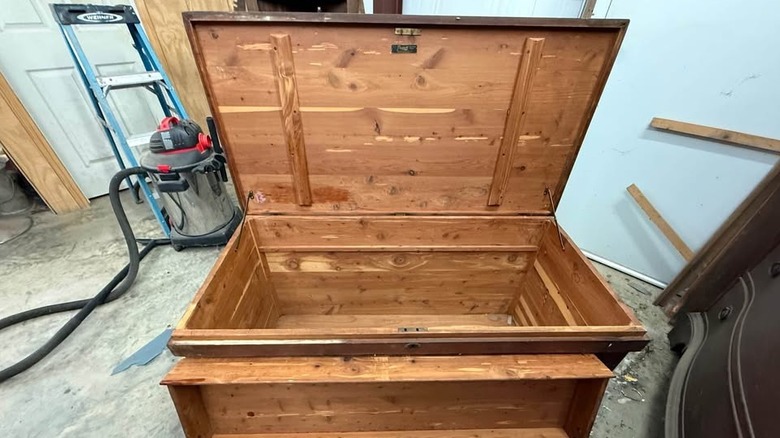
The Piedmont Red Cedar Chest Company is one of the vintage brands that are always worth buying at the thrift store, but how do you know the chest you're looking at is the real deal? First thing is first: look for a maker's mark or serial number. One very obvious way you will know that the chest in question is a Piedmont is if you find a metal plate on the lid that has the words "Piedmont Red Cedar Chest Co." stamped on it. It will also be made from authentic red cedar. Cedar usually has a slight woodsy scent, but the scent may have faded after over a hundred years of use. However, another telltale sign the chest is made from cedar is its color. Look for a two-toned wood that mixes a rich red with creamy veining.
If there are no identifying plates or serial numbers on the piece, you can also try cross-referencing it via one of the brand's catalogs. You can access them on the Internet Archive (like this example from 1910). You can flip through the offerings and see if the chest you found is identical to any of the illustrations. For example, one of the brand's defining pieces is a chest with brass rivets outlining the box's lines. If you find one that looks just like it, it can very well be an original. However, keep in mind this doesn't guarantee provenance, especially if you find a piece that is simpler and more non-descript.
Why you shouldn't pass it up while thrifting

You don't necessarily want to seek these chests out for their value, since they aren't worth a steep price. You can typically sell them for $100 to $300 — though thatcould still be a tidy profit if you buy them for a steal at the thrift store. However, one could argue that its true value is its history. While Piedmont Red Cedar Chest Company isn't as well known as Lane for cedar chests, it's still a part of American history. Factory-made with real cedar wood over a hundred years ago, it's valuable to know that the chest you found has been used as everything from someone's hope chest to a family's hallway storage for generations.
They're also great storage units. In the end, these pieces of furniture are big chests, and you can store a ton inside them. You can use this vintage furniture piece to store blankets in the living room, or move it to a guest bedroom to stash away extra pillows or duvets. You can put it in a vintage-inspired nursery to hold toys, or move it to the living room to hide away pet toys when not in use. You can even keep it in your hallway to stash surplus backpacks, shoes, or winter accessories like scarves and hats. The options are limitless.