

Not Queen Anne's Lace: The Annual Flower That'll Add Beauty To Your Yard
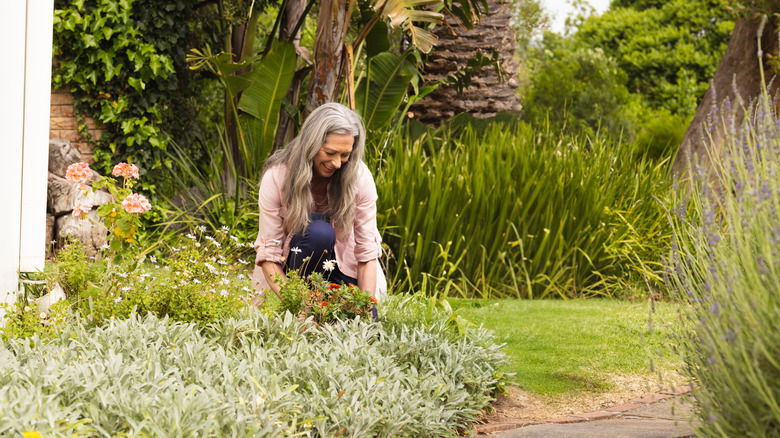
Whether you're trying to plug bare patches between recently planted perennials, create a big splash of color in a container garden, or foster flowy drifts of blooms on a slope, you're probably shopping for flowering annuals. They might not last beyond a single season, but they establish fast and bloom voraciously, delighting gardeners for the short time they're around.
Our gardens — and our lives, let's be honest — can always do with a touch of ethereality, whimsy, or romance, and we rely on age-old staples like Queen Anne's lace (Daucus carota) to bring that vibe. However, despite how pretty this plant is, it is notorious for outcompeting native plants. It is considered a noxious weed and invasive in many U.S. states. You can instead grow the lookalike annual ammi (Ammi majus), which self-seeds with abandon, but in a controllable fashion.
Ammi may not be able to boast about being the subject of the Queen of England's lace-making contest win, nor does it feature a purple spot in the center of its flowers, which symbolizes the blood the queen's spilled when she pricked her finger on a needle. It does, however, look similar enough to its royal cousin (both species are in the carrot family) to earn the common name of false Queen Anne's lace. Ammi features ferny, wispy green foliage and snowy umbels — flower heads with several clusters of tiny white flowers that bring more pollinators into your garden and more beneficial, pest-hunting insects. In this way, the plant can work as a natural pest control in your yard.
Choosing the right ammi for a gorgeous display
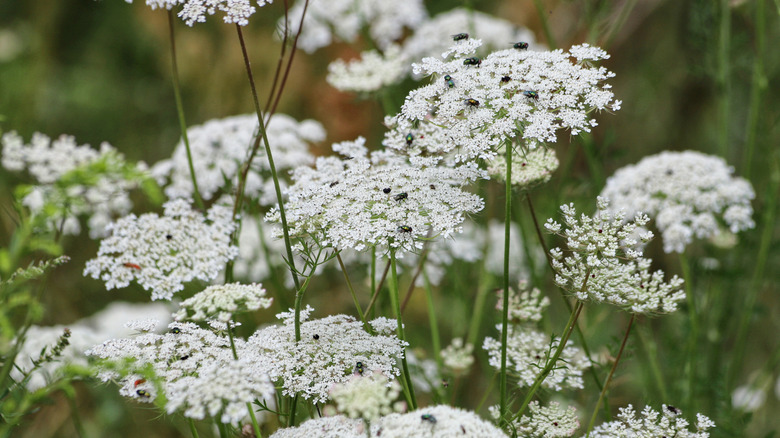
Before you head to the garden center for seed packets or seedling plugs, you need to decide which Ammi species you prefer. If you're looking for a classic Queen Anne's lace lookalike, choose greater ammi (Ammi majus) — the plant also goes by bullwort, common Bishop's weed, white dill, and herb William. If you get greater ammi seeds in the ground after the last spring frost, you can expect blooms in summer. Sow new seeds successively throughout the growing season to make up for the plant's relatively short bloom time. The seeds can germinate in as little as a week, and the entire seed-to-flower cycle takes 12 weeks. If your area has a short growing season, invest in plugs instead, which you can plant in your garden as late as June in cooler zones.
However, if you find Ammi majus — and, also, Queen Anne's lace — too dainty for your liking, consider a species with fuller flower heads. Toothpick weed (Ammi visnaga) sprouts robust flower clusters and is a reliable bloomer even in hot summers. The clusters of white buds will last through to fall. A word of warning: Some people find the scent of toothpick weed distasteful, so give a plant a sniff at the nursery before you invest. Like greater ammi, it will grow over 3 feet tall and spread up to 2 feet wide. You're more likely to find the popular cultivar 'Green Mist,' with its green-tinged umbels, at garden centers. Plant it anywhere you would greater ammi — or Queen Anne's lace, for that matter.
Ammi's care, caveats, and design layout
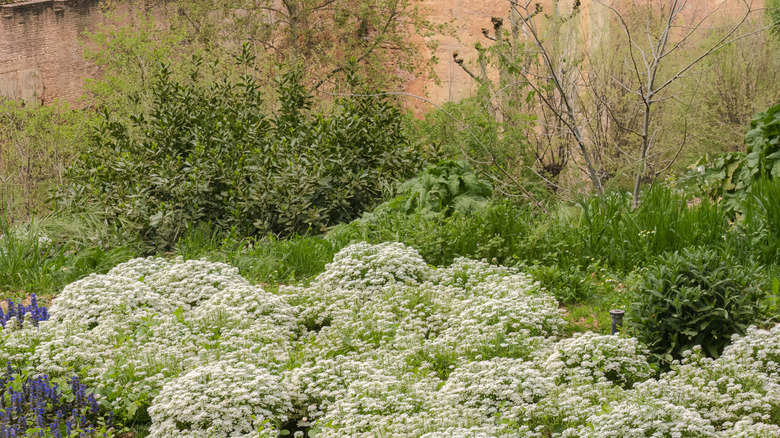
Whichever Ammi species you choose, this annual is highly versatile in gardens. For a start, it isn't fussy about soil pH or type, and it performs just as well in sunny and lightly shaded sites. However, the bed or container must drain well, and you need to mulch the root zone to improve moisture retention and insulation. Water a new ammi well until it settles into the location. After it's matured, it will only need occasional supplementation during dry periods. Ammi typically withstands most pests and diseases, though you need to watch for signs of powdery mildew in humid areas. Cats, dogs, birds, horses, and livestock may experience photosensitization after consumption of Ammi species, so choose your planting location wisely.
The lacy white ammi blooms complement almost any flowering plant. Even when it's not in bloom, the delicate, ornate foliage adds texture to mixed or cottage garden borders. Use it to draw the eye to a certain area or add vertical interest to a bed. Note, however, that this pretty annual can grow top-heavy, especially in exposed locations. You can support floppy growth with netting. To curb self-seeding, trim the plants right after blooming. Ammi flowers are perfect for a cut flower garden. Harvested at the right time — when about 80% of the flowers on the head are open — they last for up to 10 days in an arrangement. However, wear gloves when picking the blooms because the sap the stems release can irritate the skin, especially on a sunny day. You can use the feathery leaves in bouquets, too.