

What Is The 80% Rule For Circuit Breakers?
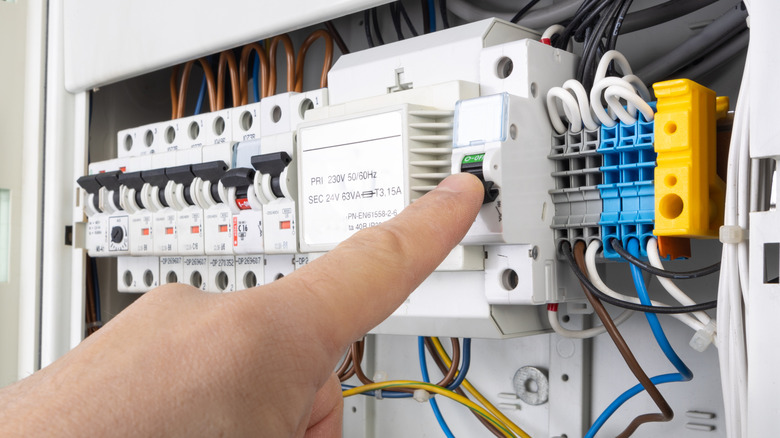
Most homeowners know where their breaker box is, but they can be a little bit scary. So many would rather leave it alone whenever possible. Nevertheless, it's a good idea to understand what it does, and our article on everything you need to know about circuit breaker boxes has lots of useful information. Something that isn't mentioned, but which you may have come across, is the 80% rule. This safety guideline is part of the National Electrical Code (NEC) set out by the National Fire Protection Association (NFPA). It says that the load on a circuit breaker should never be more than 80% of its stated capacity continuously. Okay, but what does that mean, and how could it affect you?
Circuit breakers are rated in amps, which is the amount of electrical current they let through before they trip. Usually that current switches on and off regularly (like boiling the kettle or washing clothes). So there isn't a continuous load over, say, 3 hours or more. Something like a TV, which might be on all hours of the day or night, is fine because it only draws a couple of amps. Problems arise when an appliance runs at, let's say, 90% of the breaker's rating for several hours. There's no sudden surge, so the breaker probably won't trip, but it will overheat. Typically it will stop working, but it could cause a fire. The 80% rule prevents this, so your home stays safe.
How does the 80% rule for circuit breakers affect you?
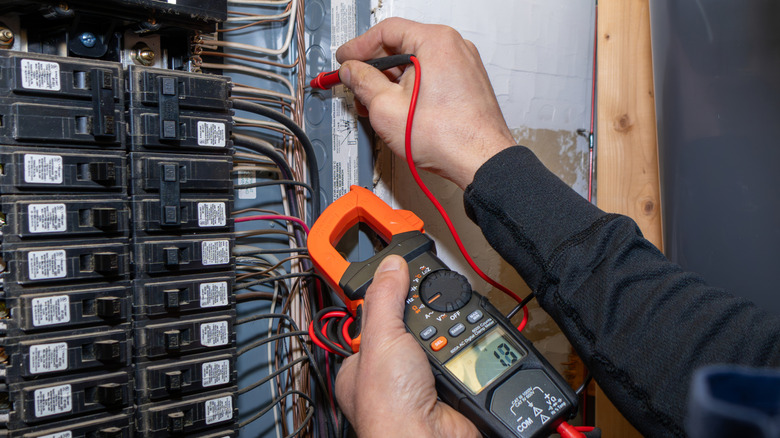
Whoever installed your breaker box should have known all about the rule and taken it into account. So if circuit breakers aren't overloaded, it may never be an issue. If you try running a couple of space heaters or portable air conditioning units off the same outlet using a power strip, you'll probably get "nuisance tripping." It's basically your circuit breakers telling you you're pushing your luck. However, there are warning signs when a breaker is bad, and that could be the cause, so it's always worth checking.
If the tripping happens over and over again with something you rely on or need to use regularly, then it's likely your device is breaking the 80% limit and either the breaker or the panel needs to be upgraded. This is one of those electrical projects you shouldn't attempt unless you're a professional. It's not something you should tinker with or guess at.
If you have, or are thinking of purchasing, an electric vehicle (EV), you'll want to think about the charging installation because that 80% rule could have a considerable impact. Charging your EV is one of those continuous processes that can take circuit breakers to their limit, and ensuring safety could mean lower amps are delivered. That means longer charging times. Your dealer should advise on the right kind of installation and whether a circuit breaker panel upgrade is required.