

The Biggest DIY Mistake You're Probably Making With Plumbing
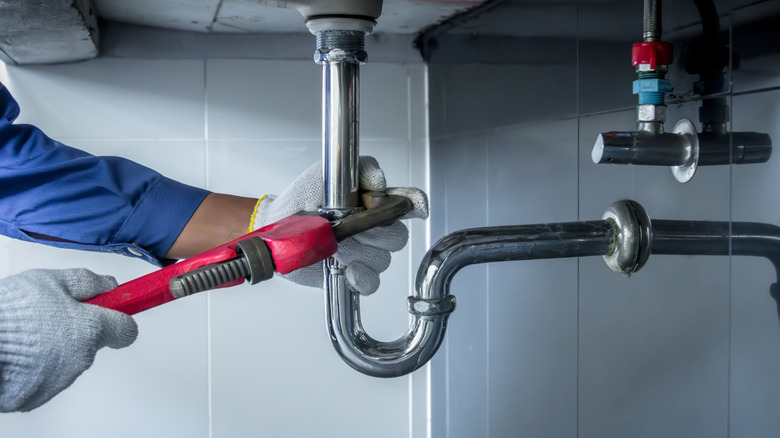
Tackling plumbing issues on your own can be a daunting task. Hiring a professional plumber to resolve what should be an easy-fix can also rack up quite a high bill, which is why homeowners often turn to the Internet to try to DIY anything to do with their water system. While some minor issues can be resolved with a little bit of plumber's putty and a roll of plumber's tape, simple fixes can turn into more expensive messes if you forget to take some important steps when trying to troubleshoot and fix a leaky pipe or a constantly-running toilet. Among these important steps? Turning off the water supply before taking your tools to your water pipes. Forgetting to turn off the water valve is the biggest (not to mention expensive) DIY mistake you can make when attempting to do any sort of plumbing.
This plumbing mistake can cause more damage than you think. Forgetting to turn off the main water supply to your home can cause major flooding due to burst pipes or leaky water valves. All of this headache and financial despair can be spared by simply turning off your water supply — a task that is a lot easier than you'd think. Most water sources in homes have an individual shutoff valve dedicated to that specific water-dispensing appliance. In addition to the individual valves, there's also a main water shutoff valve that cuts off the water supply to all of these solo valves all at once. For repairs done to specific sinks or toilets, turning off the designated water valve will often suffice. You can also just turn off your house's main water shutoff valve to cut water off completely.
How to turn off your water supply
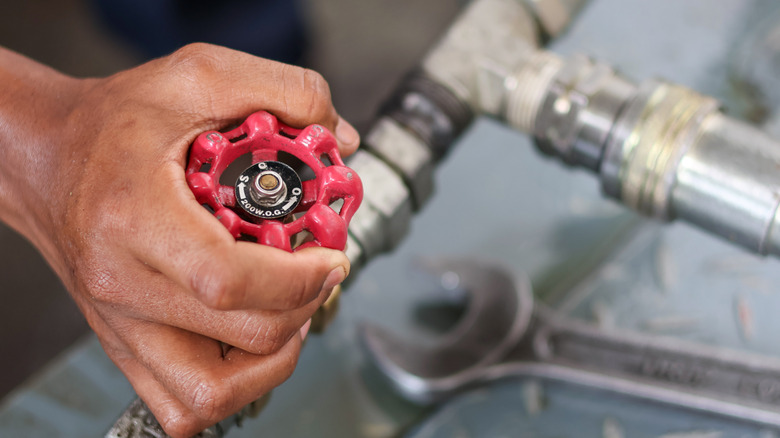
To cut off your water supply, first locate the specific valve for the plumbing you're working on. These specific, localized valves are usually found close to the faucet, toilet, or water heater they supply. Once located, turn the knob or latch clockwise to turn off the water. Alternatively, you can just turn off the main water shutoff valve, preventing any water from leaking into or flooding your home while you do your repairs. This valve can often be found outside, close to the water meter or, if you live in a colder climate, inside your home in the basement or the back of a closet. If you're turning off the water supply to a water heater, make sure to also turn off the power to the heater to avoid damage to the appliance.
If you try tackling a plumbing problem on your own without turning these valves off, once water starts free-flowing through, it's nearly impossible to stop until it's too late — a mistake that can cost hundreds, if not thousands of dollars. By taking the time to locate and turn off the water supply prior to tackling any plumbing, you're reducing the risk of flooding, leaking, and causing overall water damage to your belongings and home.