

Not Blue Mistflower: The Similar Annual Flower That Will Fill Your Garden With Butterflies

Blue mistflower (Conoclinium coelestinum) can make a stunning addition to your yard, with this perennial attracting a wide variety of butterflies. However, when you're planning out how to start your own pollinator garden, you may instead wish to fill your specialized outdoor haven with annuals instead. Fortunately, that doesn't mean you have to forgo the butterfly-appeal of the Cococlinium genus altogether. Instead, this variety can be grown as annual or perennial and also attracts butterflies, all while still sporting vibrant tufts of colorful flowers.
Also known as Gregg's mistflower, Texas ageratum (Conoclinium greggii, previously C. dissectum and Eupatorium greggii) is an flowering groundcover that both butterflies and bees love, which makes it perfect for attracting more pollinators to your garden. While not the same as blue mistflower, they are within the same genus and sport similar appearances and wildlife appeal. Texas ageratum blooms throughout the summer and fall, showcasing medium-sized tufts of fussy blue or purple flowers. They can grow up to 2 feet tall as well, making them a true thriller flower in the garden. This is especially true when they successfully attract butterflies to add even more life and vibrancy to your outdoor spaces.
Overall, ageratum is considered easy to grow. As a result, it can be a good plant for beginner gardeners looking to add a colorful butterfly magnet to their garden. However, even easy to grow plants require some specific conditions, and brushing up on the care requirements for this plant often leads to more optimal blooms — and thus more butterflies.
How to grow Texas ageratum to attract more butterflies
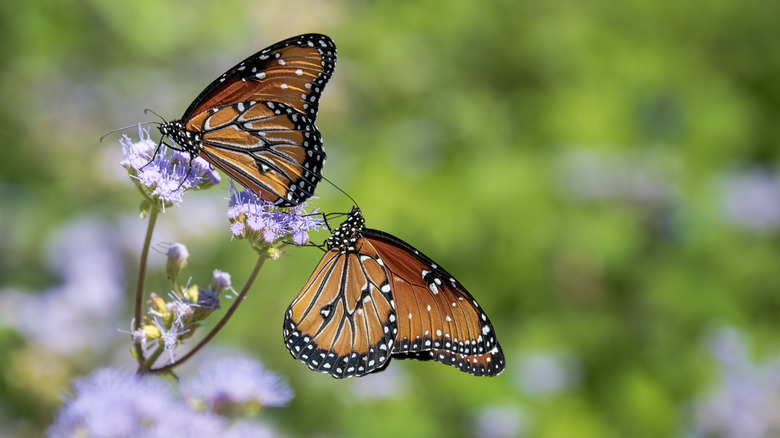
If you choose to grow Texas ageratum as an annual, you won't need to worry about USDA growing zones. However, since it is a perennial, knowing what areas it can survive the winter in may help determine the best way to grow and contain this plant, especially if you don't want to risk it returning to your garden next year. Texas ageratum is only winter hardy in a small region, from zone 7 to 10. In the right habitat, Texas ageratum can be a bit aggressive, so you may need extra care to keep it from spreading in areas it could grow as a perennial.
Overall, Texas ageratum doesn't require much to thrive in your garden. As a result, you can spend more time enjoying the butterflies it attracts and less time maintaining a high-maintenance garden. It grows in both full sun and partial shade, meaning it works in various places throughout your yard so long as it gets a few hours of direct sunlight each day. As far as soil goes, choose a medium that offers ample drainage. Texas ageratum is drought tolerant, and thus it can handle the occasional dry spell in your garden. However, providing it with the adequate amount of water and helping it thrive, not just survive, often lends to better flowering results, which is essential for attracting as many butterflies as possible.