

The '60s Garden Movement That's Making A Comeback In 2026
Some gardeners worry only about aesthetics, while others are obsessed with growing the perfect rose bushes. But one garden movement, born in the 1960s, puts native plants at its heart. The native garden movement took off throughout the decade, with strong local participation in southern and northern California. Although this initiative never truly went away, it is making a comeback in more mainstream circles around the United States.
Native gardening focuses on landscaping with native plants, defined as species indigenous to a given area. Something as simple as choosing native plants can turn your yard into a safe haven for fireflies or support indigenous pollinators for a healthier ecosystem. The idea to incorporate plants into home gardens and landscapes really coalesced in the 1960s, with California leading the way with the Theodore Payne Foundation for Wild Flowers and Native Plants, founded in 1960, and the California Native Plant Society (CNPS).
But growing native plants was also promoted nationwide by First Lady Lady Bird Johnson as a component of her Beautification of America initiative. The push to choose more native plants, especially over non-native or invasive species, has never really ended. But there have been renewed ideas about how any gardener, even casual gardeners, can participate. Plus, in recent years, more states and regions have provided resources to make it easier for local gardeners to learn about and acquire the right plants.
A resurgence of the native garden movement
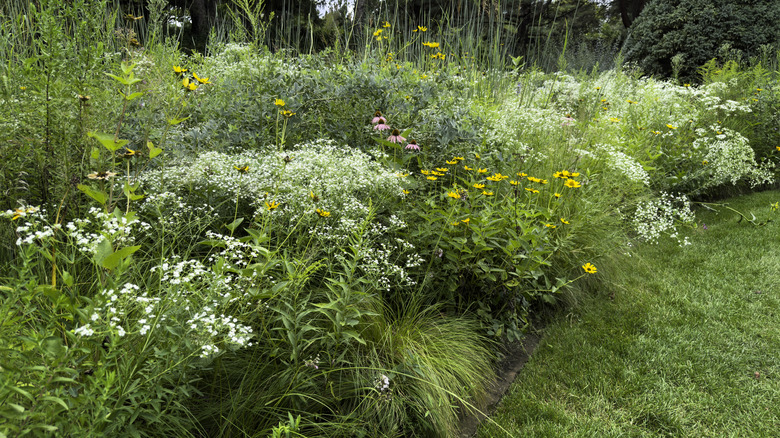
In 2026, more gardeners are deciding that native plants are a good thing for their homes. In 2023, the National Wildlife Federation found that 28% of adults in the U.S. are buying plants beneficial to native wildlife, and 17% of adults are buying plants native to their region.
Some of the best resources to get started with native gardening come from organizations local to where you live. Just like the California Native Plant Society, other states have their own groups dedicated to promoting native plants. For example, the Indiana Native Plant Society was founded in 1993 and offers education and outreach specifically on native plants in that part of the U.S. An organization near you will have the best tips for plants that work in your specific area, where to buy indigenous plants, and how to attract native pollinators common in your region.
Adding native plant species to your landscape is one way to embrace a rewilding landscape in your own yard, an increasingly popular way of restoring ecosystems. But joining the native garden movement does not mean you need to go all-in or completely remove non-native plants from your yard. To start, the benefits of adding a few new native species to your garden are all you need to focus on. For example, native plants are typically better adapted to your region's conditions, support better stormwater drainage, and prevent harmful erosion.