

Ditch Boring Pavers: The Floral Driveway Idea To Add Visual Interest To Your Yard
We may receive a commission on purchases made from links.
If you're looking to boost the curb appeal of your home, you may be tempted to think about redoing your flower beds, revamping your front porch, or even opting for an entirely new coat of paint on your house. However, one element that can drag down the look of any property that you might not have thought about is a boring driveway with simple or cracked asphalt or plain pavers. So, why not opt for something that offers a bit more life and additional visual interest at the same time?
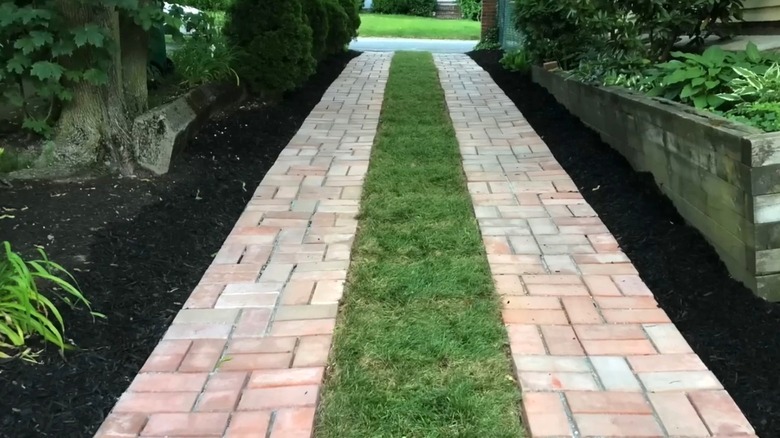
A ribbon driveway is made up of two parallel paths split down the middle. The two paths are typically covered with concrete or pavers, while the split in between is unpaved. This style works best for narrow driveways designed to fit one car at a time. The reason this is an easy and wonderful way to give your driveway an aesthetic upgrade is that the unpaved center strip can be filled with a range of different living plants and flowers. And, believe it or not, while you could bring in professionals to complete this renovation, it can also be a DIY project. Let's take a look at some essential steps to turn your existing driveway into a ribbon-style one and discuss which flowers and plants are best for growing in the eye-catching strip that runs down the middle.
How to DIY a ribbon style driveway
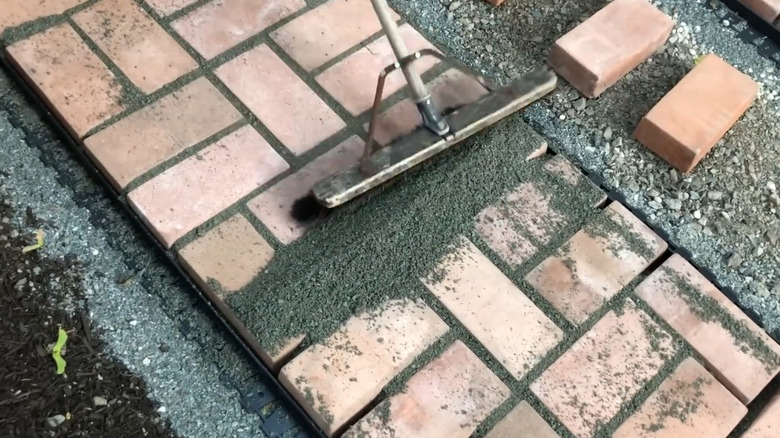
If you want a quick-install ribbon driveway that combines visual appeal and sturdiness, a great option is placing a flower bed between two lines of pavers. You will need a jackhammer to break up the original concrete and a compactor to press down the gravel, along with the gravel itself, some stone dust, landscape edging, and pavers.
First, start by breaking up and removing the old driveway using your jackhammer. Make sure to wear appropriate protective gear, such as gloves and ear defenders! Then, dig two trenches, between 2 to 2.5 feet wide, 1 foot deep, and 2 to 2.5 feet apart, and fill them with gravel. Use the compactor on the gravel. This will ensure the driveway can handle more weight and the gravel will be less likely to wash away. After the gravel is level, lay pavers of your choice over it to form two strips and fill in the gaps between them with stone dust. You will likely need a couple of cubic yards of stone dust, depending on the length of your driveway.
You'll then want to install some landscape edging on either side of each path. For example, this Master Mark dig-free edging from Amazon can be pinned into the ground using these round metal anchoring stakes. The edging will help hold the pavers in place, preventing them from spreading outward. After that, you can prepare the central strip for planting by digging a 4-inch deep ditch between the two paths, taking out large rocks as you go. Then, add compost into the middle section. Finally, you can start exploring which flowers you can put in your new ribbon driveway for stunning visual interest.
Choosing flowers for a ribbon driveway
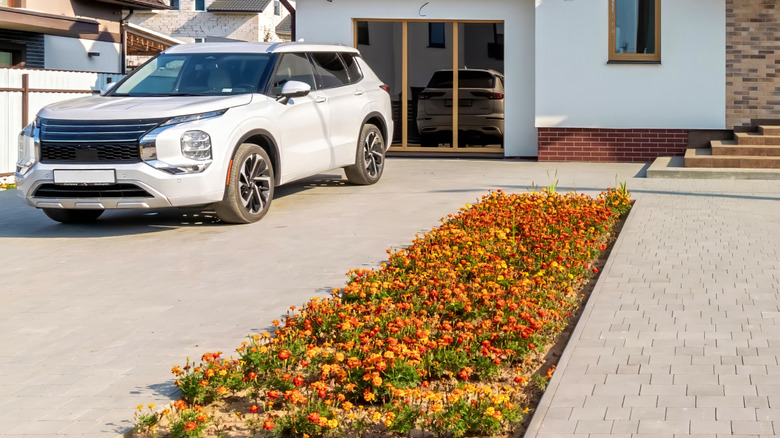
When picking flowers for this setting, one of the most crucial considerations is clearance. Taller plants can get caught up in vehicles, so look for flowers that do not grow very tall and yet still have plenty of attractive blooms. One popular choice, for example, is creeping phlox (Phlox subulata). With a maximum height of around 6 inches, this plant displays small, charming blooms throughout spring and early summer. It grows best in hardiness zones 3 to 9.
If your driveway is exposed to long, harsh sunlight throughout the day, it is also a good idea to check out some low-maintenance flowering plants that will thrive in the sun and won't wither in the intense light. For example, you could look for some thyme (Thymus praecox), which grows well in full sunlight in hardiness zones 5 to 8. Choosing a scented herb is a great way to make sure your new ribbon driveway is not only visually appealing but also smells great.
Plants like blue star creeper (Laurentia fluviatilis) — which grows well in hardiness zones 6 to 8 — are also a good choice if the dirt in between your gravel tire paths is not particularly rich in nutrients because they are hardy even in poor soil. As blue star creeper can be an aggressive grower, planting it in the middle of the driveway can help keep it contained. If you want a symmetrical, cohesive look, you could also consider adding some border plants for your driveway to line the outside edges. This will help create a better flow between the driveway and the yard beyond it, making your entire property feel more fun and floral-focused.