

Not Basil, Not Cilantro: The Summer-Blooming Herb With Flowers That Pollinators Love
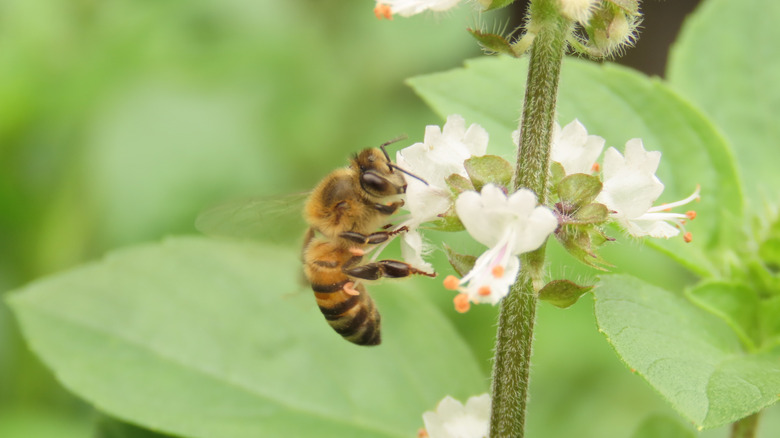
When you think about starting your own pollinator garden, common kitchen herbs may not be the first plants to come to mind. However, including herbs in your garden can be a great way to maximize space. After all, when you choose herbs like basil and cilantro, you can enjoy them for culinary purposes, their overall visual appeal in your outdoor spaces, and also for attracting a variety of pollinator insects. Of course, these aren't the only herbs you can use to bring more pollinators to your yard. Instead, this summer-blooming herb offers show-stopping flowers throughout the summer that bees and butterflies alike love.
Thyme (Thymus spp.) is an evergreen herb in the mint family. There are hundreds of species that fall into this genus. However, you may be more familiar with some rather than others. For example, common thyme (Thymus vulgaris) is commonly used for cooking, and it's a big hit among the smaller pollinators of your garden like bees. There's also creeping thyme (Thymus serpyllum), which makes a walkable, fragrant edge for your driveway or garden while also drawing in butterflies and bees for an overall vibrant and lively outdoor space.
Of course, when you're growing thyme specifically for its pollinator appeal, the process can be a bit different than growing it for garden or culinary purposes. After all, pollinators like bees and butterflies are drawn to the nectar-filled flowers, which means the more flowers the better. Don't worry – you can still harvest culinary thyme species after they've gone to flower for your local pollinators; the taste may just vary slightly.
How to grow thyme to attract more pollinators
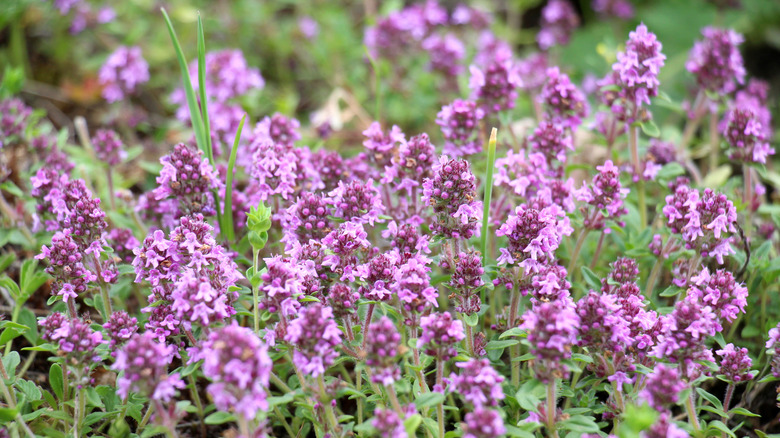
When growing thyme to cultivate flowers that pollinators love, it's important to remember that not every species is the same. While many of the most common species of thyme prefer full sun, they can vary in other general care aspects, which includes USDA growing zones and soil preferences. Learning about these differences in advance can help decide which option is the best for your pollinator-friendly garden.
Overall, thyme is considered to be hardy in zones 5 through 9, but many species have a more limited range. For example, lemon thyme (Thymus x citriodorus) is only hardy in zones 5 through 8. Meanwhile, creeping thyme is winter hardy in zone 4 all the way to 9, giving it a broader range while still attracting a variety of butterfly species. Fortunately, thyme does grow well in a container. As a result, you could consider growing it outdoors in a container garden during the warmer months, allowing you to reap the benefits of its pollinator appeal, while overwintering it safely indoors.
Many popular species of thyme also do well in drought conditions, holding up to dry soil with ease. However, there is one species, common thyme, that does grow best when offered moist soil with good drainage. It can still tolerate the occasional dry spell and drought, but offering it its preferred soil conditions can lead to more of those pollinator-magnet blooms.