

Ditch Hanging Baskets - Here's A More Creative Way To Show Off Your Petunias
We may receive a commission on purchases made from links.
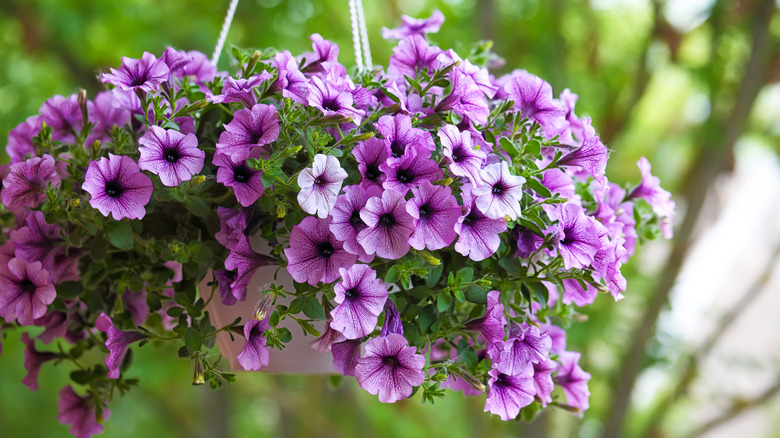
Petunias deliver on wow factor every single time when displayed in hanging planters. Their voluminous trailing blooms branch out, swallowing the flower pot in a spherical arrangement of color. When properly cared for, they can flourish all summer long and give you some enviable curb appeal. But what if you could expand on this successful hanging basket method and give it a bit more dimension? Enter the petunia tree, an idea that will have you rethinking your entire display.
Whether you have ample yard space or a patio in need of a makeover, a petunia tree could be just what you need to achieve vertical interest and a vibrant color scheme. While you may not be able to quickly purchase one online, there are many ways to DIY them or work with professionals to create one of the exact height and size you envision. After learning more about these display alternatives to hanging planters, you'll never see petunias the same way!
What is a petunia tree, and where can you buy one?
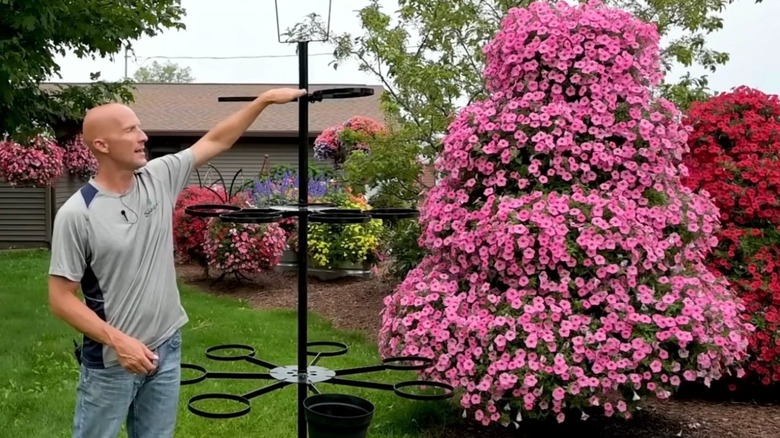
To put it broadly, a petunia tree is an eye-catching feat of floral design, in which several plants are arranged in cascading tiers that resemble a tree. Except instead of lush green leaves, there are tons of gorgeous blooms in any color you desire. But how is this achieved? The answer lies in a metal structure with holders where flower pots will go. The rods that hold the planters connect to a central metal pole (this is anchored into the ground and can be any height you choose, depending on the custom design). There are fewer rods and planter rings toward the top and more toward the bottom, creating a shape that's similar to the triangular form of a Christmas tree.
There are a few places to get one if you're understandably obsessed. Sharkey's Greenhouses on YouTube worked with a metal artisan to create a custom tree-like frame with tiered planter rings that hold 10-inch pots. You also may be able to find one on an online marketplace like Etsy. If you go the custom route, you'll probably need to spend hundreds of dollars — but it will allow you to create a stunning display you can reuse each year. If you have a tighter budget, there are still plenty of ways to reinterpret the petunia tree. Available on Amazon, the GameXcel Vertical Planter Tower costs $35.97 and has five tiers to work with — not to mention, it has a wheeled base, making it easy to move around on patios or decks. There are even tie-around post planters, like the EMSCO Bloomers Post Planter, designed to attach to existing lamp poles or wooden posts in your yard.
Setting up, selecting the right petunias, and care tips
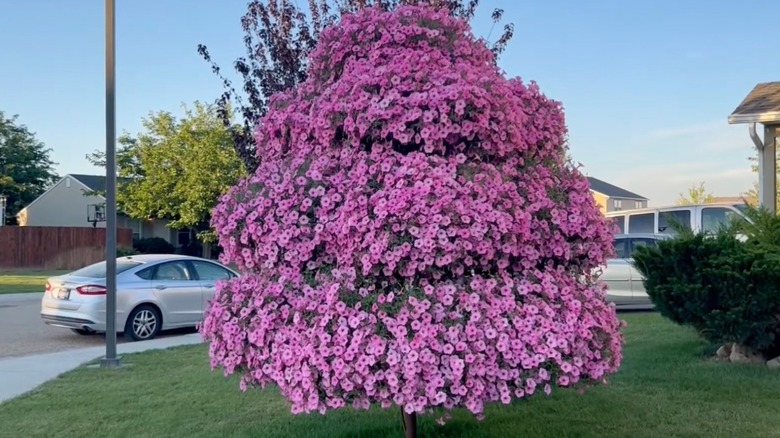
For custom-designed petunia trees, choose pots of the same size or half an inch smaller in diameter than each ring. Plastic pots with rims will fit securely on top of the rings if you're worried about containers being too small or falling through. For tiered and post-anchored petunia trees, all you have to do is assemble them. Do this before adding plants and soil, as it will be lighter and more manageable. Regardless of the configuration you choose, picking the best beautiful petunia varieties is paramount to the success of your petunia tree. Since there will be tens of plants at varying heights, you should choose low-maintenance options that don't require deadheading. Proven Winners' Supertunia® flowers are designed to shed spent blooms by themselves and come in tons of color options.
Aside from deadheading, you need to be savvy when it comes to watering and feeding petunia trees. Depending on the height, you don't want to have to go up on a ladder multiple times a day each time you water or apply fertilizer to the top-most flower pots. If you can, make sure each container is 10 to 12 inches in diameter and about the same size in depth. This not only gives the petunias ample room to grow and thrive, but it also means you won't have to water as often since there's more soil to retain the moisture. While, normally, you'd fertilize petunias to extend their beautiful blossoms by applying a water-soluble feed once a week, watering more frequently may require more consistent fertilization. This is because water washes nutrients from the soil over time.