

Not Copper Nor Coffee Grounds: The Humane Way To Keep Snails Out Of The Yard
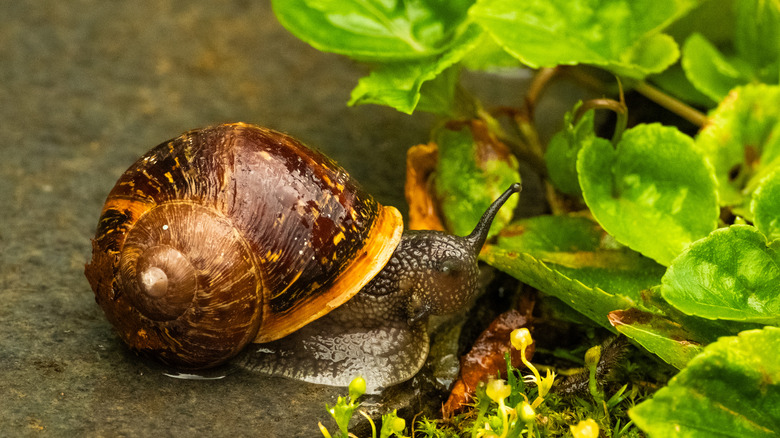
You've tried copper foil, coffee grounds, beer traps, and eggshells, yet the snails and slugs keep treating your garden like their personal salad bar. You don't want to hurt them or use harmful pesticides since they're a source of food for local wildlife, but you don't want them eating your strawberry plants, either. No thanks! So, what can you do? Before you throw in the towel, one easy, organic method is key to preventing snails from invading your garden: planting a border of herbs around your garden beds. You've probably never even heard of it, let alone tried it.
Essential oil sprays may help keep some garden pests at bay, so why not simply go straight to the source and grow the plants themselves as a defense? The herbs that work particularly well at repelling snails are the really fragrant ones — think wild garlic, chives, lavender, sage, thyme, rosemary, hyssop, spearmint, peppermint, and tarragon. Though you may not think of them as a herb, nasturtiums are another great plant for snail control because their leaves have a peppery scent and flavor.
Not all herbs will repel snails and slugs. In fact, they're known to enjoy eating quite a few species. These pesky mollusks love basil, for example, despite its heady aroma. They've also been known to munch on cilantro, dill, parsley, and chamomile, among others. They occasionally go for oregano, too, if they're feeling particularly peckish or there's nothing much else around. While you can still plant these herbs in your garden, keep them out of borders where slugs and snails can easily access them. Otherwise, you're basically providing them with a starter before the main course.
A border of herbs is your first line of defense against snails and slugs
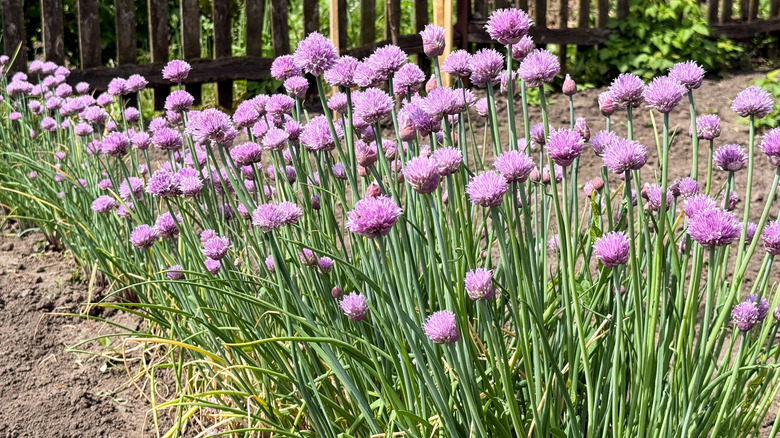
Before heading to your local nursery for pots of chives, thyme, and mint — or seed packets of lavender, sage, and tarragon — you need to learn how to use herbs as a slug and snail deterrent. Start with a densely planted border around your veggie patch. You can also plant protective circles of herbs around damaged perennials or shrubs. Use mature herb plants from the garden center for the most immediate results.
Before you plant any of the aforementioned herbs, look up each genus or species in a reputable catalog, like The Garden.org Plants Database or the Missouri Botanical Garden Plant Finder, to confirm they will thrive in your soil conditions and growing zone. Check, too, how companion planting will benefit your garden with these specific herbs and your existing plants in mind. Let's say you have tomato plants and basil — both favored foods of slugs and snails — in a raised bed. Choose chives, a delicious herb that can act as a natural pest repellent for tomato plants, or tarragon to create an aromatic fortress wall. You can also plant a combination of herbs, as long as they have similar growing requirements.
Although a border of fragrant herbs might help dissuade lots of snails and slugs from heading deeper into your garden beds, it probably won't keep them out completely. Herb borders are best used in tandem with other lines of defense. For example, sprinkle eggshells and coffee grounds in front of the row of herbs and place copper tape or beer traps nearby. It's still important to check your plants every night and manually remove any hungry mollusks you spot. At minimum, you'll have some uneaten herbs to harvest for salad dressings and pasta sauces.