

Don't Let Feng Shui Fool You: The Plant That Can Become A Fire Hazard For Your Home

Looking to feng shui your outdoor space? Feng shui gardens are said to draw peace and prosperity into your life, along with good health. They are meant to represent the balance among the natural elements of earth, fire, water, metal, and wood. If you're thinking about plants to place in your feng shui garden, one that will surely come to mind is bamboo. If so, you'll want to give that choice serious thought as bamboo needs the right placement and maintenance to avoid becoming a fire hazard, especially if you live in an area prone to wildfires.
In recent years, the lucky bamboo houseplant has been associated with feng shui, but it is not actually bamboo; it is Dracaena sanderiana. The feng shui connection with bamboo grown outdoors is ancient and laced with symbolism. Bamboo in a feng shui garden can represent strength — the ability to bend without breaking — and has many additional positive associations in Chinese culture.
In terms of fire hazards, bamboo is flammable in the sense that all plants are flammable under the right conditions. Well-maintained bamboo is actually highly difficult to ignite, thanks to its chemical composition of cellulose, hemicellulose, lignin, water, and a significant amount of silica, as reported by Bamboo Sourcery. It's when bamboo canes die and dry out that they become a threat, as does the litter of leaves and debris on the ground beneath a stand of bamboo.
Reduce bamboo fire danger with placement and maintenance
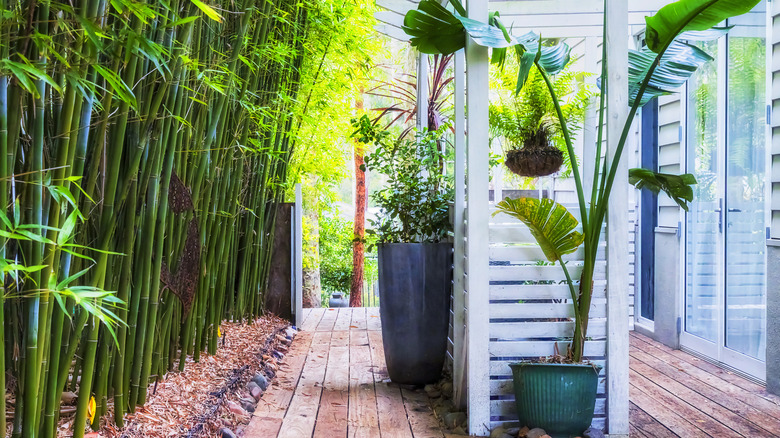
The flammability of bamboo came to people's attention when bamboo scaffolding was identified as a contributor to a deadly 2025 Hong Kong fire; clearly, the scaffolding was made from dry bamboo canes and is not comparable to live bamboo used in a feng shui garden. You can enjoy the feng shui qualities of bamboo in your garden, as long as you take precautions.
Just like any landscape plant, bamboo should not be planted in the portion of your "defensible space," which comprises the 5 feet surrounding your home, and preferably not less than 30 feet from your house. To keep garden bamboo from becoming fuel for a wildfire, you'll need to maintain your stand of bamboo by removing dead, dry canes and ridding the ground of bamboo leaves and debris. Replace these elements with compost or well-decomposed mulch. You'll also want to keep your bamboo watered so it doesn't dry out.
In fall or winter, cut down dead canes as close to the ground as you can, using a reciprocating saw with a pruning blade. You may also want to cut off the lower branches of live canes.
Consider planting bamboo in containers for fire safety
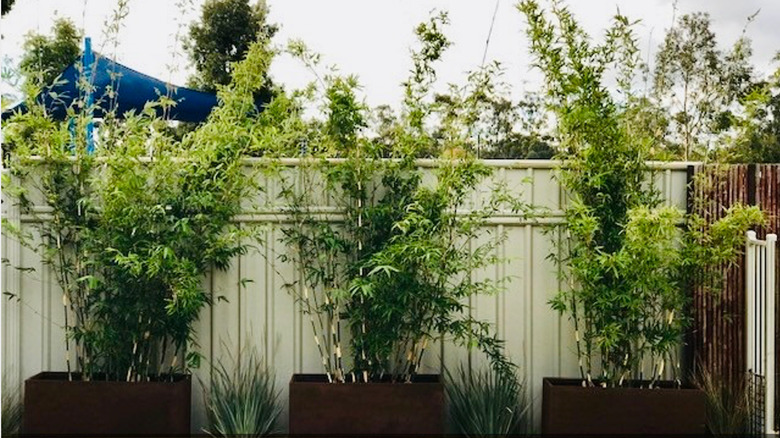
If you're considering running bamboo, also known as the invasive bamboo to steer clear of, a tactic to help with both invasive spread and fire prevention is to contain it in pots or planters. You're likely to have fewer leaves and less debris in individual containers than you would in your garden or yard. Plus, containers are portable, so you can move them to safer locations if fire threatens. Be sure to use noncombustible containers.
Without containment, the invasive, running types of bamboo in the Arundinaria and Phyllostachys genera pose a greater fire hazard as dense spreading growth and the associated debris provide a conduit for fire, according to FireSafe Marin. The noninvasive, clumping bamboo (also known as hedge bamboo) is found in the Bambusa multiplex and Fargesia genera, including red bamboo, a variety that won't invade your yard and doubles as a gorgeous privacy screen.