

Refrigerators Today Look Nothing Like They Used To
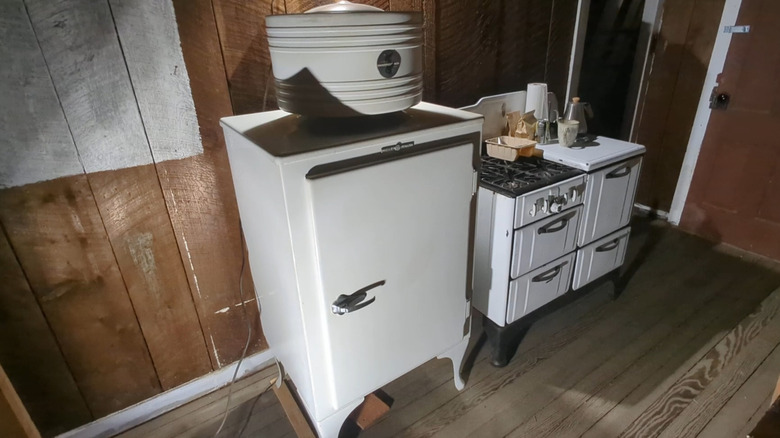
Refrigerators are by far the most commonly used appliance, with more than 122 million households owning at least one refrigerator, according to the Energy Information Administration. But refrigeration, as we know it, hasn't always existed. In fact, before refrigerators came into play, ice boxes were the main way people kept their food chilled. The introduction of the first models of home refrigerators turned the ice box into an old-school appliance that nobody uses anymore. And in 1927, General Electric shook up the market with a new electric refrigerator model with a unique feature: a compressor installed above the refrigerator cabinet.
Buyers dubbed General Electric's (GE) new fridge "Monitor-Top" because it resembled the gun turret on top of the Civil War ship named the USS Monitor. With the coiled compressor sitting on top of the unit, this fridge looked closer to a safe than the sleek refrigerators we are familiar with today. However, the Monitor-Top fridge revolutionized the market because it was a hermetically sealed (airtight) unit, which significantly improved refrigerated food safety standards.
Eventually, competition in the refrigerator market led to manufacturers making some design changes. Notably, they moved the compressor so it was hidden in the unit, which was a step toward the refrigerator designs we know today. With the Monitor-Top refrigerator, GE set a new standard in the market and solidified itself as one of the most trustworthy and reliable appliance brands in America.
An important refrigerator advancement that we can't see
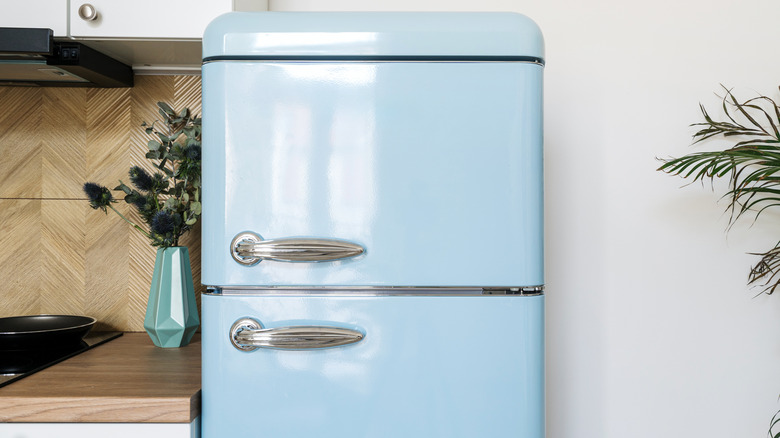
While refrigerators in the 1920s had some very distinct design choices that set them apart from modern fridges, there were also some important internal components that differed from what we'd expect today. Monitor-Top refrigerators were highly advanced for the 1920s, but if you were trying to choose a more energy-efficient refrigerator today, you'd probably skip past the Monitor-Top model.
In the 1970s, the energy crisis caused oil prices to spike, and consumers began to want refrigerators that were more efficient and less costly to use. State and federal legislation began to implement energy conservation and efficiency standards across the board. In 1992, the U.S. Environmental Protection Agency launched the ENERGY STAR program, which sets efficiency standards and specifications for a number of home appliances. Today's home refrigerators that are ENERGY STAR-certified are 9% more energy-efficient than other models, leading to significant savings on home electricity bills. So, the next time you open your modern refrigerator, take a moment to appreciate how far it's come from the fridge models of the 1920s.