

Everyone Had Them In The '80s: The Houseplant That Deserves A Spot In Your Living Room
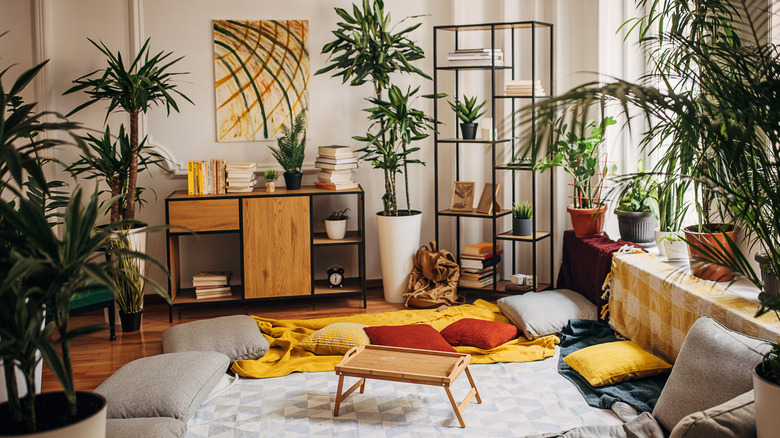
We all know that what goes around, comes around; styles in fashion, architecture, and interior design often harken to the past and revive popular trends of yesteryear. Even plants fall into and out of fashion. It seems the 1980s called and wants to send you its Boston ferns. What, those dowdy old plants your grandma had in her living room? Yes, these lush, classic ferns are back, rising on the wings of the dramatic maximalism of the '80s.
This is not the first comeback for Boston ferns, which were hugely popular in the Victorian era and then experienced a revival in the 1920s. 60 years later, the ferns could be seen all over the interior and exterior sets of the hit TV series "Full House," (1987-1995) according to Tonkadale. The 1980s popularity of Boston fern may have been driven by the era's preference for easy-care houseplants and those that make a bold statement, like Boston fern. Kids born in the 1980s are hitting their 40s in this decade and are perhaps nostalgic for the Boston ferns they grew up with. This fern is the quintessential hanging basket plant with its cascading fronds, and this trait may help explain its 1980s popularity. Hanging baskets surged in popularity in the preceding decade because everyone was making macrame hangers for them.
Try the bold look of Boston fern for 1980s nostalgia
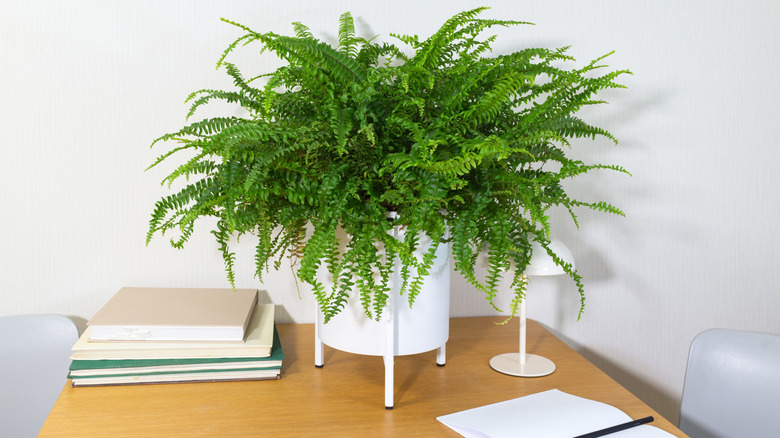
If you're ready to embrace this classic, plant Boston fern in well-draining, organic potting soil and place in a spot that gets bright, indirect light. Keep soil evenly moist, and never let it dry out completely, but cut down on watering during the fern's winter dormancy period to avoid root rot. Tropical Boston ferns need a room temperature between 60 to 70 degrees Fahrenheit and humidity to the extent that experts recommend they be placed near a water source, such as in a bathroom or kitchen. Indeed, your fern will thrive in your steamy bathroom. If the air around it is too dry, the fern may attract scales or spider mites. Keep humidity needs in mind if your fern is in a hanging basket; hanging them too high or close to air conditioning vents can be the hanging plant mistake that's killing your Boston fern because it will dry out the soil. You can help the plant retain moisture and humidity by using a pot within a pot and including a layer of sphagnum moss. When the fern is producing new growth, fertilize with fish emulsion or half-strength houseplant fertilizer, following label instructions; you can also try fertilizer if leaves look faded.
To prune a Boston fern for a thriving plant, start by cutting off discolored leaves as they appear. You can also give Boston fern a major pruning in spring or summer or when it needs re-potting. Prune the sides only, not the top of the plant. In early spring, use division to propagate your Boston fern plant for fuller growth all spring long.