

Protect Your Tomatoes From Wildlife Pests With A DIY Solution Every Pet Owner Has
We may receive a commission on purchases made from links.
Few things are more frustrating than finding that the tomato plants that you poured your sweat and tears into have been raided by backyard pests. Fortunately, you can fight back by utilizing barriers that are specially designed to keep pests at bay. Crop cages offer protection against animals that might like to chow down on your juicy produce. But using an old, metal dog crate can deliver similar results without a new purchase.
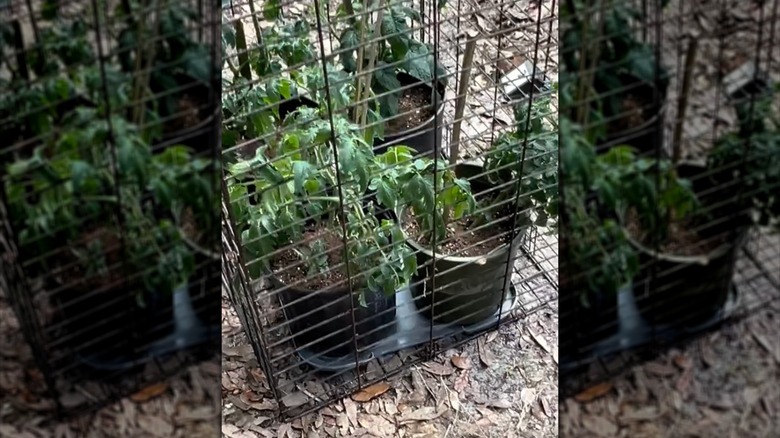
This idea comes courtesy of Instagram creator @flyingfoxfruits, who showcases how they turned an old metal dog crate on its side and filled it with tomato plants. They display how the crate — and plants contained within — can easily be moved around by simply lifting the crate and taking it where you want it to go, such as to a sunnier or shadier spot in the yard. This creator also states that they placed a tray underneath the plants to provide them with a stable foundation. The sturdy sides of the crate can also serve as a good trellis for supporting tomato plants as they grow heavier with produce (just double check that no fruit is directly aligned with an opening in the grate or wildlife may snag it).
Beyond just tomatoes, you can place other fruiting plants in your dog crate. Strawberries and peppers are both generally compact plants that wildlife will happily raid the harvest of, so these could do well with some added protection. A dog crate also can do well for climbing plants that need a structure to overtake.
Additional tips for success
While dog-crates-turned-tomato-cages may do a stellar job of keeping larger pests like squirrels and rabbits away from your harvest, smaller pests will easily be able to fit through the openings. If you're struggling with caterpillars and other bugs attacking your plants, you can cover the crate with netting fabric for gardeners, like this option from Garden Tailor ($26.99 on Amazon). Be sure to secure the fabric so that there are no openings for bugs to sneak through. You'll also need to research the best time to install insect netting; if installed too early, it will prevent pollinators from accessing the plants to do their crucial work. For an added layer of deterrent, you may also consider adding these plants that work as natural pest control in your garden crate system.
If you don't own a dog crate but love this idea, taking to your local Buy Nothing or community gifting groups via social media can be a smart move; dog owners whose pups no longer need the crate may happily offer their old supplies if you're willing to come collect them. You may also be able to find a heavily discounted dog crate at your city's humane society thrift store.
It bears noting that while a metal dog crate will protect your plants, most crates are made from steel, which is itself likely to suffer rust after being exposed to outdoor conditions, like rain and water from your garden hose, for extended periods of time. That being said, if the crate is no longer serving its original purpose and you're content with it rusting after some length of time, this use does make for a clever repurpose.