

16 Heat-Tolerant Plants Perfect For Landscaping Your Pool Area With
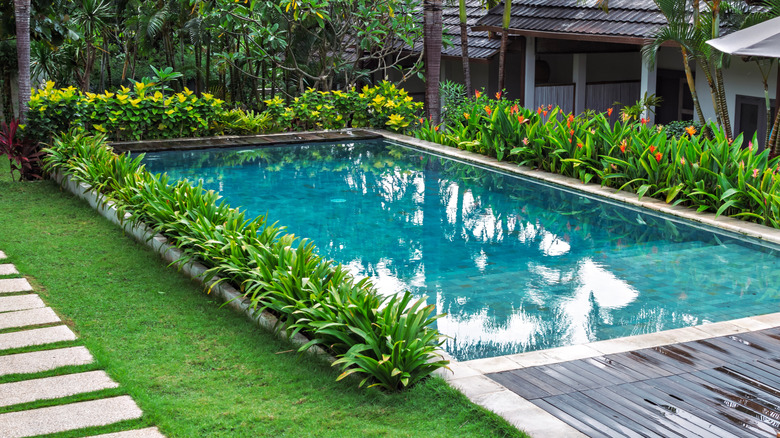
Pools are a wonderful way to relax during the hottest parts of the summer. However, all that cement can leave it looking a little too industrial. Plants are a great way to create a relaxing and oasis-like environment, tying your pool into the rest of your yard. You can't just use any plant, though. They need to be heat-tolerant so that they can handle the warmer temperatures and potentially full sun around your pool — especially if you live in a climate where you can use your pool year-round. Thankfully, there are still plenty of options for greenery to landscape the area with, including lavender, yucca, and gardenias.
Of course, before picking any plant, make sure it's good in your USDA hardiness zone. Even if it isn't, you may still be able to plant them around your pool as annuals. Or, if they grow well in containers, like Russian sage, you can bring them out during the summer, and take them inside or into a greenhouse before it gets too cold.
Keep in mind, while growing plants near your pool is fun and all, it often means more pool maintenance, as you have to clean up leaves and petals. To reduce your workload, you may want to keep evergreens and ornamental grasses closest to your pool, and plant other plants further away to reduce the amount of cleanup you have to do daily and stop them from causing damage.
Moss roses
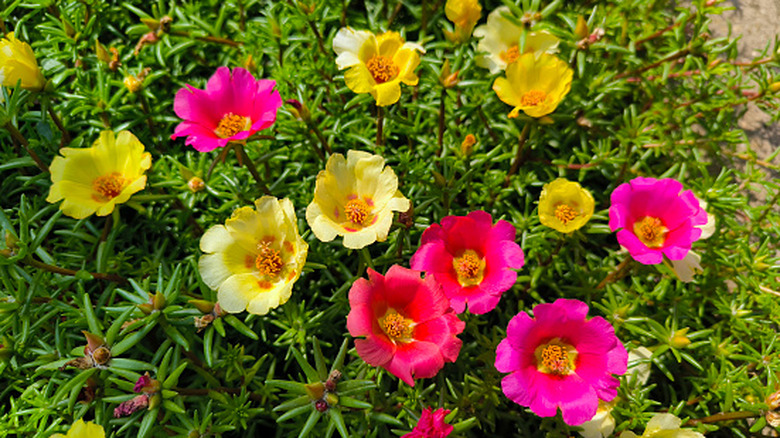
Moss rose (Portulaca grandiflora) is a drought- and heat-tolerant plant. They can handle humidity and full sun, though, making them excellent to keep around pools. You just need well-draining soil to get them started. It produces bright, rose-like blooms in a range of colors throughout the summer. These flowers, depending on the variety you get, may open with the sun. It is a fast-growing flower pollinators love that doubles as a stunning ground cover. It's a perennial in zones 9 to 11, but it's still an easy-to-grow self-seeding annual worth growing in many others.
Hens and chicks
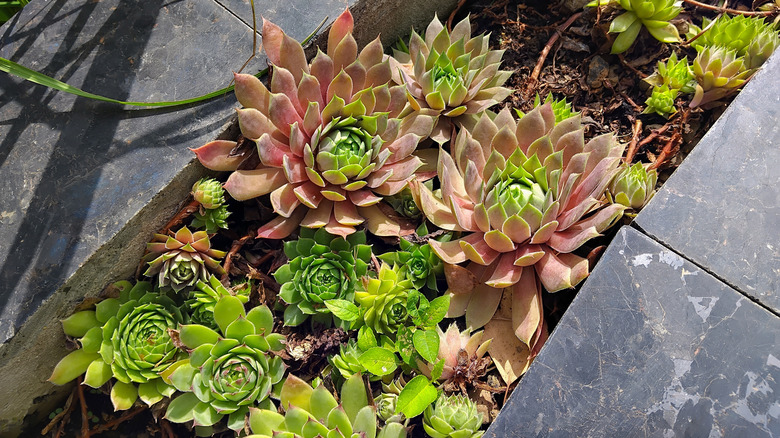
You can't get a better plant to handle the heat than a succulent. Hens and chicks (Sempervivum tectorum) are a perennial that creates a dense cover along the ground or planter. They prefer drier environments, but as long as you keep them from getting too damp because of the water, they can handle all the heat and sun you throw at them alongside a pool. To keep them more secure and out of the way, grow them in planters. They are hardy in zones 3 to 8 making them versatile for most of the United States.
Gauras
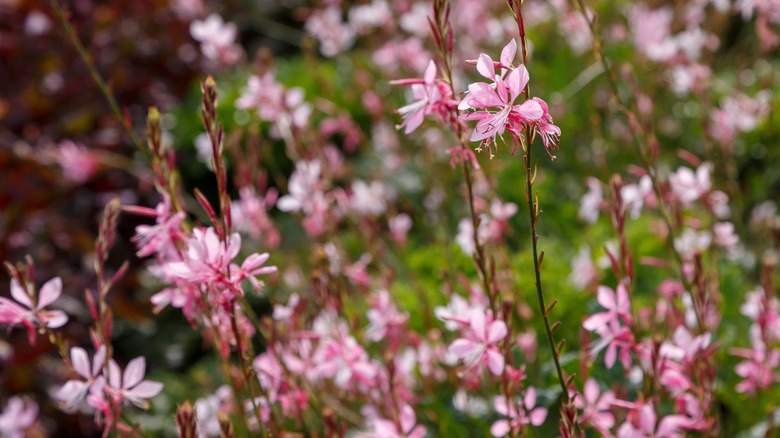
Also called bee blossom and whirling butterflies, gaura (Gaura lindheimeri) is wonderful beside the pool, especially in zones 5 to 9, though it is an excellent annual as well. They love heat, full sun, and don't need much water. They are continuous bloomers that create small flowers, often in pink or white. The plant tends to look a little chaotic sometimes, but it can provide a wild nature feel. It's also good in xeriscaped areas, so if you only want a few plants around your pool, this is one to consider.
Hydrangeas
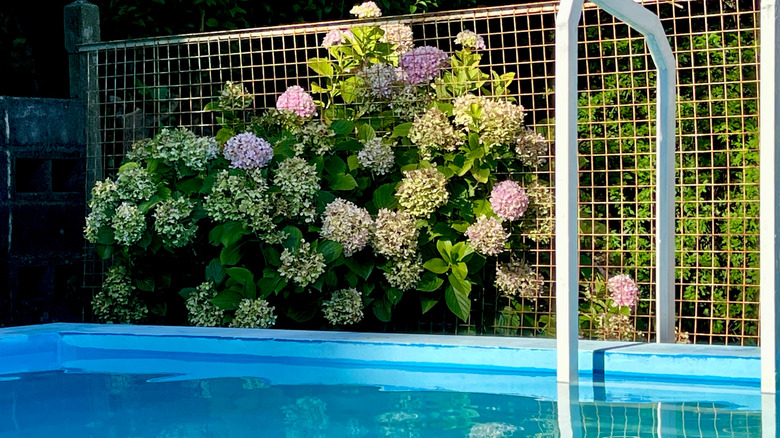
Not all hydrangeas (Hydrangea spp.) are ideal for growing alongside a pool. Some varieties can handle full sun, though, like 'Incrediball' and 'Bobo,' and can be a beautiful addition to any garden in zones 3 to 8. They do need a bit of water and maintenance, but have stunning blooms and can handle the heat. These large shrubs work well to create a wall around your pool and separate it from the rest of your garden. Once fully grown, hydrangeas provide a bit of shade around your pool that keeps everything a little cooler.
Hibiscuses
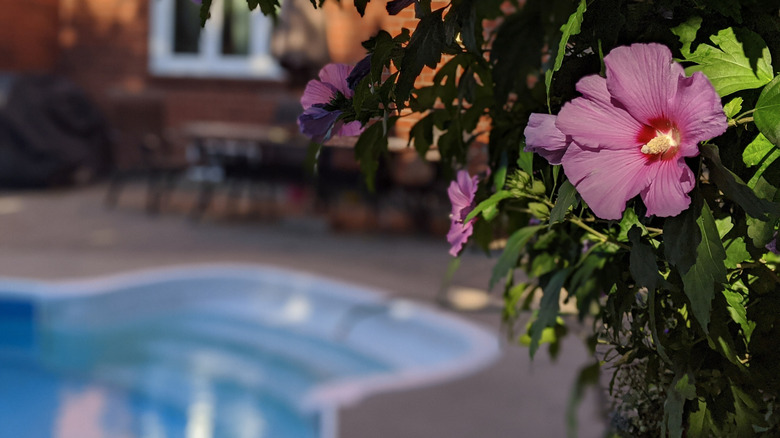
All hibiscus (Hibiscus spp.) are great options for placing along a pool with almost full sun and heat. There are two main kinds — hardy and tropical, and which one you pick mainly comes down to the zone you live in. Pretty much any option looks stunning next to a pool, but if you want something eye-catching, there are some colorful varieties of hibiscus flowers for a tropical garden that stand out. Most hibiscus thrive in zones 4 to 11, with hardy ones in zones 4 to 9, and tropical varieties ranging from 9 to 12.
Lavenders
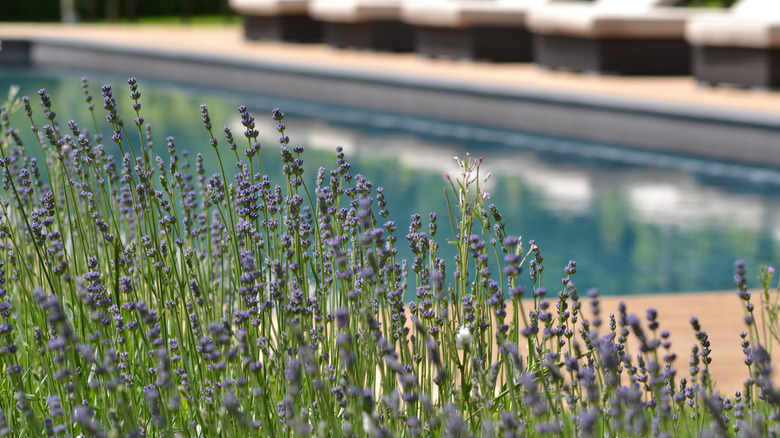
Lavender (Lavandula spp.) is heat-tolerant and is an excellent option when it comes to growing near a pool. English lavender (Lavandula angustifolia) can thrive in zones 5-11, while heat-lovers like French lavender (Lavandula dentata) are hardy in zones 8-11. It has a relaxing scent for those moments you just want to lounge at the edge of your pool, and a beautiful purple flower. However, it may not be ideal for everyone, as it's also a major attractant for bees, which you may not want near your pool. Its ability to repel mosquitoes, though, may make seeing a few bees flying around worthwhile. Once established, it's low-maintenance and thrives on a bit of neglect.
Meyer lemons
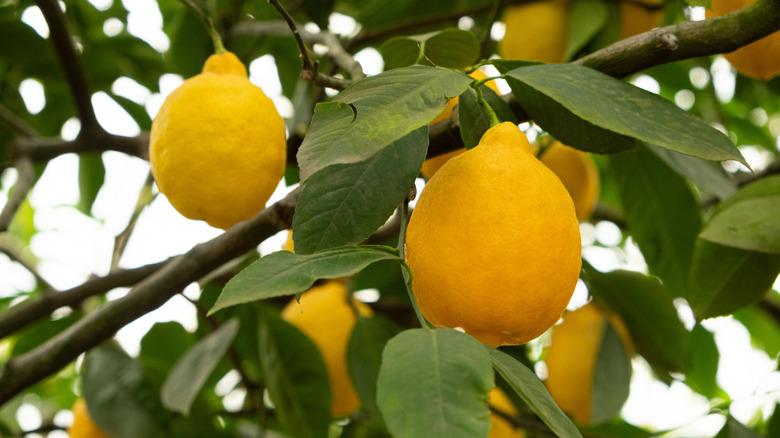
Meyer lemons (Citrus x limon 'Meyer') are a popular citrus variety to grow. They thrive in zones 8 to 11 if you want to leave them outside in the winter. However, they can grow well in pots, which means that you can easily bring them inside when the warmer seasons are over. Interestingly, lemon species like Meyer lemons can do really well alongside a pool, as they actually can use the light reflected off the water. The tree can provide some shade as well, and the dark green leaves are perfect for a poolside tropical vibe.
Russian sages
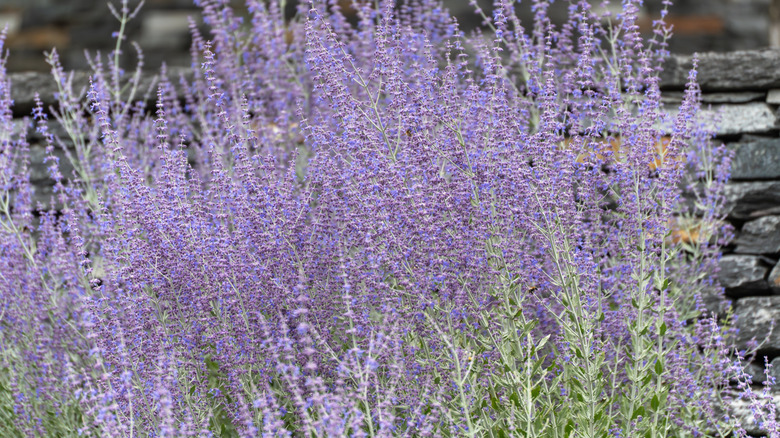
Russian Sage (Salvia yangii) is a Mediterranean species that adds a burst of color while handling the heat. It's a flower you can plant in a sunny yard with no shade, as well, which makes it perfect beside the pool. It produces silvery leaves and beautiful purplish-blue flowers. As a bonus, the plant has a lovely scent that's not overwhelming when it's brushed against. Russian Sage is a perennial in zones 4 to 9, but works as an annual in other areas as well. You can grow them directly in the soil or in containers.
Yuccas
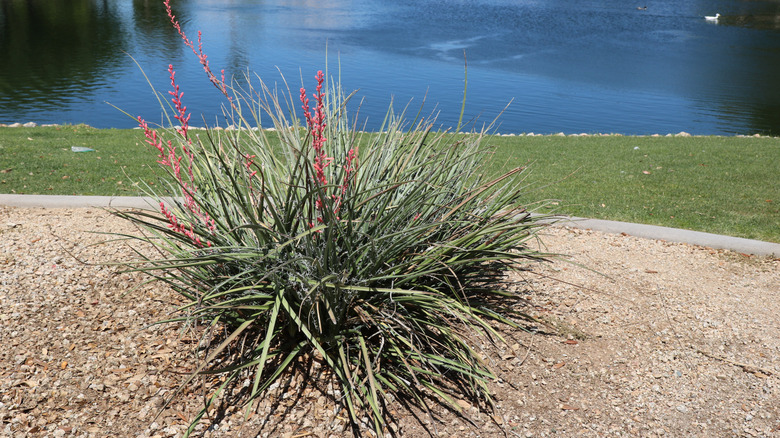
Yucca (Yucca spp.) are rockstars at handling heat and droughts. These are also easy to maintain overall, as long as you know how to correctly grow and care for a yucca plant. However, if you're going to keep one near a pond, it needs to be contained in a pot. They tend to have exploratory roots when left to roam free, which can damage your pool. Thankfully, these plants can stay in containers. Some yucca can only handle zones 9 to 11, but others can go all the way down to 5.
Feather reed grass
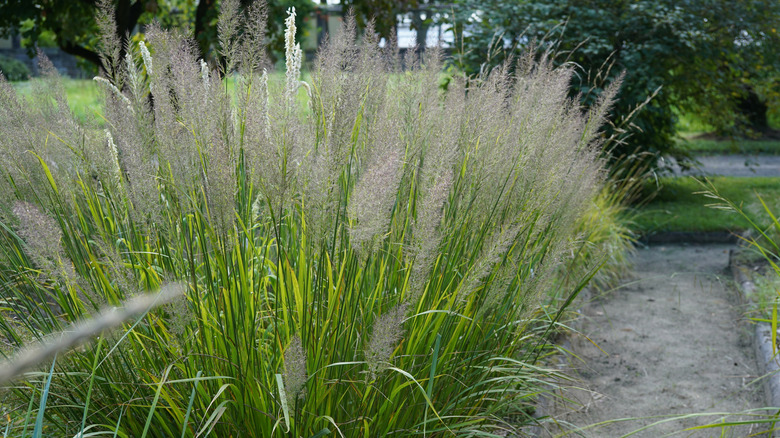
To complete your landscaping, don't just look at flowers, trees, and hedges. Though grasses don't always get the spotlight, they can tie together a landscaping project. 'Karl Forester' feather reed grass (Calamagrostis x acutifolia 'Karl Foerster') is a heat-tolerant species and produces flower heads that are a faintly pink color, which change to look more like wheat in the fall. It grows in zones 3 to 9, and needs little maintenance, as they get to about 2 or 3 feet tall and stop growing, which means you don't get tons of grass clippings in your water.
Deergrasses
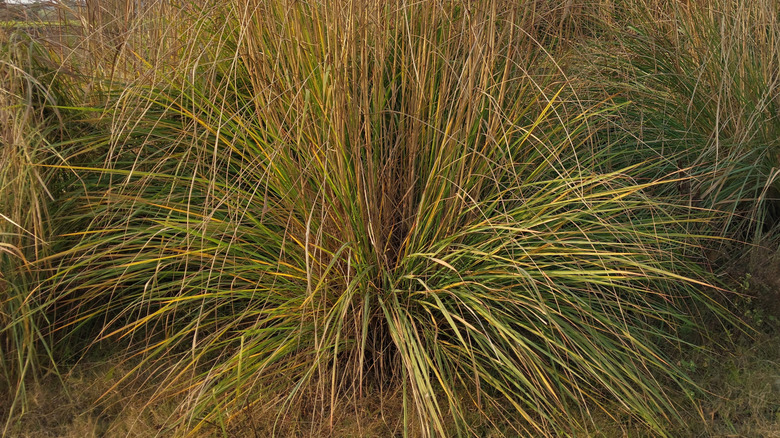
Deergrass (Muhlenbergia rigens) is another excellent heat-tolerant grass to grow around your pool. When its flower spikes appear for the year, it can be up to 5 feet tall. You can sow it directly into your soil, but it also works well in containers. It does need to be mowed if you want to take care of some of the dead stalks that stick around, but it only needs it every few years. Its zone is listed as 6 to 9, but it may survive the winter up to zone 5.
Pink muhly grasses
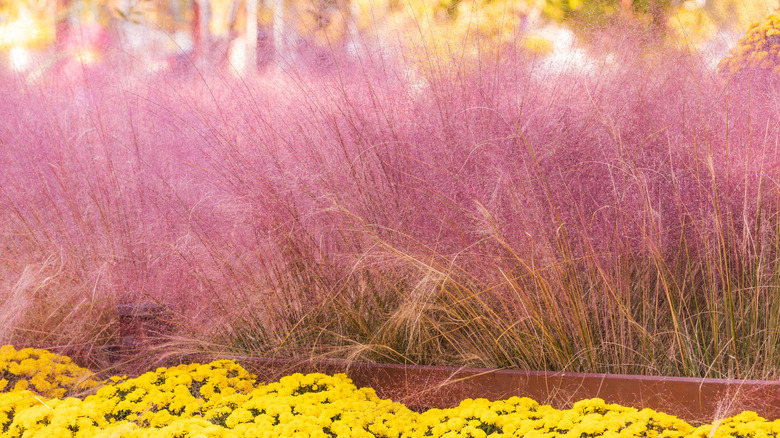
Grasses don't have to be boring. Pink muhly grass (Muhlenbergia capillaris) is a beautiful green grass that produces pink feathery stalks, sure to add a bit of contrast to your pool. In zones 5 to 11, they can grow in a container or directly in the soil. As an added bonus, heat and drought are no problem for this plant, and it can also tolerate higher humidity levels. It needs some maintenance, as it is an ornamental grass you should be cutting back in the fall, but it is easy to care for overall.
Gardenias
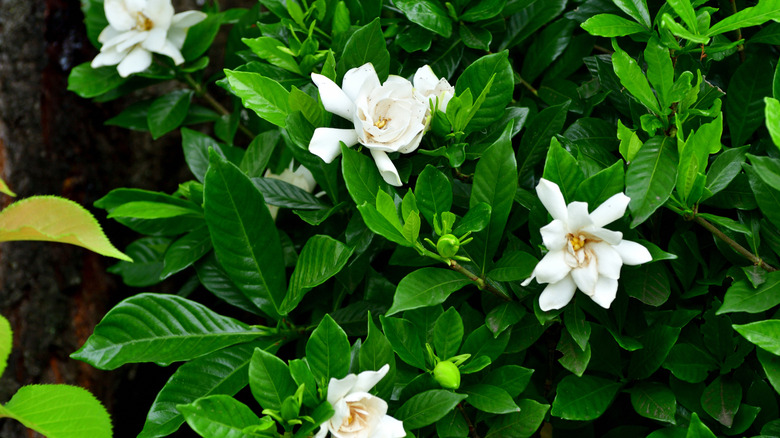
While gardenias (Gardenia jasminoides) are already heat-loving, a variety like 'Steady as She Goes' has an even better ability to handle it, and there are plenty of other varieties of gardenia that can tolerate the summer heat and winter frost as well to consider. This evergreen plant usually has dark green, waxy leaves and fragrant white blooms, though different varieties may have hints of other colors and flower shapes. Their beautiful smell and gorgeous presence make them a fun poolside plant, especially in zones 7 to 11, where they are hardy.
Daylilies
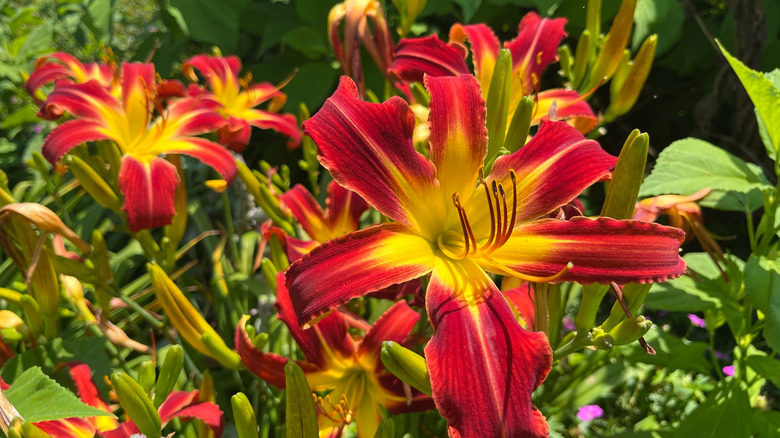
For those with saltwater pools, daylilies (Hemerocallis spp.) are an excellent choice. Not only are they good in the heat and the sun, but they are also tolerant of salt. They're incredibly adaptable to situations you throw at them. Most species are hardy in zones 3 to 9, but some varieties can go outside of this, and they thrive in containers if you're having difficulty finding suitable kinds for your area. Originally, these plants came in red and yellow, but now you can find them in almost any color. They attract butterflies and hummingbirds. Note that the common orange daylily (Hemerocallis fulva) is considered invasive in many parts of the United States.
Palm trees
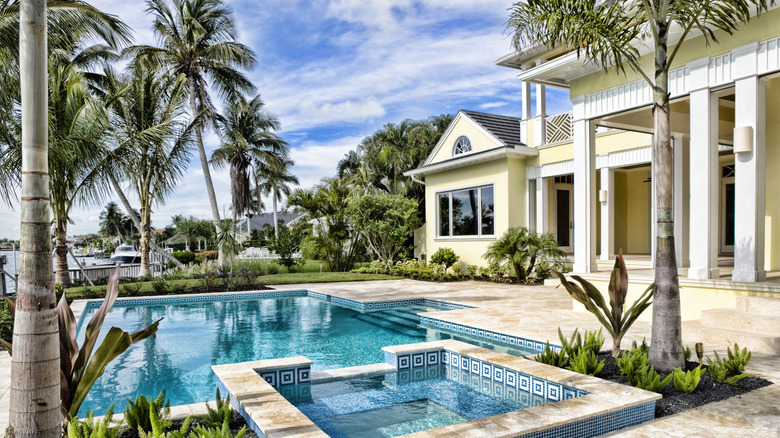
If you're looking for a taller plant to landscape your pool with, palm trees (Family Arecaceae) are another great choice. They can be planted directly into the ground or in a pot, and do well with high temperatures. Their height adds a little shade, too, so you may not need to buy shades or umbrellas for your area. Plus, despite their size, palm trees can be planted close to the edge, as their roots grow straight down and won't cause damage. Some palms are pretty sturdy, and you can find ones that handle zones 4 to 11.
Lantanas
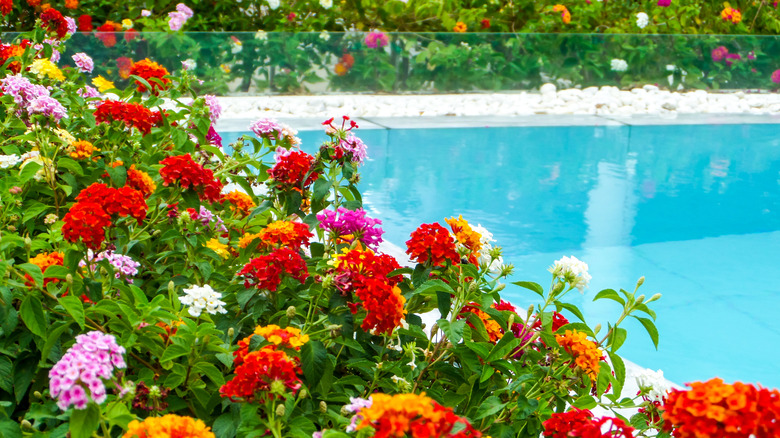
You can't talk about heat-tolerant poolside plants without mentioning lantanas (Lantana spp.). Every species is a little different, but most varieties are hardy in USDA zones 8 to 11. While they prefer temperatures around 60 to 85 degrees Fahrenheit, they can handle intense heat. These are great to place near the pool as they can handle the light and increased temperature from the water's reflection and need little care. Plus, they are stunning when they bloom, which is continuously between spring and fall. However, they can cause contact dermatitis for some, and the leaves are poisonous.