

More Than Eco-Friendly: This Surprising Upgrade May Extend Your Shed Roof's Lifespan
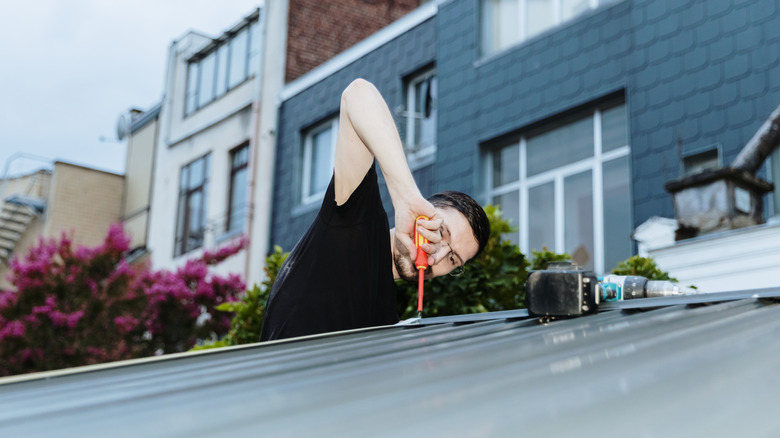
Having a sturdy shed roof is the key to keeping the structure intact and the items inside safe. Traditional ones need to be replaced every few decades to ensure they stay strong, depending on the material. However, if you want an eco-friendly option that looks nice and increases the lifespan of your shed, a green roof might be the perfect alternative. According to the National Park Service, they have double the lifespan of a traditional topper, and even beat the long-lasting shed roof material that's worth the price.
Adding a bit of greenery to the top helps protect the surface from harmful UV light and harsh temperatures, as well as weather like hail. All of which work together to keep your shed roof standing strong longer. There are other benefits to adding plants, too. For example, they help to keep temperatures more stable inside your shed, and it is actually an ancient roofing technique that'll help counter extreme heat and cold. This means you can save money on heating and cooling while you're working in your shed.
However, you can't just slap plants on your roof and call it good. It requires a bit of time and quite a bit of money to set up. You also need to make sure that your shed can handle the significant weight increase. If you don't mind investing the time and effort, though, you'll have a beautiful shed with a potentially longer-lasting roof.
What you need to build a green roof on top of your shed
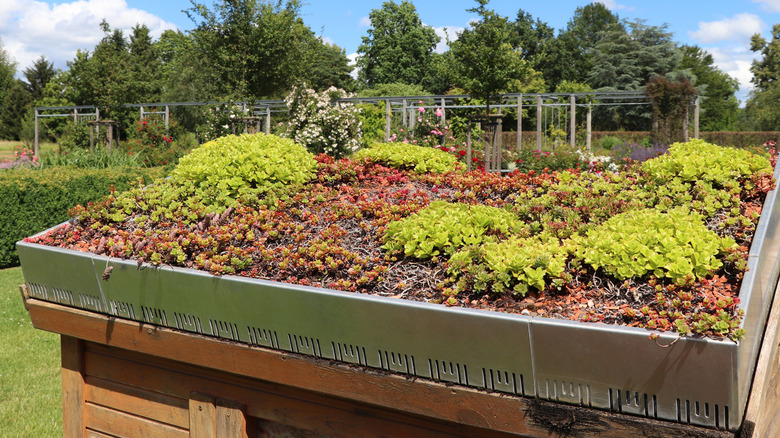
To build a green shed roof, you'll start with a waterproof or rainproof barrier to stop the plant roots from digging too far down or water rotting the structure. You can also add a bit of drainage if your shed doesn't have much of a slope or is large. Then, you need a way to hold the dirt in place using something like a filter sheet. Adding a frame around the area you want to plant is also a good idea. Then you need the soil itself. This needs to be pretty thick to account for roots and is a major part of what makes the shed so heavy, even if you use lightweight substrates like clay granules. You want around 3 inches of soil minimum for sedum and similar plants. However, for wildflowers, berries, and herbs, you need at least 6 inches.
There are a few plants you can try on top of your shed roof, depending on the maintenance and care you want to put into it. Sedums and other succulents are a common choice, as they don't require a lot of maintenance, soil, or extra care. Grass is simple, and you have many ornamental varieties to pick from as well as basic turf. Wildflowers are a great native option for pollinators. Some people have even done herbs and vegetables on top, so their shed serves multiple purposes.
Considerations before building your very own green roof
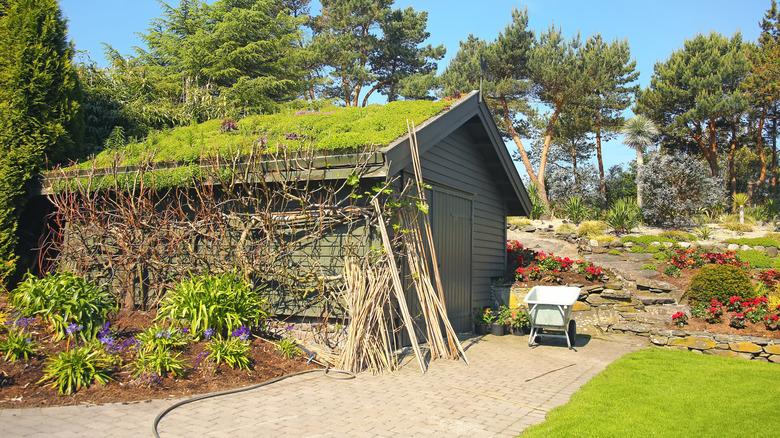
You need to consider if your shed will work for this DIY before you get too far. They aren't cheap to set up. Depending on the size of your garage, they generally cost somewhere between $10 to $24 a square foot, according to Green Roofs. While this can be a hefty initial cost that puts people off, it can be worth it in the long run, as it can extend the lifespan of your shed roof. Green roofs are not lightweight, either, and most structures are not made to handle that weight. If you're building your own and considering a green roof, you can choose the most durable wood for your outdoor shed, like something pressure-treated. No matter what kind you have, you'll also need to add some supports.
Additionally, sloped roofs, especially ones with more than a 20-degree drop, are going to be a problem, as the dirt and plants could slide off the roof. A shed benefits from a small slope, no more than 5 degrees, so water can run off instead of sitting on top. Another, potentially easier, alternative for a green roof — moss. If grown intentionally, with protective layers, it can also produce similar benefits and add a cozy cottage feel to your home, but weigh less and can handle sloped shed roofs.