

Ditch The Chemicals: This Tool Combo Is A No-Dig Way To Remove Weeds From Gravel Driveways
We may receive a commission on purchases made from links.
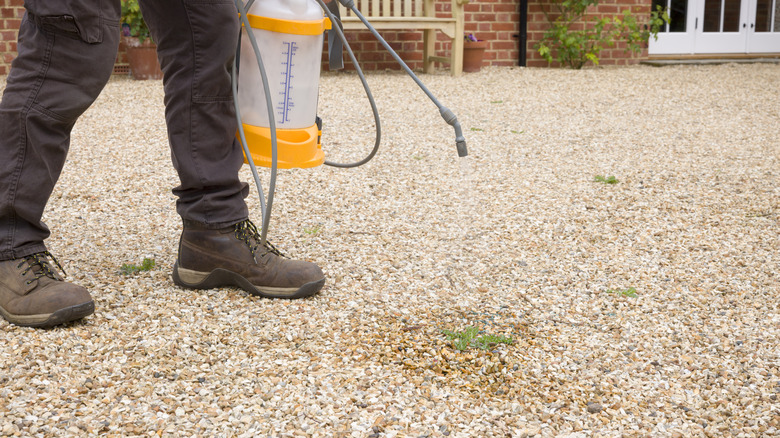
When people say something is "growing like a weed," the phrase is usually delivered with a smile, suggesting abundance, vigor, and even success. But when actual weeds start growing like weeds, the punchline usually comes with a lot of kneeling, digging, and a sore back. The truth is that killing and preventing weeds from growing in gravel driveways requires consistent, proactive maintenance — something that can be physically challenging for even the most dedicated homeowner. However, there is a method that you can employ to get rid of weeds in your gravel without having to throw on the knee pads first or spend your weekends spraying herbicides.
The suggested technique comes courtesy of YouTuber Blue Nile Farm and involves first pulling and loosening the weeds with a bow rake, then using a garden hoe cultivator (sometimes called a garden pick) to remove them at the root. This practical solution is a great way to tackle one of the most labor-intensive chores associated with gravel driveway maintenance.
A huge part of what makes this method appealing is that it targets weeds below or at the root, which is beneficial for long-term weed maintenance. So, instead of buying herbicides or using common household ingredients to tackle weeds, you can use two simple tools to help slow weed growth. This means you'll avoid introducing potentially harmful chemicals to your gravel surface or its surrounding landscape. Another takeaway from this weed-clearing hack is its affordability. A garden hoe cultivator, such as the Lilyvane Hoe Garden Tool, and a bow rake, like the Baraystus Rake, can typically be found on Amazon or at local garden centers for around $20 each.
The tools behind this weed-removal method
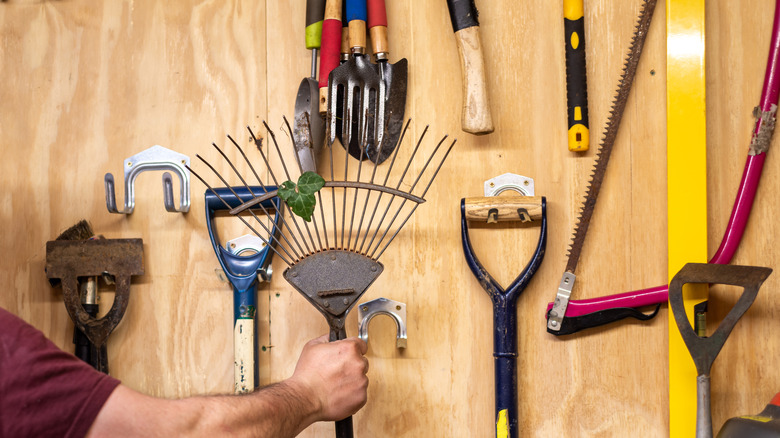
Both of these tools are available with long handles, which means less bending over to get the job done — something your back will thank you for. Your typical bow rake ranges from about 50 to 66 inches in length, allowing users to work from a standing position. Garden hoe cultivators, on the other hand, are commonly used for excavating and tilling, and are generally a bit shorter. However, long-handled models can reach around 45 inches, making them ideal when standing upright.
The garden hoe cultivator used in this landscaping hack that we wish we learned sooner features a flathead hoe on one side and a three-tined rake on the other. This combination makes it particularly well-suited for gravel surfaces. Its flathead side can be used to excavate weed roots. The three-tine head can slip between narrow openings in the gravel more easily than a traditional garden rake. This provides direct access to weed roots, allowing for precise removal — something many homeowners typically rely on chemical weed killers to achieve.
Homeowners looking to reduce strain even further can also add a portable garden tool organizer to the mix, such as the Daoutime organizer. These lightweight caddies allow you to wheel your tools around with you, reducing the need to repeatedly bend over whenever it's time to switch between them. All in all, this method seems to be on the money. For further prevention, periodically raking the gravel to disturb weed seedlings and even adding more gravel to make it difficult for them to grow can help keep weeds at bay.