

Not Hostas, Not Coral Bells: The Bright Houseplant That Can Thrive In Shaded Flower Beds
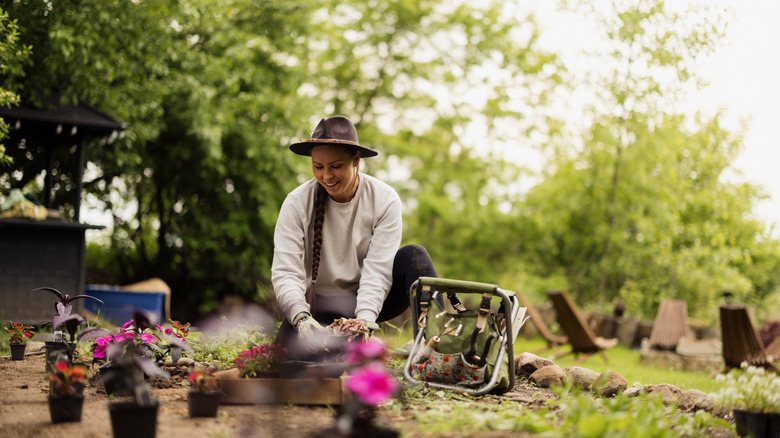
If you're trying to grow a gorgeous, healthy shade garden in your yard, you may have already considered the common options like hostas and coral bells. These eye-catching perennials can make great options, but they're not the only choices available for curating a vibrant flower bed that doesn't need ample sunlight to shine. Instead, you can also incorporate this colorful shade-loving annual that's typically grown as a houseplant.
Also known as common ragwort or florist's cineraria, cineraria (Pericallis x hybrida, previously Cineraria x hybrida) is a stunning hybrid in the daisy family. It comes in an array of bright colors, including blue, purple, red, and white, with blooms appearing during the spring and winter. It gets its name from the fact it's commonly grown by florists, and it's also frequently stylized as a houseplant. Technically, cineraria is considered an herbaceous perennial, but it is only winter hardy in a select few USDA growing zones (9 through 11), so it's grown as an annual in most locations. One major factor that helps this flower stand out (other than its vibrancy, of course) is its sunlight requirements. In many cases, when you're dealing with a flower as bright and colorful as cineraria, you're looking at a plant that requires full sun. However, cineraria does well in lower light conditions, making it perfect for adding life to those shaded flower beds you've been working on.
How to grow cineraria in a shaded flower bed
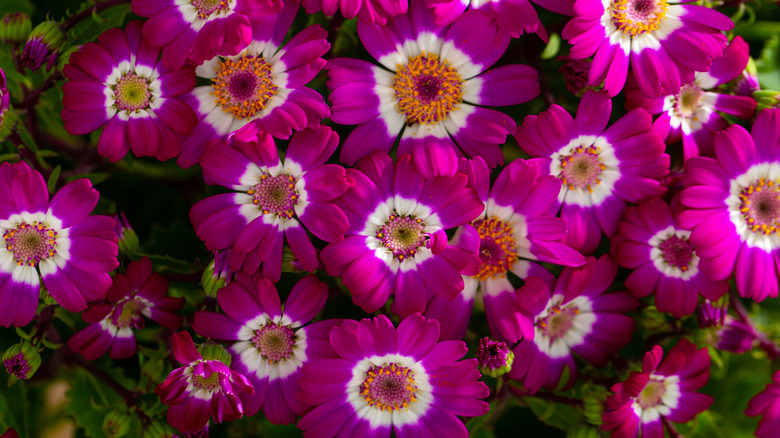
Although cineraria does grow better in lower light conditions than other colorful flowering plants that thrive in the sun, not all shade is created the same. As a result, one of the most important things to familiarize yourself with before adding this plant to your flower bed is the type of shade it prefers and what that looks like when it's not just a label at the plant store.
Cineraria grows best when it is offered partial shade. Partial shade means that your cineraria still needs a little bit of sunlight throughout the day, but not enough to count as a full or partial sun conditions. It also has to do with sunlight timing. For cinerarias, you want to ensure they receive anywhere from 4 to 6 hours of sunlight each day, ideally in the morning. Because of this, a shaded flower bed on the east-facing side of your home may be the best spot to see this flower thrive.
Outside of sunlight, cineraria needs careful watering. It doesn't do well with changes in its watering routine and volume, so you'll want to establish a steady routine that prevents drought or waterlogging. It's also important to avoid wetting the leaves while watering, especially since these flowers can struggle with mildew, mold, and similar water-related complications.