

Not Salvia, Not Zinnia: The Showy Flower That'll Have Hummingbirds Flocking To Your Yard
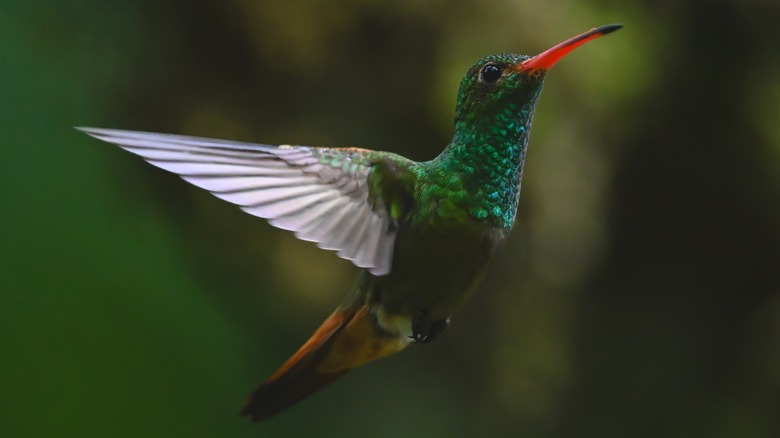
There's nothing quite like stepping into your garden and finding it alive and humming with wildlife. That's especially true when the visitor is none other than a beautiful, vibrant hummingbird whose jewel-tone feathers only further bolster the visual appeal of your carefully cultivated space. While there are many flowers that can attract hummingbirds to your yard, including the well-known salvia and zinnia options, you can also incorporate this showy flower that'll help you create a hummingbird haven in your yard.
The 'Golden Jubilee' anise hyssop (Agastache foeniculum 'Golden Jubilee') is one of several cultivars, known for its eye-catching appearance. While the flowers are certainly part of the aesthetic appeal, with their long spikes displaying small, tubular purple flowers, the foliage itself remains visually relevant as well. That's because the leaves of this anise hyssop variety are a bright gold-green, which only further elevates the contrast of its pollinator-friendly flowers. 'Golden Jubilee' anise hyssop can grow up to 36 inches in height, and its fragrant flowers attract hummingbirds, as well as bees and butterflies for an overall lively garden space.
One of the best parts of anise hyssop is that, although it is a showy flower, this species is considered to be low-maintenance. As a result, it's perfect for gardeners looking for an easy way to start their own pollinator garden. However, low-maintenance doesn't mean maintenance free, and learning how to care for this plant makes a difference in its hummingbird-appeal.
How to grow 'Golden Jubilee' anise hyssop for hummingbirds
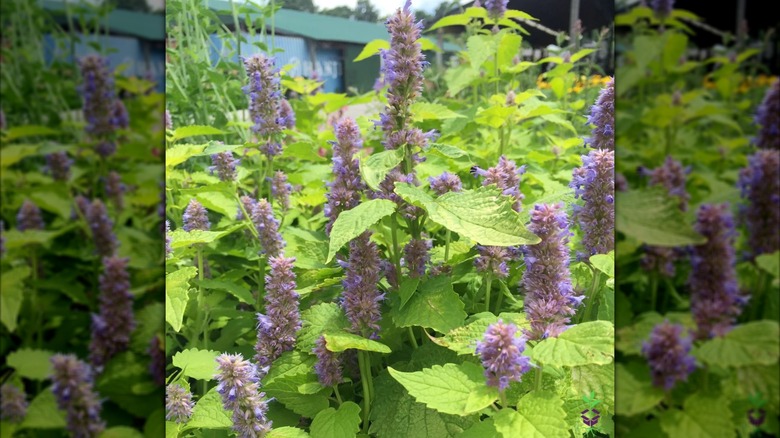
The 'Golden Jubilee' anise hyssop cultivar is a perennial. As a result, you'll want to make sure that you brush up on your USDA growing zone before adding this plant to your garden if you want to see it return year after year. It's hardy in zones 5 through 9. While thinking about location, you'll also want to consider the right place to grow it in your yard. With most flowering plants, you often want to aim for full sun. Anise hyssop is grown in partial shade to full sun, with the best results typically seen in full sun. Since your goal is to attract more hummingbirds to your garden, opting for full sun may provide you the most optimal blooming environment.
Outside of USDA zones and sunlight, 'Golden Jubilee' anise hyssop is fairly hardy overall. Deer often aren't interested in it, likely due to its fragrance, and it's also drought tolerant and disease resistant. It may need supplemental watering during extend drought periods or dry spells, however. You can also grow it in containers if you wish. Just be sure to choose a well-draining soil mixture.
While not necessary, deadheading can be helpful. This is especially true given that that anise hyssop can self-seed. Preventing the flowers from developing into seed pods can save you the trouble of removing unwanted plants that have spread elsewhere. Deadheading spent or lackluster flowers also encourages additional blooming.