

What To Do If You Find A Callery Pear Tree In Your Yard
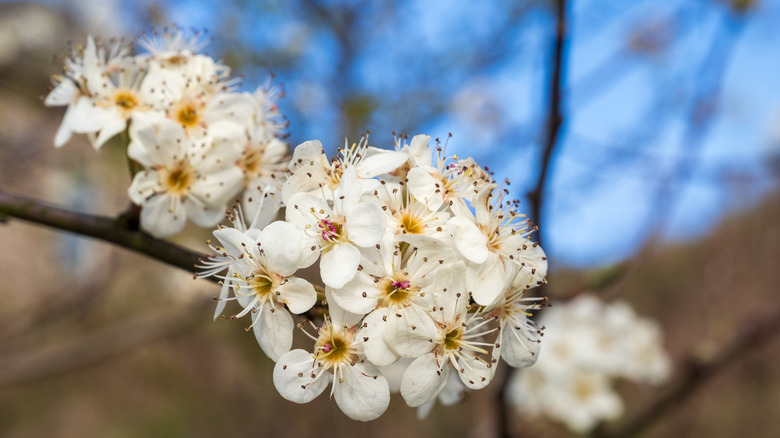
If you see a Callery pear tree (Pyrus calleryana) in your yard, it may look nice at first glance. These rather small trees, sometimes referred to as Bradford pears (Bradford is actually one of several cultivars of the Callery species), typically grow to about 40 feet tall and have a narrow trunk when young. They produce clusters of white blooms in spring and vibrant, dark red foliage in the fall, followed by small green or brown fruit. They were planted widely as ornamental trees for a time. However, you might be surprised to discover that Callery pear trees are considered invasive.Removing the tree immediately and treating the area is your best course of action to help prevent the tree from spreading.
Callery pear trees spread rather aggressively across fields and woods, with different varieties that sprout from cross-pollination. The species was originally brought to the U.S. from China in an effort to create a disease-resistant pear variety. Practically everyone owned this tree in the '80s, but they have since become a nuisance in many areas. Once the trees grow and mature, they tend to form dense thickets that push out native plants and reduce habitat quality for wildlife. This stinky tree is one you should avoid at all costs — the white blooms emit a strong odor, with many homeowners saying they resemble the scent of dead fish.
How to remove a Callery pear tree effectively
Young seedlings are the easiest to deal with. Smaller saplings can usually be dug out by hand, but you need to make sure you remove the root system. It can be better to remove the tree during late fall or early winter, when seed spread is minimal. Avoid composting the plants, since any seeds or root fragments that remain can survive and spread. Don't mow around any seedlings or small trees, since doing so could cause more trees to sprout.
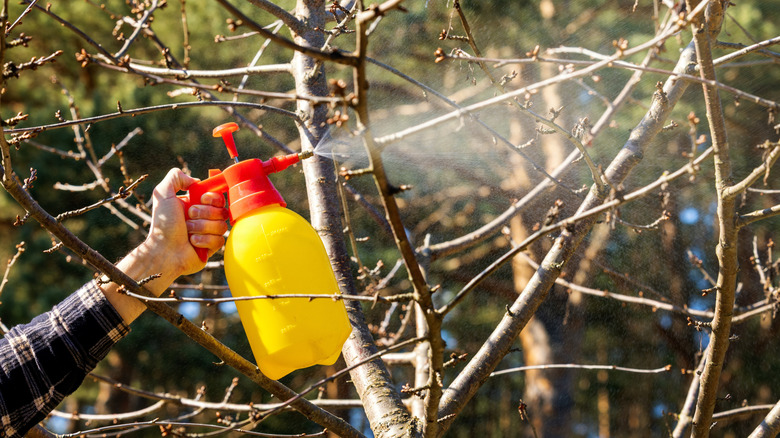
Herbicides are another recommended method, especially since it can be difficult to gauge whether you got all of the roots when pulling by hand. If the tree has smaller stems, you can use a basal bark application. Concentrated glyphosate is commonly used for trees that are 6 feet or under, depending on label directions and application methods. Make sure to follow the instructions when you are mixing and applying. Foliar applications should thoroughly cover the tree leaves. If you cut the tree down, you can apply the herbicide to the stump or any sprouts that return later.
Treating the stump is an important step to prevent regrowth, as the herbicide is absorbed into the plant and the root system. If you find larger or more established trees, it may be best to contact a professional for removal and treatment. It can be helpful to identify the invasive plant and mark it for removal. Then, you can use the open space to plant a native alternative, such as the American plum (Prunus americana) or the flowering dogwood (Cornis florida), both of which are not invasive.