

Not Chemicals: Keep Pests Away From Daylilies Using Herbs
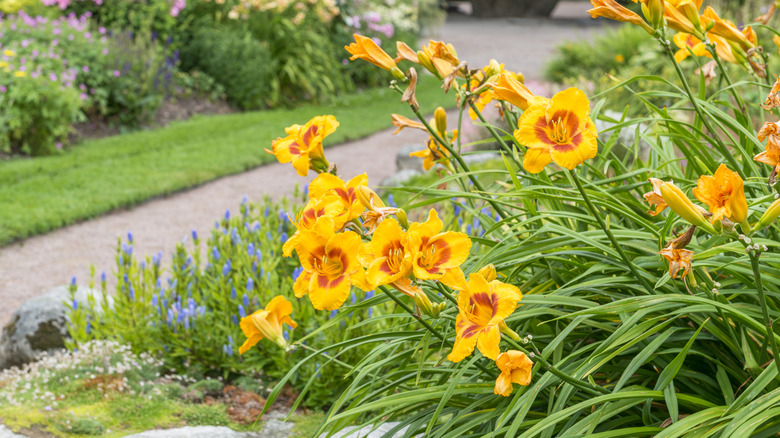
Thanks to their numerous beautiful blooms, daylilies (Hemerocallis spp.) are a stunning addition to any home garden. Though the flowers only last a day (hence the common name), a single plant produces them in abundance, given the right growing conditions. Plant a daylily patch and your garden will be full of color for the growing season. These plants are generally considered low-maintenance, but to really care for your daylilies, you need to watch for pests. While some critters are beneficial in the garden, others can infest your greenery and need to be taken care of promptly. Instead of resorting to chemical pesticides, consider companion plants to pair with daylilies in the fall for a stunning spring garden — or anytime of the year, really. While you have plenty of options, one herb that's particularly popular is lavender.
Of the many benefits of planting lavender in your garden, its strong scent is probably the most important for protecting your daylilies from pests. Lavender (Lavandula spp.) contains the volatile organic compound linalool and the terpenes trans-ocimene and d-limonene. While we may enjoy the plant's potent aroma, many insects aren't a fan — and some just happen to also munch on daylilies. Aphids, in particular, can infest Hemerocallis species in large numbers, and they are proven to dislike the scent of lavender. Deer, too, love to eat most types of daylilies, but will avoid lavender shrubs. Lavender can also attract beneficial insects to your daylilies; simply growing a diversity of flowering plants increases the natural enemies of common plant pests. Plus, if your aim is to collect seeds from your daylilies, lavender blooms will bring in butterflies and bees to facilitate pollen exchange between your genetically different plants.
How to use lavender as a pest-repelling companion plant for daylilies
Daylilies grow well in most climates, where they push their masses of thick, tough roots into almost any soil type. They thrive in Zones 3 to 9. While that's great for daylily lovers, the plants do not like to compete for nutrients or water; they'll steal resources from nearby greenery. Lavender, with its compact, shallow, and less aggressive root system, isn't a threat to daylilies. Plus, the Lavandula genus thrives in Zones 5 to 9— which overlaps nicely with the preferred zones of daylilies.
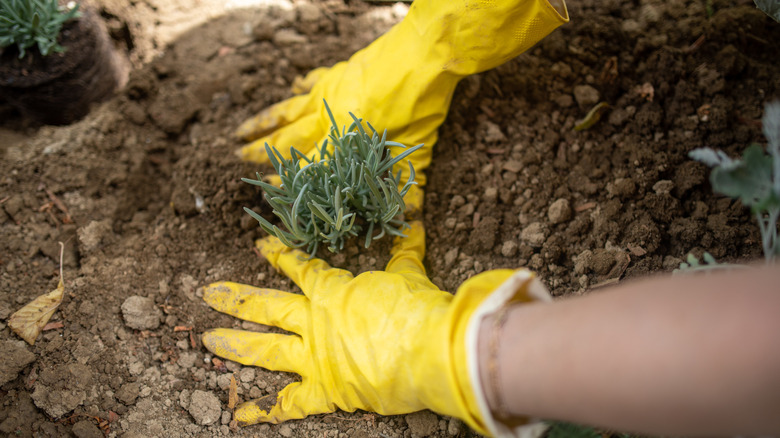
Lavender does prefer alkaline soils, but that doesn't matter to daylilies, which will grow in mildly acidic, neutral, or alkaline soil. Both plants need full sun sites, but daylilies need moist, well-draining soil, whereas lavender likes it dry with good drainage. After all, the latter plant hails from the Mediterranean, with its rocky, sandy, nutrient-poor landscapes. To make this pairing work in your garden, plant lavender on the higher, drier ground and add fine gravel to the planting hole. Alternatively, fill a sunny raised garden bed with daylilies, and then plant lavender in the dry border as a pest-repelling barrier.
At the end of the day, there's no denying that spiky blue, pink, purple, or white lavender blooms pair wonderfully with vibrantly hued daylily flowers. When out shopping for plants, choose humidity-tolerant lavender varieties with dramatic blooms, like Spanish lavender (Lavandula stoechas) or 'Phenomenal' lavender (Lavandula x intermedia 'Phenomenal'), for best results. Commit to dividing your daylilies every two to three years, too, to keep the patch from crowding out its protective companion.