

Not Retaining Walls: There's A Natural Way To Control Drainage For Sloped Yards
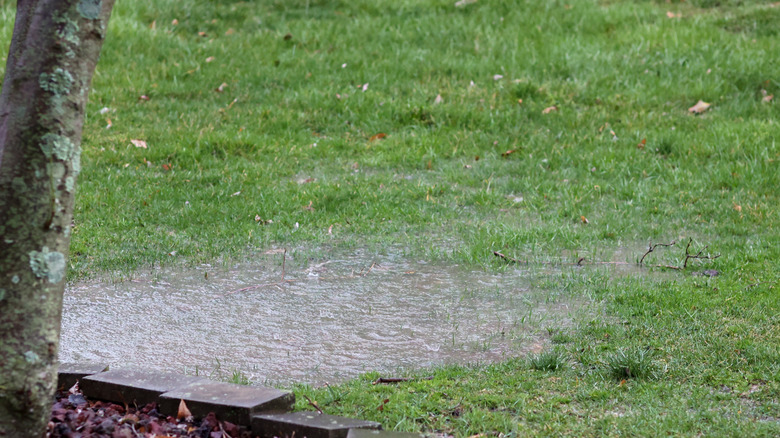
If you've noticed pools of water on your lawn, troughs of soil being swept away, or an increase in the amount of insects in the area, then you may be dealing with poor drainage in your sloped yard. While one common solution is to use a retaining wall to divert the water and keep the soil in place, you may not be keen on that idea for aesthetic reasons, as well as the cost of the initial build and the maintenance that is required over time. Alternatively, an effective and natural way to improve yard and soil drainage on a sloped property is by adding specific plants that are good at absorbing high amounts of moisture.
In addition to soaking up water, certain plants can also be helpful for preventing erosion on sloped properties because their strong roots help keep the soil in place. This is beneficial not only for the look and style of your yard, but also for the health of your plants, because it means that the positive nutrients in the soil are less likely to be washed away. Fortunately, there are plenty of fun, eye-catching plants that can improve overall drainage while also effortlessly filling your yard with color. So, with all those benefits in mind, let's take a look at what plants you can use to control the drainage in your sloped yard so that there isn't a need for a retaining wall.
Choosing plants to improve yard drainage
The key to using plants for improved drainage is choosing the right ones. First, consider which plants naturally do well in wet environments. Ferns, for example, do well in wet soil, meaning they can withstand the high moisture in a poorly draining yard without wilting. In addition, certain trees like willows grow very well in wet conditions and soak up lots of water.
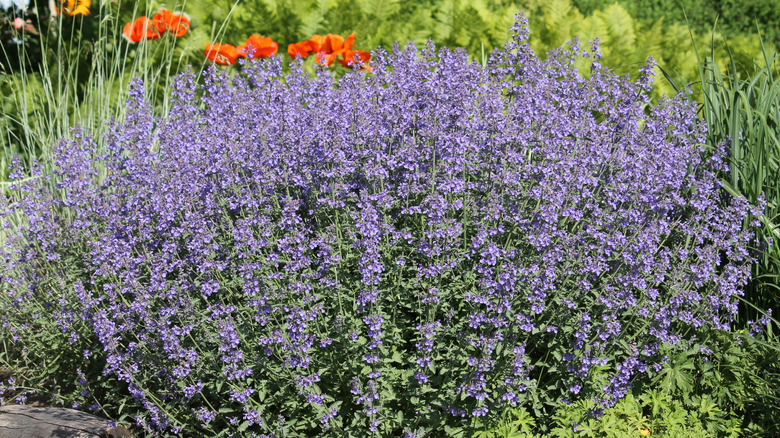
Certain perennial plants and flowers are also a good addition when trying to attain this goal, because they come back multiple years in a row, meaning they have time to build up the kind of root system that helps to keep the soil sturdy and in place. Catmint, also known by the scientific name Nepeta racemosa, is a great example of this. With eye-catching purple flowers, catmint does well when left to its own devices in hardiness zones 4 to 8, making it a good, low-maintenance option for sloped yards that suffer from poor drainage. Ornamental grasses such as Panicum virgatum or 'red switch grass,' which grows well in zones 4 to 9, are also good for controlling water in gardens because their dense, rhizomatic roots help keep the soil from eroding away. These are just a few of the underrated perennials that'll effortlessly transform patchy garden areas.
To maximize the benefits of these plants in a poorly draining yard, place multiple layers of these moisture-absorbing options in areas where the water tends to pool or run down the slope. This will help you work towards controlling the drainage in your sloped yard using a bespoke, natural solution.