

Why Are There So Many Old Razor Blades In My Bathroom Wall?
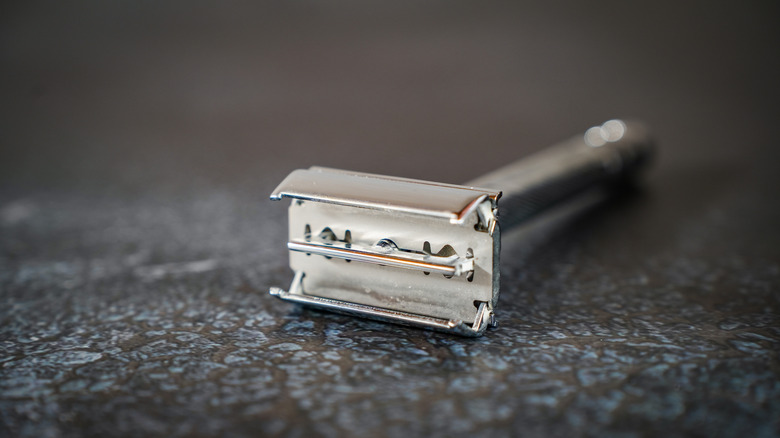
Older homes come equipped with a lot of bizarre features, but there's one that may truly be a cut above. In 1903, Gillette developed an at-home safety razor with replaceable blades, which meant men no longer had to make a trip to the local barber to avoid that five o'clock shadow look. But it created a different hairy situation: Shavers weren't sure what to do with their used blades. In addition to worries about causing deep cuts to sanitation workers, the blades were also considered a biohazard. Since they were too risky to toss in the trash, people initially attempted to burn their refuse and use the ashes as fertilizer, but the blades were able to withstand the heat.
So, medicine cabinet manufacturers came up with a sharp solution: Cabinets installed directly into walls were designed with a tiny slit in the back where shavers could deposit their used blades. The cabinets were placed between two studs, allowing the blades to drop into the empty cavity in the walls where they could pile up. Some bathrooms even had a slot cut straight into the tile on the wall. So, yes, if you live in an older home, you could potentially find a stash of blades that seems straight out of a horror film. But once Bic released a completely disposable razor option in the 1970s, the practice fell out of fashion.
How to handle a stash of razor blades in your wall
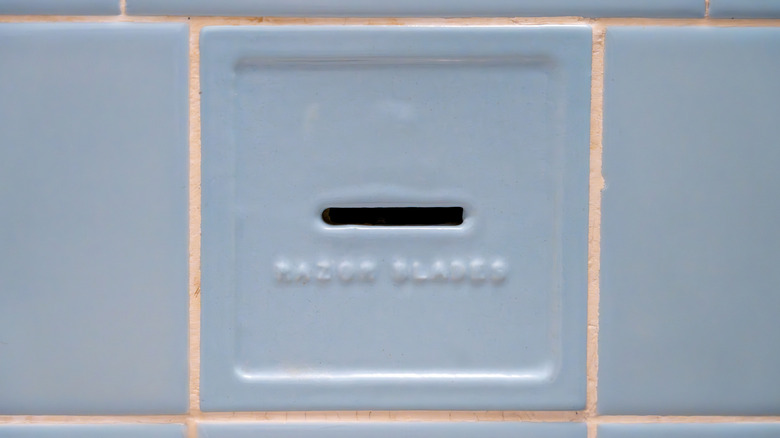
If you have no plans to do a bathroom remodel and are unbothered by this razor-sharp imagery, it's completely fine to adopt an "out of sight, out of mind" stance — the blades trapped between the studs in your wall don't pose a threat. But if you're going to be knocking down any bathroom walls, take steps to ensure your safety. Wear protective gear like safety goggles and work gloves.
If you do find a stash of blades, the best place to dispose of them is a sharps container, which will need to be replaced once it's two-thirds full. You can also look into sustainable brands such as Gillette, Leaf Shave, and Albatross Designs that have razor recycling programs — and yes, you can still recycle rusty blades as the rust will be removed during the recycling process. But no matter which route you choose, it's best to follow the National Library of Medicine's sharps handling guidelines. In addition to wearing cut-resistant gloves, make sure to keep the sharp end of the razor away from yourself and others, and only grab from the non-sharp end. Never hand the blades to someone else.