

Not Coffee Grounds: The Drink To Add To DIY Fertilizer For Thriving Leafy Greens
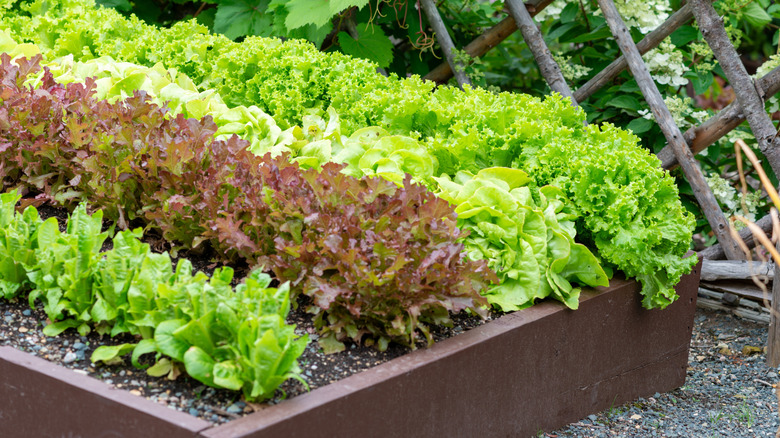
Coffee grounds are a no-brainer for giving your compost heap a boost of nitrogen. But did you know that there's another source you can steep on your stovetop right now? Nettle tea is a budget-friendly DIY fertilizer that's high in nitrogen and filled with essential micronutrients. Made from stinging nettles (Urtica dioica), it's beneficial for humans and plants alike. Its nourishing compounds are particularly helpful to promote healthy growth of leafy greens like Swiss chard, lettuce, spinach, kale, and other vegetables within the Brassica family, such as broccoli, cauliflower, kohlrabi, cabbage, and Brussels sprouts. While you can empty the remnants of used nettle tea bags (or loose-leaf tea) into your compost heap, fresh nettles are free or at least very inexpensive when grown from seed.
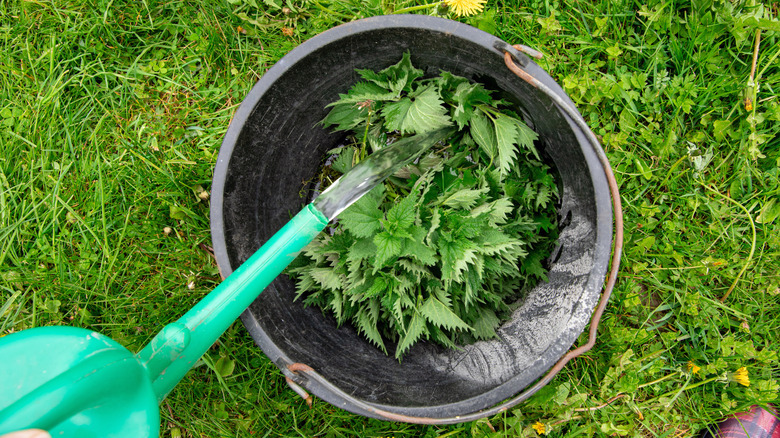
For the best results, forage or grow this weed to use as a water-soluble fertilizer. Wear protective gloves to prevent contact between the prickly stems and your hands — they cause an awful stinging and burning sensation on the skin when touched. Either boil nettle cuttings and let the tea leftovers sit overnight, or leave it for a few days for a more powerful concentration of nutrients. Alternatively you can try the bucket method, to create fermented nettle tea fertilizer. Fill out the bottom third of a large container with the cuttings, fill it with water (being mindful to leave room since the plants will create bubbles as they ferment), weigh down the leaves with a rock or bricks. Cover the bucket for a few weeks and stir frequently. When it starts to smell, you can add a small amount of the liquid to a can filled with water. The general rule of thumb is a 1 to 10 ratio. You only need a little bit of the mixture diluted in water — too much will overwhelm the plants.
How nettle tea helps leafy greens thrive
When growing salad greens and brassicas, you want the healthiest, tastiest, and most abundant plants. Nettle tea's nitrogen content helps the leaves maintain their vibrancy and rich green coloring and encourages them to grow more leaves instead of going to flower. This, along with other essential vitamins and minerals, gives them everything they need to keep producing for you — even through varying weather conditions and bouts of pests. Nettle tea also has a ton of plant polyphenols, which when included in a fertilizer, allow leafy greens to stay healthy by making them strong enough to ward off pests, diseases, or fungal growth — a must for good-looking salads.
For greens in garden beds, water them with a 1 to 10 ratio of the DIY fertilizer tea, and water each month. For container-grown varieties, you may need to apply this mixture more regularly (depending on how frequently the soil dries) since watering can remove nutrients over time. Another effective way to use nettle tea for healthy salad leaves is by creating a diluted spray to dissuade aphids, cabbage moths, whiteflies, and fungal diseases like downy mildew, which is common for lettuces and other greens. There are a variety of recipes to try so long as the tea-to-water ratio is 1 to 20. Some homemade pest sprays include the tea in a mixture of diluted soap or essential oils to keep pesky insects at bay.