

Are French Door Refrigerators The Most Energy Efficient Option? It's Complicated
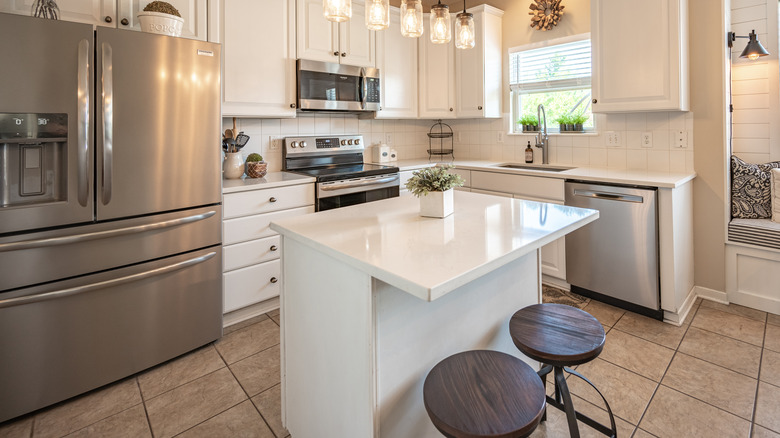
Convenient, spacious, and gleaming. Walk into any kitchen showroom, and French door refrigerators command the room, often being marketed relentlessly as the efficient, modern choice. That perception, however, runs ahead of the facts, as French door refrigerators are not the most energy-efficient option available. That title belongs to top-freezer models, as they keep dense cold air sitting above the refrigerator section, reducing the thermal burden on the compressor as cold air naturally sinks. French door designs invert this arrangement. They instead have the freezer at the bottom, creating a less favorable thermal gradient that the compressor must constantly work against.
Where French door models legitimately win, though, is against side-by-side refrigerators. They have a split-door design that means only one narrow panel opens at a time, limiting cold air loss with each access, thus saving energy. Still, keep in mind that there are a lot of factors that come into play when determining the energy efficiency of a refrigerator. Take, for instance, Energy Star certifications. Energy Star-certified refrigerators operate approximately 9% more efficiently than models that merely meet the federal minimum standard (per energystar.gov). In practice, an Energy Star-certified French door unit might outperform a non-certified top-freezer model.
It is also important to note here that French door models often also come with automatic ice makers and through-the-door dispensers. These features can increase their annual energy consumption by 14 to 20% (per VCE Publications). If you are looking for ways to reduce wasted energy while using kitchen appliances, stay away from such models. Plus, keep in mind that a refrigerator's energy efficiency, French door or not, depends heavily on how it is used and handled at home each day as well.
Maximizing the efficiency of your French door refrigerator
Purchasing an efficient appliance only finishes half the task. It is actually the daily habits and routine upkeep that determine whether efficiency ratings will ever translate into real savings. The question is, what can you do? Well, start with the correct temperature calibration. It is best to set the fresh food compartment between 35 and 38 degrees Fahrenheit. Anything colder just burns unnecessary electricity. Plus, it does not improve food preservation. As for the freezer compartment, keep it between −5 and 0 degrees Fahrenheit.
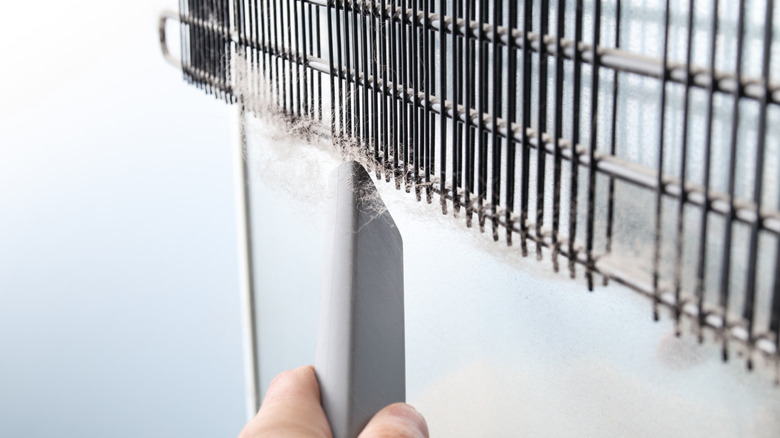
Other than that, clean your refrigerator coils regularly. Many things, including dust, lint, and pet hair, accumulate on coils, reducing heat exchange and forcing the compressor into longer, harder cycles. In fact, the Department of Energy says that dirty coils can increase energy costs by as much as 35% and accelerate appliance aging. Make sure you clean them regularly, especially if you have pets. Door gaskets are another thing you must pay attention to. That is because French door refrigerators have multiple sealing surfaces. If any one of them leaks, energy consumption will rise. Test each seal and replace if needed.
Organize your fridge properly, too. It may not sound important, but interior organization governs how long the doors stay open. When you have a well-organized unit that lets users retrieve items in seconds, you will keep its door open for less time, saving cooling and thus energy. Lastly, choose a good spot to place your fridge. Direct sunlight, a nearby oven, or proximity to heating vents all elevate ambient temperature around the unit and push the compressor harder, reducing the energy efficiency of your French door refrigerator.